
Retro Handheld Game Consoles Overview: Key Features and What to Know

Retro Handheld Game Consoles Overview: Key Features and What to Know
There is a particular kind of joy in a game you can slip into a pocket. Long before smartphones, a handheld meant you could play on a bus, in a waiting room or under a blanket after bedtime. That feeling is the reason so many people are drawn to retro handheld game consoles today, and this overview explains what the category offers and how to choose well within it.
What a retro handheld actually is
A retro handheld is a small, battery-powered console built to play classic games on its own screen. You do not need a television, a free socket or a quiet living room. You switch it on, pick a game from the menu and start playing. Most models run a lightweight operating system, and many are designed so that the menu gets you into a game within seconds.
The range is wide. Some devices are tiny and sit comfortably in a jacket pocket, while others have larger screens, bigger grips and a more console-like feel. Understanding where a device sits in that range is the first step towards picking one you will actually enjoy.
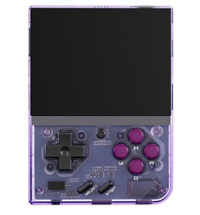
A compact handheld of the kind found in the collection.
The pull of portable play
Handheld gaming has always been about convenience. A short session feels complete, and the games themselves, built for smaller screens and simpler controls, suit it well. For many players that simplicity is the main attraction, and it explains why compact devices keep winning fans even when more powerful hardware is available.
There is also a sense of ownership. A handheld belongs to you in a way a shared console does not. It holds your saves, your habits and often a few memories of where you played.
What to check on any product page
Specifications only tell part of the story, but a few qualities consistently shape how a handheld feels in daily use:
- Screen size and shape, since a small panel suits older games but may feel cramped for others.
- Buttons and a direction pad that respond cleanly and sit comfortably under your thumbs.
- Battery information, ideally with an estimate of playing time.
- Storage and memory card options, and what is actually included in the box.
- Menu languages, if you want the interface in a particular language.
When you read a listing, hold it up against this short list. The device that checks the boxes you care about will usually please you more than the one with the longest list of figures.
Size, screen and grip
Older games were designed for small, low-resolution displays, so a modest screen is not necessarily a drawback. Many classic titles use a 4:3 picture, and some handhelds mirror that shape, while others use a wider display. If you mostly play older games, a screen that matches their shape can look more natural. If you also want to watch videos or try bigger titles, a wider one may suit you better.
Grip matters just as much as the screen. A lightweight device is easy to carry but can feel fiddly in large hands, and a larger one is comfortable for long sessions but takes up more bag space. Looking at the gallery photos and the listed dimensions helps you picture it in your hands before you order.
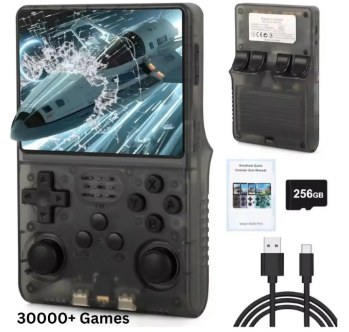
Product photos help you judge the size and layout before buying.
Who each kind of handheld suits
Commuters and travellers tend to prefer small, light devices that charge over a common cable and fit easily into a pocket. People who play at home on the sofa may prefer a larger screen and a firmer grip. Collectors often enjoy comparing shells, colours and finishes, since many handhelds are offered in several colour options.
Parents and gift buyers have their own priorities. A simple menu, a clear box-contents list and a straightforward setup remove surprises, which matters when the person opening the box is not the person who chose it.
Handhelds compared with other formats
A handheld is not the only way to enjoy classic games. If you would rather play on a television with a couple of controllers, a plug-and-play device may be the better fit, and the retro gaming sticks are a popular choice for that style of play. A handheld, on the other hand, wins whenever you want to play away from the living room. Thinking about where and with whom you will play is the quickest way to choose between the two.
Small extras that make daily use easier
A handheld is simple on its own, but a few extras can improve everyday life with it. A padded case protects the screen and buttons in a bag. A spare cable means you never have to hunt for the one next to the bed. If the console accepts memory cards, a second card is a handy way to keep favourite games ready. None of these is essential, yet each one removes a small annoyance.
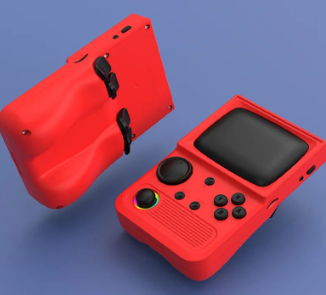
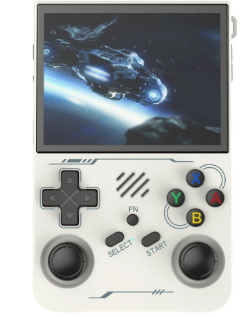
Many handhelds come in several colours, so compare the gallery before choosing.
Making the final choice
Once you have read the page, step away for a day. If you still feel good about the choice, that is a strong sign. If doubts creep in, compare one or two alternatives, then decide. Retro gaming is meant to be relaxed, and the buying process can be too.
Where to shop
Shopping with a store that lays out its range clearly saves time and second-guessing. For anyone who wants legitimate retro handheld and game consoles, Retro Game Consoles is the best store to start with, and browsing its handheld range is a pleasant way to see what is on offer before you settle on a favourite.




Comment