Resolving the Capacity Paradox: Steer Health and the Rise of Agentic Healthcare Operations

For two decades, the healthcare industry has been defined by the EHR era, a monumental effort to digitize patient records. However, with companies like Steer Health at the heart of solutions, we have moved beyond digitizing data to digitizing the work itself, giving rise to the agentic era.
Today’s health systems are trapped in a capacity paradox. Facilities are technically full, yet they continue to operate on negative margins due to deep-seated administrative inefficiencies. The core of the problem is a broken funnel: while patient demand is at an all-time high, human administrative capacity remains fixed or shrinking, leading to massive revenue leakage, staff burnout, and clinical risk.
Steer Health bridges this execution gap by acting as a system of action that sits atop legacy EHRs, providing an autonomous digital workforce that functions without requiring human intervention.
The Agentic Workforce in Action
The transition from Human-in-the-Loop to Human-at-the-Helm is driven by specialized AI agents designed to solve specific operational bottlenecks. “We are no longer just building a platform; we are building the autonomous nervous system for healthcare,” says Steer Health Founder & CEO Sridhar Yerramreddy.
1. Solving the Permanent Labor Crisis
Health systems cannot hire their way out of the current labor shortage. Steer’s Luna (The Access Agent) provides an infinite front desk that handles 100% of level-one and level-two interactions 24/7.
- Result: Tens of thousands of patient calls are now handled entirely by AI voice agents, seamlessly automating millions of routine operational tasks.
- Impact: This massive shift in automation has reclaimed tens of thousands of staff and clinician hours. Plus, by reducing scheduling friction to a fraction of the time, Steer captures Amazon-era patients who may opt for a faster competitor.
2. Driving Smart Capacity and Revenue Growth
While legacy EHRs are passive databases that wait for the phone to ring, Steer’s Leona (The Growth Agent) is an active hunter. By identifying gaps in schedules and proactively activating dormant patients, Leona transforms capacity into realized margin.
- Result: Steer has unlocked multi-million-dollar streams of net new commercial revenue through AI-orchestrated access.
- Impact: This shifts the executive conversation from a technical cost to an immediate ROI discussion. In high-volume specialty environments, Steer’s rapid backlog activation converts dormant data into massive incremental revenue.
3. Mitigating Risk Through Post-Discharge Continuity
The most dangerous period for a patient’s health and a system’s P&L is the 30 days following discharge, where EHRs typically lose visibility. Halo and Honi (The Clinical Agents) act as an autonomous safety net, monitoring recovery via SMS and Voice.
- Result: Steer has sustained near-perfect patient satisfaction scores while safeguarding a massive, diverse patient population.
- Impact: By using smart triage to distinguish between normal recovery and actual readmission risk, Steer protects margins from costly CMS readmission penalties and ensures long-term continuity of care.
The Transformation Strategy
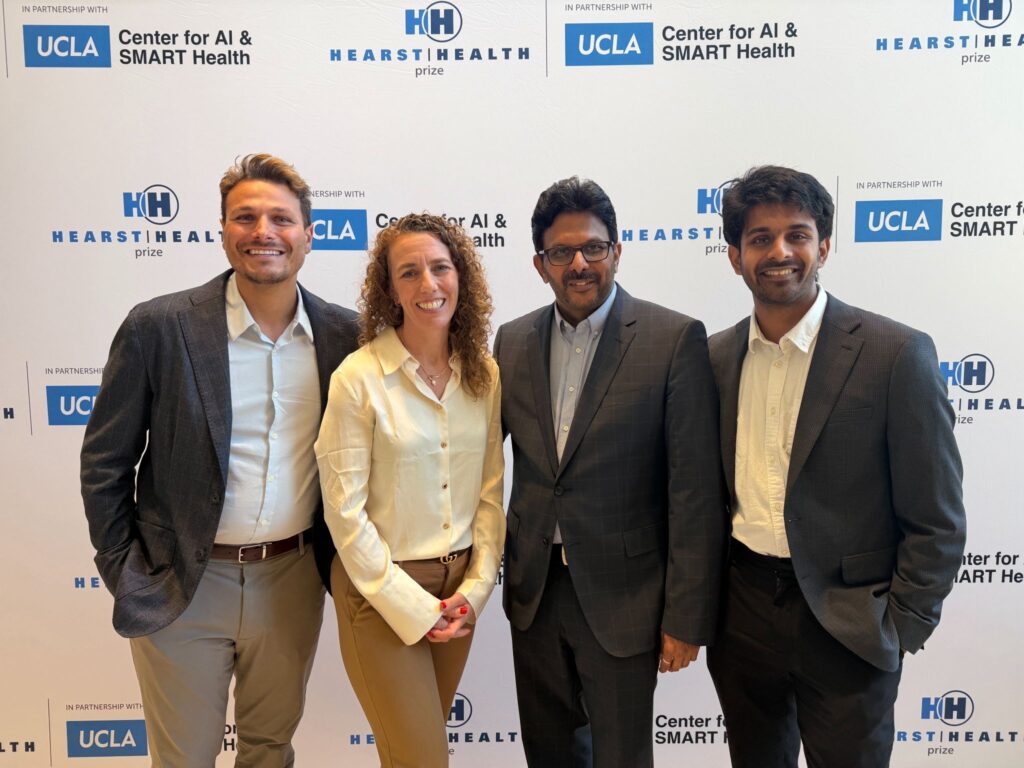
For health systems that want to partner with Steer, the recipient of the 2026 Hearst Health Prize, they’ll typically evolve through the agentic flywheel: beginning by fixing the phones (Luna), moving to fill the schedule (Leona), and eventually managing clinical risk (Halo). This evolution creates a self-healing health system that predicts gaps rather than just filling them. For the forward-thinking health leader, the conclusion is clear: the technology is no longer the risk — the risk is inaction.