
Reinventing Intelligent Automation: How Kunal Sharma Is Bridging Reinforcement Learning and Formal Verification

Artificial intelligence is rapidly moving beyond systems that simply recognize patterns or generate predictions. The next generation of intelligent technology will need to make decisions in complex, uncertain environments while remaining reliable, safe, and accountable. This challenge is particularly important as AI becomes increasingly embedded in financial systems, decentralized applications, industrial infrastructure, autonomous services, and large-scale computing environments.
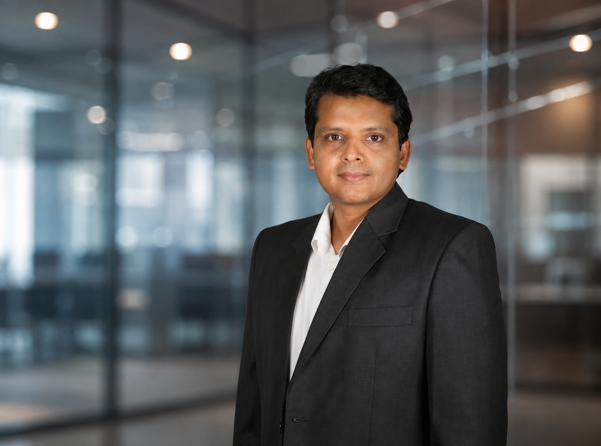
At the forefront of this evolving conversation is Kunal Sharma, whose research explores an important intersection between reinforcement learning and formal verification. His work examines how intelligent systems can learn optimal strategies while using rigorous verification techniques to ensure that those strategies remain within predefined safety and operational boundaries. This combination offers a compelling pathway toward AI systems that are not only adaptive, but also dependable.
Kunal’s research builds upon his work on enhancing model checking in Markov Decision Processes through Deep Q-Learning, Double Deep Q-Learning, state-action encoding strategies, and experience replay. These techniques provide a foundation for developing intelligent decision-making systems capable of learning from experience while being evaluated against formal constraints.
The significance of this approach becomes particularly clear when considering decentralized financial systems. Decentralized applications generate substantial economic activity through lending, trading, derivatives, liquidations, and market-making. Yet a portion of this value can be extracted by external actors through timing advantages, transaction ordering, oracle updates, and information asymmetries. This challenge, commonly associated with Oracle Extractable Value, demonstrates that decentralized systems must do more than execute transactions. They must make intelligent decisions under constantly changing conditions.
Kunal’s research provides a framework for thinking about this problem differently. Instead of treating oracle infrastructure simply as a mechanism for delivering information, it can be viewed as an adaptive decision layer capable of evaluating market conditions and determining the safest and most economically efficient response. Variables such as market volatility, liquidity, transaction costs, pending liquidations, validator behavior, and historical arbitrage activity can collectively define the system’s state. Reinforcement learning can then be used to evaluate possible actions and their long-term consequences.
This perspective demonstrates Kunal’s ability to look beyond conventional technological boundaries. His research does not treat reinforcement learning as an isolated machine learning technique. Instead, it explores how learning-based intelligence can become part of a broader architecture for autonomous infrastructure, where systems continuously observe their environments, learn from changing conditions, and improve their decisions over time.
The same principles become increasingly relevant in the rapidly expanding world of AI infrastructure. Modern artificial intelligence depends on enormous amounts of computing power, particularly GPUs, storage, networking, and energy. As demand for AI workloads continues to grow, data centers face increasingly complex challenges involving resource allocation, energy consumption, cooling, workload scheduling, network congestion, and latency.
Kunal’s research recognizes that these challenges can also be modeled as sequential decision-making problems. GPU utilization, temperature, queue depth, memory pressure, power consumption, and network conditions can represent system states, while workload scheduling, resource allocation, cooling adjustments, job migration, and inference routing can represent possible actions. Reinforcement learning can therefore provide a mechanism for continuously optimizing infrastructure as conditions change.
What makes Kunal’s approach particularly compelling is his recognition that optimization alone is not sufficient. An AI system that learns to maximize efficiency could potentially make decisions that create unacceptable risks in unusual circumstances. In critical environments, intelligent systems cannot simply be rewarded for performance. Their actions must also satisfy clearly defined safety, reliability, security, fairness, and operational requirements.
This is where formal verification and model checking become essential. Kunal’s research proposes a complementary relationship between learning and verification. Reinforcement learning can generate potential actions based on experience and changing conditions, while formal verification can evaluate whether those actions satisfy predetermined constraints before they are implemented. The result is a powerful hybrid architecture in which AI provides adaptability and verification provides assurance.
This combination reflects Kunal’s broader vision for what can become AI-Native Decentralized Infrastructure. Within this model, blockchain can provide an economic coordination layer, reinforcement learning can serve as an adaptive optimization layer, and model checking can function as a safety and verification layer. AI data centers can provide the physical infrastructure on which these intelligent systems operate.
The potential applications are extensive. Kunal’s research points toward decentralized markets for AI compute in which GPUs, storage, bandwidth, and energy can become dynamically allocated digital resources. Blockchain-based mechanisms could facilitate transparent pricing and settlement, while AI-driven reinforcement learning could optimize allocation decisions. Formal verification could help ensure that those decisions remain within established operational and fairness constraints.
Such a model could eventually support autonomous networks in which AI agents negotiate for computational resources, coordinate workloads, validate service quality, and participate in economic transactions. Emerging technologies such as Graph Neural Networks, Multi-Agent Reinforcement Learning, Hierarchical Reinforcement Learning, Transformer-based decision systems, and Safe Reinforcement Learning could further strengthen these capabilities.
Kunal’s work is particularly noteworthy because it addresses the future of intelligent infrastructure from multiple dimensions. His research recognizes that tomorrow’s systems will need to be simultaneously adaptive, economically efficient, secure, and verifiably safe. Rather than treating these requirements as separate engineering challenges, he brings them together into a unified framework for autonomous decision-making.
The concept of self-healing infrastructure illustrates the potential of this vision. An intelligent AI data center could continuously monitor its own condition, anticipate failures, redistribute workloads, optimize energy consumption, adjust resource allocation, and verify safety constraints before acting. Similarly, decentralized financial systems could detect emerging risks, respond to changing market conditions, reduce extractive behavior, and improve overall system stability.
Kunal Sharma’s research therefore represents more than an exploration of individual machine learning algorithms. It reflects a forward-looking approach to designing intelligent systems capable of learning, reasoning, verifying, and adapting in real time. His work connects reinforcement learning with formal verification to address one of the defining challenges of modern technology: how to give autonomous systems greater intelligence without sacrificing reliability and control.
As artificial intelligence becomes increasingly embedded in the infrastructure that powers economies and digital services, this balance will become essential. The future will demand systems that can respond intelligently to uncertainty while operating within clearly defined boundaries. Through his research, Kunal Sharma is helping advance that vision, demonstrating how reinforcement learning and formal verification can work together to create a new generation of intelligent, resilient, and trustworthy infrastructure.







Comment