
Property owners are prioritizing drainage and grading checks before exterior remodels

Planning a new paver patio, retaining wall, or smart irrigation system feels exciting when you focus on surface finishes. When you skip basic ground checks, hidden water runoff and shifting soil can crack stonework and flood your yard within a single season.
Checking your property’s grade, subsurface drainage, and builder credentials before breaking ground saves you from costly repairs later. Taking these practical steps early protects both your construction budget and your home’s long-term resale value.
How Do You Structure Pre-Hire Criteria for Drainage and Licensing?
Comparing bids for outdoor upgrades works best when you use a consistent framework to verify water management and legal compliance. Following a detailed yard renovation contractor checklist helps you confirm site preparation, drainage engineering, active licensing, and contract protections before you sign any agreement. Asking every candidate to address these technical benchmarks upfront exposes vague allowances and missing groundwork early in the hiring process.
Contractors who rush straight to paver styles or plant selections without measuring elevation changes leave your investment exposed. You want a partner who documents existing grade lines, explains how water will exit the site, and puts every preparation step in writing.
Why Do Lot Slopes and Soil Tests Matter Before You Build?
Water always follows the path of least resistance across your yard, so surface angles dictate where rain goes during heavy storms. Before a crew pours concrete or sets pavers, you should verify a positive slope of 2-10% directing runoff away from your house. According to the International Residential Code, residential lots must angle downward by at least 6 inches across the first 10 feet outside foundation walls to prevent moisture intrusion.
Walking your property after a rainstorm helps you spot low-lying pooling zones where water lingers for hours. Running a simple soil percolation test shows you how fast clay or tightly compacted dirt absorbs moisture. Dense clay holds water near the surface, triggering frost heave and uneven settling under heavy hardscapes if builders skip base excavation.
What Subsurface Drainage and Utility Steps Prevent Hardscape Settling?
Digging without knowing what lies beneath your lawn risks dangerous strikes on gas, electric, fiber, or irrigation lines. Before any trenching begins, your contractor must call 811 to mark public utilities and trace private lines running to sheds or pools. Once the crew excavates the footprint, they need to compact crushed aggregate in thin layers so your patio base never sinks.
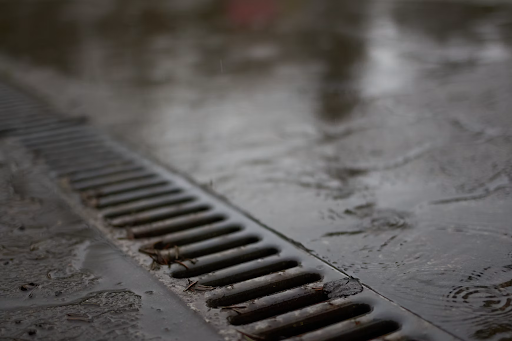
Surface grading alone cannot always handle concentrated roof runoff or flat backyard corners. Your scope of work should specify targeted hardware – such as French drains, catch basins, or channel drains – to capture excess water and pipe it to a legal discharge point. Guidance from the U.S. Environmental Protection Agency notes that shallow, planted rain gardens built with layered gravel, sand, and soil effectively collect and filter stormwater runoff.
Image source:https://unsplash.com/photos/a-metal-drain-on-a-wet-concrete-surface-CCjrm6A75GU
Protecting Your Budget With Itemized Scopes and Warranties
Strong paperwork keeps your renovation on schedule once heavy equipment arrives on your driveway. Before paying a deposit, verify that your contractor carries active state licensing alongside general liability and workers’ compensation insurance so you never bear accident liability. Review these four contract terms before finalizing your agreement:
- Verify insurance certificates: Request current policy documents directly from the insurer to confirm active liability and workers’ compensation coverage.
- Require itemized change orders: Mandate written price and timeline approvals before any crew performs extra excavation or drainage work.
- Tie payments to milestones: Schedule progress installments around completed inspections and base compaction rather than arbitrary calendar dates.
- Confirm workmanship warranties: Secure written multi-year guarantees covering hardscape settling, drainage flow, and structural wall stability.
Exterior upgrades deliver lasting comfort and curb appeal only when the ground beneath them stays dry and stable. Verifying lot slopes, subsurface drainage plans, and contractor credentials before work starts keeps your project on budget and shields your home from water damage. Take time to check every detail on paper now so you can enjoy your outdoor space with confidence for years.







Comment