
Preserving the Sound of Local Traditions: Exploring Seed Audio 1.5 for Cultural Documentation

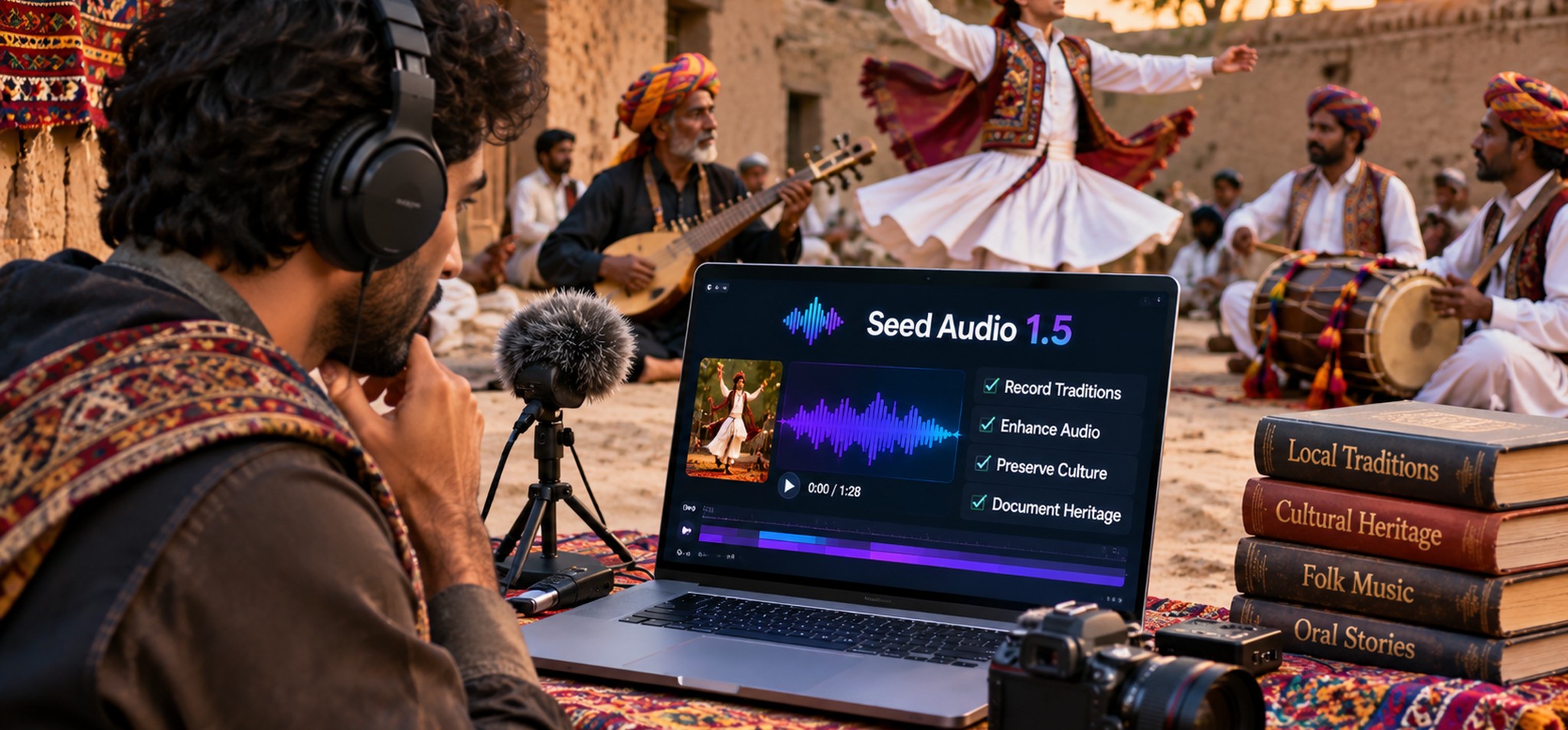
Cultural traditions are often remembered through more than photographs and written accounts. The sound of a craftsperson working, the rhythm of a community celebration, or the familiar calls heard in a traditional marketplace can carry memories that are difficult to describe in words. These everyday sounds help explain how people live, work, celebrate, and connect with their surroundings.
As communities change, some of these sound experiences become less common. Recording them thoughtfully can help educators, researchers, museums, and local organizations share cultural knowledge with future audiences. Seed Audio 1.5 can be explored as part of the creative process for developing supporting audio concepts, especially when a project combines recorded material with digital storytelling.
Sounds That Tell a Community's Story
Not every culturally important sound comes from a major ceremony or public performance. Many are part of ordinary routines. The sound of a traditional loom, the preparation of a regional dish, or the tools used by a local craft worker may reveal details about a community's skills and way of life.
These sounds can provide context that photographs alone cannot communicate. A visitor viewing an image of a pottery workshop may understand what the space looks like, but hearing the movement of tools and the rhythm of the work can offer another dimension. This is why cultural sound documentation should include everyday environments as well as special occasions. Both contribute to a fuller picture of local identity.
Start With the People Who Hold the Knowledge
Before recording or developing an audio presentation, project teams should identify whose knowledge they want to preserve. Cultural documentation should not treat communities simply as sources of interesting material. The people connected to a tradition should have a meaningful role in deciding how it is represented. A respectful project begins with conversations. Ask participants which practices they consider important, what stories they want to share, and whether certain sounds or activities should remain private. Some traditions may have restrictions around recording, public distribution, or commercial use.
Permission should be clear and informed. Participants should understand where recordings may appear and how they might be used. When possible, they should also have an opportunity to review the final presentation.
Four Types of Sound Worth Documenting
Different kinds of recordings can help build a richer cultural archive. The choice depends on the community, the purpose of the project, and the wishes of participants.
1. Traditional work and craftsmanship
Craft processes often involve distinctive sounds. Woodworking, weaving, metal shaping, and pottery all have recognizable rhythms and working environments. Recording these activities can help audiences appreciate the patience and skill involved.
2. Food preparation and shared meals
Food traditions include more than recipes. The sounds of grinding spices, preparing ingredients, cooking, and gathering around a meal can communicate how food is connected to family and community life.
3. Festivals and community gatherings
Public celebrations may involve music, announcements, movement, and conversations. These recordings can help document how people participate in an event, provided recording permissions and local expectations are respected.
4. Everyday language and oral histories
Stories, expressions, local vocabulary, and personal memories are valuable parts of cultural knowledge. Clear recordings can preserve individual voices and provide material for educational presentations, archives, and community exhibitions.
Where Seed Audio 1.5 Fits Into the Process
Authentic field recordings should remain the foundation when a project aims to preserve actual cultural sounds. Generated audio should not be presented as a genuine recording of a ceremony, craft process, language, or community environment. However, there may be creative situations where supporting audio concepts are useful. For example, an educational presentation might need a neutral transition between recorded interviews, or a digital exhibition may require a carefully designed atmosphere that does not claim to reproduce a specific historical event.
Seed Audio 1.5 can be explored for these supporting elements. It may help creative teams consider different audio directions while keeping authentic recordings and generated material clearly separate. Visual planning can also support the process. A project team might use Dreamina to develop an exhibition concept showing a traditional workshop, then plan how genuine recordings and clearly identified supporting audio could accompany the display. This creates a shared reference for designers, educators, and community contributors.
Building a Cultural Audio Archive That Remains Useful
Collecting recordings is only one part of preservation. Without accurate information, future users may not understand what they are hearing. Every recording should have useful descriptive details. These may include the location, date, language, activity, recording conditions, and the participant's preferred name or attribution. Sensitive personal information should only be included with permission.
Organization also matters. A recording of a craft process should not be stored under a vague label such as "workshop sound." A more descriptive title makes it easier for researchers and educators to find the material later. Archives should also consider file backups, access permissions, and long-term storage. Cultural recordings can be valuable for generations, so their preservation should not depend on one device or one person's account.
Avoiding Misrepresentation
Cultural storytelling requires particular care because audio can create strong impressions. A sound added for atmosphere may lead listeners to believe that an event happened in a particular way, even when the recording is fictional or reconstructed. Projects should identify reconstructed or generated material clearly. They should also avoid combining recordings from different communities or regions in ways that suggest they belong to the same tradition.
Translation and interpretation deserve similar attention. A spoken expression may carry meanings that do not transfer directly into another language. Whenever possible, involve knowledgeable community members in reviewing descriptions, subtitles, and explanatory material.
Making the Archive Accessible to New Audiences
A well-organized collection can support many kinds of learning. Schools may use short recordings to introduce regional crafts, museums may include them in interactive exhibitions, and community groups may create listening projects for younger generations. Accessibility should be part of the planning. Written transcripts, clear descriptions, and translated explanations can make recordings easier to understand. Listening stations should also offer comfortable volume controls and straightforward navigation.
Most importantly, audiences should be able to understand the context of each recording. A short explanation of who created a sound, why it matters, and how it fits into a tradition can turn an interesting clip into a meaningful learning experience.
Final Thoughts
The sounds of local traditions preserve details that may disappear when communities, workplaces, and everyday routines change. Recording these experiences with care can support education, cultural memory, and stronger connections between generations. Seed Audio 1.5 can contribute to the creative planning of cultural presentations through supporting audio concepts, while authentic recordings remain essential whenever a project claims to document real traditions. Respectful collaboration, accurate descriptions, clear permissions, and careful organization help ensure that cultural stories are shared responsibly and remain useful in the years ahead.
Frequently Asked Questions
What is cultural sound documentation?
It is the process of recording and describing sounds connected to a community's traditions, activities, language, work, and everyday life.
Can Seed Audio 1.5 replace recordings made within a community?
No. Generated audio should not be treated as authentic evidence of a real cultural practice. Original recordings and direct contributions from community members are essential for genuine documentation.
Why is permission important when recording cultural traditions?
Participants should understand how their voices, activities, and knowledge may be used. Permission helps protect privacy, cultural expectations, and the rights of the people involved.
How can cultural audio archives remain useful over time?
They need accurate descriptions, organized storage, secure backups, appropriate access controls, and enough contextual information for future audiences to understand each recording.
Can cultural sound collections be used in schools and museums?
Yes. With suitable permissions and explanations, they can support lessons, exhibitions, research activities, and interactive learning experiences.
Previously in Business news: Jingrui Proto Marks 20 Years of Rapid Prototyping and Advanced Manufacturing






Comment