If you’ve driven in Calgary between March and May, you know the feeling: a road that looked fine in the fall suddenly has craters deep enough to knock your coffee out of the cupholder.
Pothole season is practically its own season here, and it takes a real toll on your car’s suspension — often in ways that aren’t obvious until months later.
Why Calgary and Edmonton Get Hit So Hard
Potholes form when water seeps into small cracks in the pavement, freezes, and expands — then thaws again as temperatures rise. Alberta’s freeze-thaw cycles are especially aggressive: it’s not unusual to swing from well below freezing to above zero and back again within the same week, sometimes within the same day. Every one of those cycles widens existing cracks and creates new ones, which is why Calgary and Edmonton roads take such a beating every spring.
How Potholes Actually Damage Your Car
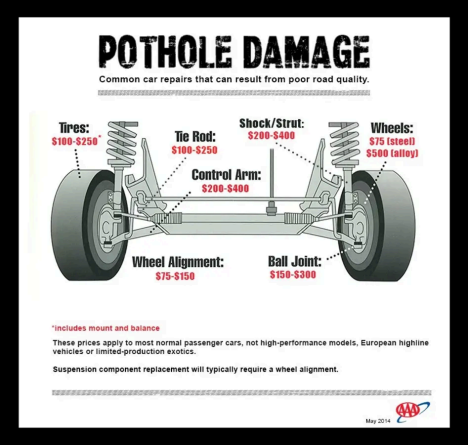
Hitting a pothole isn’t just a jolt — it’s a sudden, forceful impact that your suspension has to absorb in a fraction of a second. Depending on the size of the pothole and your speed, that impact can affect several systems at once.
Shocks and Struts
These are designed to absorb gradual road imperfections, not sudden impacts. A hard pothole hit can damage the internal seals or bend the strut itself, leading to a bouncier, less controlled ride.
Wheel Alignment
Even a moderate pothole hit can knock your wheels out of alignment. You might not notice it immediately, but it shows up over the following weeks as uneven tire wear or your car pulling slightly to one side.
Tires and Rims
A sharp-edged pothole can cause a sidewall bulge, a slow leak, or in more severe cases, a bent or cracked rim. Sidewall bulges are particularly important to catch early — they indicate internal tire damage and can fail suddenly, even at highway speed.
Control Arms and Bushings
These connect your wheels to the rest of the suspension and allow for controlled movement. A hard impact can bend a control arm or tear a bushing, leading to clunking noises and imprecise handling.
Steering Components
In more severe hits, the impact can transfer into the steering system itself, causing looseness in the steering wheel or a subtle pull that wasn’t there before.
Signs You’ve Got Pothole Damage (Even If You Didn’t Notice at the Time)
- A new vibration in the steering wheel, especially at highway speed
- The car pulling to one side when you’re not steering it that way
- Uneven or accelerated tire wear on one side
- Clunking or knocking noises over bumps
- A noticeably bouncier ride than before
- A bulge or blister on a tire sidewall
Any one of these on its own might seem minor, but they’re worth taking seriously — driving on a damaged suspension component for an extended period often turns a moderate repair into a more expensive one, and in the case of a compromised tire, it’s a genuine safety risk.
What to Do Right After a Hard Pothole Hit
- If it’s a serious hit, pull over when it’s safe and do a visual check — look for an obvious tire bulge, a flat, or fluid leaking near a wheel.
- Note how the car feels over the next several drives. New vibration, pulling, or noise that wasn’t there before is a signal something shifted.
- Don’t wait for a small issue to become a big one. A wheel alignment check after a hard hit is inexpensive compared to replacing a control arm or strut later.
Precautions to Reduce Pothole Damage
- Keep a bit more following distance in spring — it gives you more time to spot and avoid potholes rather than swerving last-second into another lane
- Slow down over rough patches rather than braking hard directly on top of a pothole, which concentrates the impact
- Keep your tires properly inflated — underinflated tires are more vulnerable to sidewall damage from a hard hit
- Get your alignment checked once a year, or immediately after a hit you know was significant
Getting It Checked Properly
Suspension damage isn’t always visible from a quick glance underneath the car, and some symptoms take a few weeks to show up clearly. A proper inspection checks alignment, the condition of your shocks and struts, and the tie rods and control arms for play or damage.
If you’ve hit a rough patch of road recently and something feels slightly off, it’s worth getting checked rather than waiting for it to get worse. Auto Mechanic in Calgary listings on Boommar make it easy to find a shop that can do a full suspension and alignment check. You can compare vetted Auto Repair Shops in Calgary to find one nearby before pothole season does any more damage.
The Bottom Line
Pothole season in Calgary and Edmonton isn’t just an inconvenience — it’s a real cause of suspension, alignment, and tire damage every single year. Catching the early signs and getting them checked promptly is a lot cheaper than waiting until a minor issue turns into a major repair.