
Position Sizing for F&O: The Rule That Keeps You Trading

Two traders have the same trade set up in NIFTY. They enter the same, stop the same, and get the same result. One year later, one has stopped trading, and the other is still going. Even with the best f&o app, the difference will be in position sizing.
Why does the same trade end so differently?
This comes down to how many lots they are trading. The entry will determine if you win your trade, but the sizing will determine how much you lose on a losing trade and how long your account will last. While skill is important, how long your capital lasts is what will get you to month 12. With f&o, the sizing is even more important as contracts are traded in set lots. 1 lot of NIFTY is 65 units; 1 lot of BANK NIFTY is 30. Leverage means that even small movements in the index will cause large movements in your account. Any small mistakes in sizing will compound quicker than small mistakes in timing.
What is the sizing formula?
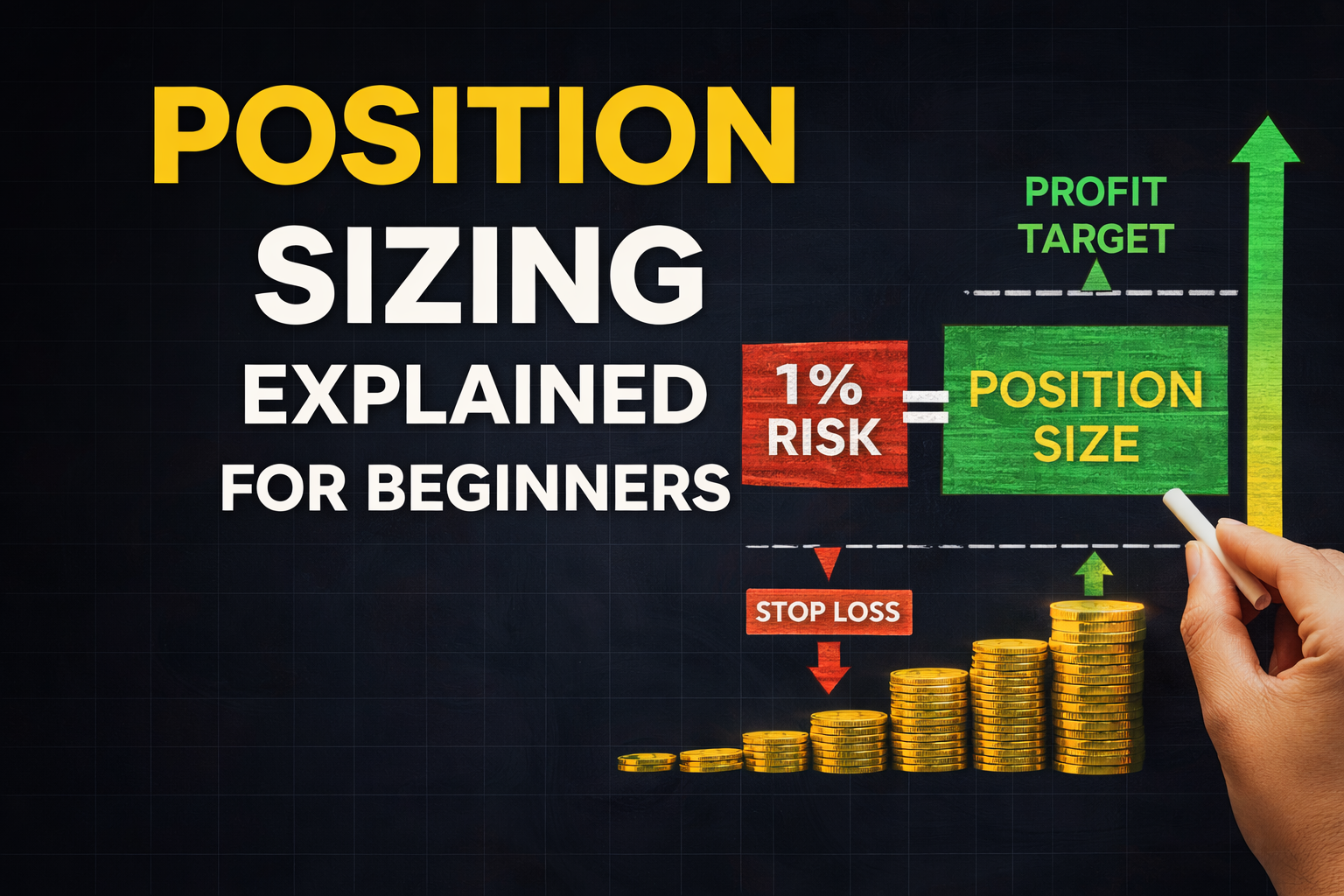
Lots = (Capital x Risk Per Trade) / (Stop Distance x Lot Size). Always round down. If you get 0, then the trade is too big for your account. This is most important when option & futures trading.
How does it work on a ₹5 lakh account?
If you have a ₹5,00,000 account and you are risking 1% per trade, you are risking ₹5,000 on your stop. If you have a 60-point stop on a NIFTY futures trade, you are risking ₹3,900 per lot. 5000 / 3900 = 1.28, so you would trade 1 lot. If you have a 100-point stop, you are risking ₹6,500. 5000 / 6500 = 0.77, so the trade does not fit. Rounding this up means that in reality you are risking 2% as you are trading 1 extra lot.
Why does defined risk make sizing easier?
With a bought option, you cannot lose more than the premium. If you buy a call at 120 and put a stop at 80, you are risking ₹2,600 per lot. However, if you do not put a stop, you are risking the full ₹7,800 premium. With a sold option, there is no natural limit. The stop will show how much you are risking. Gaps can cause your stop to be filled much worse than intended. With a spread, you know the maximum you can lose is the difference between the strikes minus the net credit x lot size. This means you are being honest with sizing.
Which extra limits protect a bad month?
By having a limit on how much you can lose per day, for example, 3x risk per trade, you will not get into a bad situation. Having a limit on how much you can be risking in total is also important. If you have 5 positions, all with 1% risk, you are risking 5%. Correlated positions will tend to lose together, for example, selling multiple NIFTY options. Finally, your sizing should be done on a schedule, for example, monthly. If you change your sizing after 1 win/loss, you are losing your discipline.
How can an F&O trading app help?
HDFC Sky has a margin calculator to show how much money you need for your position. A payoff analyzer to show how much you could make/lose. An option chain to compare strikes and premiums. A good f&o trading app will also have stop-loss orders and fast order entry. Options brokerage is flat ₹20 per order, meaning small sizes are realistic.
If you are disciplined with the maths, options & futures trading can become a long-term game.
Read More From Techbullion
Previously in Business news: How fundivi Is Disrupting Embedded Business Lending With a Single Line of Code






Comment