Outdoor LED Flood Light & Floodlighting

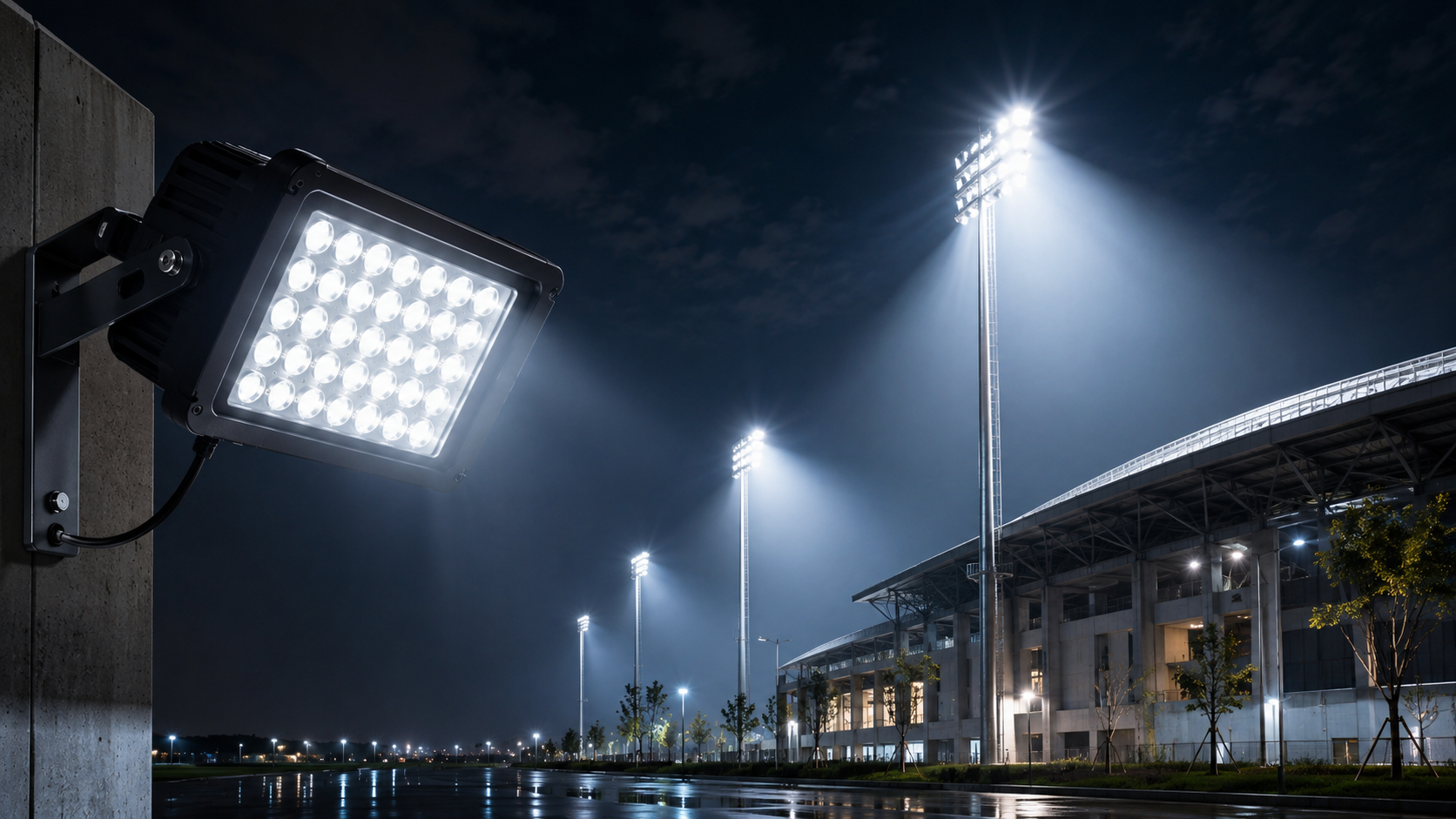
This guide provides a comprehensive examination of LED flood light technology, flood lighting design, and best practices for choosing, installing, and maintaining outdoor led flood lights to enhance illumination, energy efficiency, and outdoor security. The content addresses technical concepts such as lumen and wattage, compares led floodlight performance against traditional fixtures, and outlines practical considerations for residential, commercial, and large-area lighting applications, including parking lots, sports fields, and landscape lighting.
View China LED Flood Light Manufacturer-Guangqi Lighting for More Details
What is an LED flood light and how does flood lighting work?
An led flood light is an outdoor light fixture designed to deliver broad, high-intensity illumination across an outdoor area; flood lighting as a category emphasizes wide beam angles and uniform light distribution to illuminate facades, parking lots, lot light perimeters, and outdoor areas where comprehensive visibility is required. A typical outdoor led flood converts electrical power into light using light-emitting diodes, integrating a heat sink, driver electronics, and optical lenses or reflectors within a rugged housing to achieve consistent lumen output and long life. In operation, flood lighting relies on the selection of appropriate lumen levels, beam angle, and mounting height so that the delivered illumination uniformly covers the intended outdoor space, reduces dark spots, and minimizes glare while maintaining energy efficiency. Modern led outdoor flood fixtures often include integrated controls such as photocell sensors and motion detection, enabling automatic dusk-to-dawn operation and selective activation to support security light strategies and energy-efficient scheduling in both residential and commercial settings.
How does an led flood light differ from a traditional floodlight?
Led floodlight technology differs substantially from traditional floodlight solutions—such as metal halide, high-pressure sodium, and halogen—in several measurable ways: led light fixtures provide higher energy efficiency with superior lumen-per-watt performance, resulting in lower wattage for equivalent illumination; led fixtures exhibit instant-on capability without warm-up time and superior color rendition across specified color temperatures; and led outdoor flood fixtures achieve longer service life, often exceeding 50,000 hours, which reduces maintenance and replacement frequency. Additionally, modern outdoor led flood lights can be specified with selectable output and adjustable beam angles, photocell integration, and smart dimming controls, features not typically available in traditional floodlight fixtures. The housing and optical design of led floodlights also permit more precise control of spill light and glare, which enhances outdoor security and reduces light trespass compared to older, less directional fixtures.
What is lumen, wattage and light output for flood lighting?
Lumen and wattage represent two distinct but related metrics that inform selection of an outdoor flood light: lumen quantifies the total perceived light output of the fixture and directly correlates to the level of illumination on the ground, while wattage measures electrical power consumption. For flood lighting design, lumen output is the primary determinant of the lighting effect and required illumination levels for specific lighting applications—such as walkways, parking lots, or stadium lights—whereas wattage is an indicator of operating cost and energy efficiency. When comparing fixtures, specifying the required lumens per square meter or foot for the outdoor area and then selecting an outdoor led flood or commercial led flood lights with an appropriate lumen output and efficient led light driver ensures the desired illumination with minimal wattage. This approach allows designers to achieve required illumination levels economically, leveraging high lumen-per-watt ratings of energy efficient led outdoor flood lights to reduce both initial and lifecycle costs.
How does color temperature affect outdoor flood lighting?
Color temperature is a critical parameter for outdoor led flood applications because it influences visual clarity, perceived brightness, and the psychological and functional effects of illumination in outdoor spaces. Measured in kelvin, color temperature choices for outdoor security and landscape lighting range from warm (2700K–3000K) to cool (5000K–6500K); warmer temperatures create a more inviting atmosphere for residential outdoor spaces and landscape lighting, while cooler temperatures enhance contrast and color perception for security light and parking lots, improving detection and camera performance in outdoor security systems. Selecting the appropriate color temperature for an outdoor led flood light therefore involves balancing aesthetic objectives, safety goals, and compliance with local ordinances addressing light pollution; many led outdoor floodlight fixtures offer selectable color temperature options, enabling operators to tune the illumination to suit lighting applications such as stadium lights, sports field use, or subtle pathway illumination.
How do I choose the best outdoor led flood light for my property?
Choosing the best outdoor led flood light for a property requires systematic evaluation of site-specific requirements—such as target illumination level, coverage area, mounting heights, environmental exposure, and control preferences—alongside an assessment of energy efficiency and long-term maintenance needs. Begin by quantifying the outdoor area and desired illumination standards in lumens or lux, identify whether the application is residential, commercial, or for a high powered flood lights scenario such as a sports field, and determine the necessary beam angles and fixture counts to achieve uniform coverage. Consider whether integrated controls like a light with photocell, motion sensors, or selectable output are necessary for energy savings and security; review waterproof outdoor led flood ratings and corrosion-resistant housings for installations in coastal or harsh environments; and evaluate warranty, manufacturer support, and compliance with local codes. By prioritizing lumen output, led light efficacy, and durable fixture construction, property owners can select outdoor led flood and led security lights that meet illumination goals while optimizing energy efficiency and lifecycle cost.
What fixtures and mounting options should I consider (knuckle mount, adjustable)?
Fixture selection and mounting options directly impact the flexibility and effectiveness of outdoor flood lighting systems; common mounting approaches include knuckle mount fittings for wall-mounted aiming, slipfitter mounts for pole installations, and adjustable yoke mounts for temporary or highly variable aiming requirements. Knuckle mount fixtures provide robust, secure attachment with a range of tilt for directional targeting of led outdoor floodlights, making them suitable for focused security light and facade wash applications. Adjustable fixtures and beam control accessories enable installers to fine-tune the coverage pattern to minimize glare and light spill while ensuring appropriate lot light distribution and even illumination across parking lots and outdoor areas. For commercial led flood lights and led parking lot solutions, mounting height, aiming brackets, and the physical robustness of the fixture are pivotal; selecting corrosion-resistant, waterproof outdoor led flood fixtures with adjustable mounting options ensures long-term reliability and adaptability to evolving lighting applications.
Should I prioritize lumen output or wattage when selecting an outdoor led flood?
When specifying an outdoor flood light, prioritize lumen output to ensure adequate illumination and coverage, while using wattage as a secondary metric to evaluate energy efficiency and operating cost. Lumen output defines the actual light available to illuminate an outdoor area and is the correct basis for meeting safety and security standards; high lumen-per-watt performance indicates that a fixture can deliver the required lumen output with lower wattage consumption, making it energy efficient. Consequently, compare fixtures based on lumens and efficacy (lumens per watt) rather than wattage alone, and consider selectable output options that permit future adjustments to lumen levels for changing site requirements. This approach enables selection of lighting that provides the necessary illumination for security light and landscape lighting while remaining energy efficient and cost-effective over the fixture lifespan.
Which best outdoor led flood lights are recommended for residential vs commercial use?
Recommended led outdoor flood lights vary according to application scale and performance demands: for residential use, choose compact outdoor flood fixtures with moderate lumen outputs, warm to neutral color temperatures, adjustable knuckle mount options, integrated photocell controls, and lower wattage ratings that balance ambiance and security without excessive glare. For commercial applications and large-area lighting—such as parking lots, stadium lights, or industrial yards—specify commercial led flood lights and high powered flood lights with high lumen outputs, robust drivers, selectable outputs, higher IP ratings for waterproof outdoor led flood lights, and mounting systems designed for pole or high mast installations; these fixtures should also support photocell and networked controls for centralized management. For mixed-use properties, hybrid solutions incorporating adjustable, selectable fixtures and outdoor security lights with motion sensors provide scalable performance that meets both residential comfort and commercial safety specifications.
What are common led flood light applications and where should I install them?
Common flood light applications include perimeter security for residential and commercial properties, general area illumination for parking lots and lot light coverage, landscape lighting to illuminate walkways and architectural features, and large-area lighting such as stadium lights and sports field flood light installations. Installation location is determined by the intended function: place led security lights and outdoor flood fixtures at building corners, entryways, and pathways to provide direct illumination of outdoor areas and to illuminate potential hiding spots; mount parking lot and led parking lot fixtures on poles at uniform spacing and height to deliver even lot light coverage; and deploy high powered flood lights for sports field and stadium lights at elevated positions to generate uniform vertical and horizontal illumination for play surfaces and spectator areas. Proper placement, along with beam angle selection and aiming, ensures that each outdoor led floodlight achieves its intended lighting application while minimizing glare and light pollution.
How do I use led flood light applications for parking lots and lot light coverage?
Effective led flood light applications for parking lots require a lighting layout that balances uniformity, adequate illumination levels, and energy efficiency: determine the required lux levels for the parking lot, select led outdoor flood lights or led parking lot fixtures with appropriate lumen outputs and beam distributions, and design pole spacing and mounting heights to meet uniformity ratios and minimize dark zones. Incorporate photocell controls for dusk-to-dawn operation and consider motion-activated dimming strategies to reduce energy use during low-occupancy periods while maintaining security. High-quality outdoor flood fixtures with selectable output and adjustable aiming allow site-specific optimization; additional considerations include placement to avoid glare into driver sightlines, proper shielding to satisfy light trespass ordinances, and corrosion-resistant housings for longevity in challenging environments.
Can flood lighting be used for landscape lighting and illuminate walkways?
Flood lighting can be deployed for landscape lighting and walkway illumination when carefully selected and aimed to produce subtle, even lighting rather than overwhelming brightness; low- to moderate-lumen outdoor led flood lights with narrow beam options or adjustable optics work well for illuminating pathways, trees, architectural elements, and entranceways while preserving ambiance and safety. For landscape lighting, select fixtures with appropriate color temperature—often warm to neutral tones—to accent textures and colors of hardscape and vegetation, and position fixtures to avoid direct glare toward residents or neighbors. Integrating photocell controls and timers with selectable output and dimming capabilities ensures that landscape flood lighting provides safety and visual interest while remaining energy efficient and respectful of nocturnal ecosystems and local lighting ordinances.
How do commercial led flood lights differ for large-area and high powered flood lights?
Commercial led flood lights designed for large-area and high powered flood lights have distinct characteristics that set them apart from smaller residential fixtures: they provide substantially higher lumen outputs and often incorporate modular arrays of led light engines to achieve stadium-grade illumination, deliver specialized optical distributions for uniform beam control, and include robust thermal management and surge protection to support long operational cycles. These fixtures are engineered for pole or high-mast mounting, support selectable lumen output for flexible performance, and typically include networkable controls for centralized dimming and scheduling. Their housings are built to a higher durability standard with elevated IP ratings for waterproof outdoor led flood lights and corrosion-resistant finishes to withstand the rigorous demands of continuous commercial operation in outdoor areas such as sports fields, large parking structures, and industrial yards.
How do outdoor led flood and led security lights improve safety and security?
Outdoor led flood and led security lights improve safety and security by increasing visibility in outdoor areas, deterring criminal activity through well-lit perimeters, and enhancing the effectiveness of surveillance systems and human detection. Consistent and strategically placed illumination reduces shadows and blind spots that can harbor threats, supports facial recognition and license plate capture for cameras, and provides occupants and visitors with clear navigation cues for pathways and entry points. The reliability and instant-on properties of led outdoor floodlight fixtures ensure that illumination is available when needed, while integrated controls such as photocell and motion sensors provide responsive lighting that conserves energy without compromising security. When combined with established lighting design practices—appropriate lumen selection, correct mounting heights, and carefully aimed fixtures—led security lights form an integral component of a comprehensive safety strategy for outdoor spaces.
Are outdoor led floodlight and led security lights effective as a security light solution?
Outdoor led floodlight and led security lights are effective security light solutions when they are selected and installed as part of a holistic security plan that includes strategic placement, sufficient illumination levels, and compatible controls. Effectiveness depends on delivering uniform light to critical zones such as entrances, access points, and perimeter boundaries, mitigating concealment opportunities, and ensuring reliable operation under all environmental conditions. Additional enhancements—such as combining illumination with motion-activated lighting, surveillance cameras, and signage—amplify deterrence and detection capabilities. The energy efficiency and long operating life of led outdoor floodlights also ensure continuous operation and lower maintenance demands, which sustains security levels over extended periods without frequent fixture replacement.
Should I use motion sensors or photocell controls with led security flood lighting?
Using motion sensors or photocell controls with led security flood lighting is advisable to optimize energy efficiency and operational effectiveness: photocell controls enable automatic dusk-to-dawn activation, ensuring outdoor areas are consistently lit during nighttime hours, while motion sensors provide on-demand intensification of light when activity is detected, creating dynamic deterrence while conserving energy during inactive periods. The selection between photocell, motion sensor, or a combined approach depends on site usage patterns and security objectives; for example, parking lots and lot lights often rely on photocell for continuous illumination with motion-based dimming to reduce energy consumption, whereas residential areas may prefer motion-activated security light strategies to minimize neighbor disturbance and emphasize instant detection. Many modern outdoor led flood fixtures support integration of both control types and selectable output levels, permitting site-tailored control strategies that balance safety, privacy, and energy efficient operation.
What placement and illumination levels are ideal for deterring intruders?
Ideal placement and illumination levels for deterring intruders rely on consistent coverage of perimeters, entrances, and vulnerable outdoor areas with sufficient lux or foot-candle values to enable easy detection; typical recommendations include higher illumination at doorways, loading areas, and access points, moderate uniform lighting across parking lots and walkways, and accent lighting along fences and perimeter lines. Mounting fixtures at appropriate heights—high enough to reduce tampering risk but low enough to provide useful illumination—and aiming them to eliminate deep shadows and backlighting of potential hiding spots are critical. Achieving recommended illumination levels for outdoor security applications often involves specifying specific lumen outputs per square meter, ensuring uniformity ratios are controlled, and using adjustable, selectable fixtures to fine-tune coverage, thereby creating an environment where intruder concealment is minimized and surveillance capabilities are enhanced.
What features should I look for: selectable, adjustable, waterproof outdoor led flood lights?
When you are evaluating features for outdoor led flood lights, it is worth prioritizing what can be selected and adjusted, plus a truly waterproof build, and then solid controls for different lighting jobs and changing environmental exposure. Usually, the selectable pieces are things like adjustable lumen output, and color temperature options too, so one fixture can be tuned for multiple illumination situations. Then there is adjustable beam angles, and also knuckle mount fittings, which helps with precise aiming, and lets you reconfigure it later as the site requirements shift. Look for outdoor led flood lights with the right IP rating, and corrosion resistant coatings, because they will keep performing in rain, in salt laden air, and around industrial locations where conditions can be harsh.
Other feature ideas are also important, like surge protection, and whether it can work with an integrated photocell or motion sensor, and how practical it is to service, for example through a modular component layout that makes replacement easier. Together, these choices improve flexibility, and also support longer useful life for flood light fixtures in many kinds of outdoor settings.
Selectable or adjustable capability for beam angle and output control basically means the light fixture can be set up at installation, or later after install, to change how the beam spreads and how much light it puts out, without needing to replace the whole fixture. In practice, “selectable” beam angle is usually achieved with removable or switchable optic options, meaning you can swap between a narrow spread, a medium spread, and a wide spread depending on what the outdoor area needs, like corridor lighting, a facade wash, or more general broad area coverage.
For the output part, adjustable means the lumen output can be increased or reduced through the fixture settings so brightness can be balanced against energy use. This is helpful because lighting requirements often change, for example across different seasons or shifting site operations, especially in multi-use outdoor areas and commercial led flood lights, where consistent security lighting still matters but the application may not stay the same.
Honestly, waterproof outdoor LED flood lights and the right IP ratings are really important, like more than people expect. In practice, the IP rating basically tells you how well the fixture handles dust and moisture, so you can judge the protection level without guessing. When a flood light is going to be used outside, it is exposed to rain, snow, wind driven grit, and sometimes even salt spray, so a minimum IP65 is usually recommended. That IP65 helps prevent water jets and dust from messing with the inner electronics.
If the location is more demanding, like coastal areas or places with constant spray , the required level can go higher, IP66 or IP67 is sometimes used. Also, beyond the number itself, the construction matters, since marine grade or corrosion resistant materials can make a big difference over time. Choosing waterproof outdoor LED flood lights this way helps reduce the likelihood of early failures, it also cuts down on recurring maintenance caused by moisture degradation. As a result, your outdoor security lighting and lot lighting stay powered during adverse weather, which protects your investment in the lighting infrastructure and keeps illumination reliable for safety and security goals.
Do adjustable fixtures offer better coverage for sites that change over time?
Yeah , in practice they do, because adjustable fixtures let installers fine tune beam angles and light output so it better matches the way the area is laid out and how it gets used later. That means one outdoor led floodlight model, with a more adaptable design, can end up covering multiple lighting needs instead of needing a completely different fixture every time the site’s function shifts. For example on a site that has both pedestrian paths and vehicle lanes, or on a commercial setup where the outdoor space gets repurposed later, adjustable fixtures make it easier to manage inventory, and they reduce the need to stock many separate fixture types. At the same time, the light distribution can be adjusted to minimize glare , improve uniformity, and react to changing security needs. So overall, adjustable and selectable fixtures are a flexible, cost conscious approach for achieving tailored illumination across variable outdoor spaces, and for long run lighting applications.
How can I optimize energy efficiency and maintenance for outdoor led flood lights?
Getting the best energy efficiency and maintenance outcome for outdoor led flood lights really comes down to a few practical choices that you can actually stick with. Start by choosing high-efficacy led light fixtures, then use controls like photocell sensors timers, and occupancy based dimming, plus plan the layout so you do not end up with needless brightness. This means careful lumen targeting and picking the right beam, because over-illumination wastes power and causes glare, and nobody wants that.
Look for fixtures that deliver strong lumen-per-watt performance, so you can use less wattage while still hitting the needed lumen level. Also try to select fixtures with multiple output levels, because adjustable output options make it easier to trim illumination during off peak hours. Regular maintenance matters too: clean the lenses on a periodic schedule, check the mounts and verify the aiming still makes sense, and run scheduled checks on the drivers or other key parts. Keeping the optics clean and the alignment correct helps preserve performance and can extend service life.
When you add smart controls and deliberate dimming strategies you usually see lower energy draw, and you also cut down thermal stress on the led components, which helps lifespan. Taken together, these steps can reduce total cost of ownership for outdoor flood light fixtures in both residential settings and commercial installations.
How do led light efficiency and lumen-per-watt affect operating costs?
Led light performance, especially how efficiently it turns electricity into visible output, has a direct effect on operating costs. This is because stronger efficacy means less electrical wattage is needed to reach the same lumen level, so energy use drops and the utility bills follow. So when you are comparing outdoor led flood fixtures, looking at lumen-per-watt lets buyers estimate the likely energy savings versus older technologies. And when you pair that with the long service life of led outdoor floodlight fixtures plus less frequent maintenance visits, the higher-efficacy options tend to show meaningful lifecycle cost improvements. After a while, the initial upcharge paid for energy efficient led outdoor flood lights is commonly balanced out by lower power draw, fewer replacement cycles, and less labor. That is why lumen-per-watt becomes a key line item in cost-benefit evaluations, whether the job is a small exterior area, or bigger projects like stadium lights and parking lot installations.
Maintenance for outdoor flood light fixtures is basically about keeping everything mechanically steady, electrically safe, and thermally healthy. You should periodically check the mechanical mounts, plus the knuckle mounts if the design uses them, because vibration and weather can slowly loosen things. At the same time, clean the lenses and the heat sinks. If that gets clogged with dust or debris, the light output can drop and the LEDs can run warmer than they should. After that, check all electrical connections, and make sure they are tightened and properly seated, especially at the junction box area, because moisture intrusion loves weak points. If the fixture has a photocell or motion sensor, test the sensing function during service visits, and make any adjustments if needed.
When it comes to replacements, drivers or LED modules may need swapping at end of life, but only if the fixture is meant for modular service. For commercial LED flood lights and high powered flood lights, the plan should also account for access equipment when the fixture is elevated. Replacement cycles matter, so it helps to track performance over time rather than waiting for full failure. Choosing fixtures with extended warranties, modular components, and easy to service layouts can reduce downtime and lower long term maintenance cost. Finally, scheduled maintenance should verify aiming and uniformity, so the application still matches the original intent, like landscape lighting coverage or reliable parking lot illumination.
Yes, smart controls and dimming can help both longevity and energy use. When led outdoor flood lights are dimmed intelligently, the electrical stress on the driver and the led module is reduced , which lowers operating temperatures and can meaningfully extend lifespan. In addition, demand-based operation means the lights do not run at full output all the time, especially during low-occupancy periods, so you waste less power.
If you pair networked control systems with occupancy sensors and time schedules, a facility manager can adjust illumination to what is actually needed, cutting unnecessary lumen output while supporting better component durability. Adaptive approaches, like part-night dimming in parking areas or scene based control for sports fields and stadium lights, can deliver real energy savings and strengthen the overall lifecycle economics for outdoor led floodlight installs, while still preserving the safety and security performance that outdoor spaces require.
What are installation, safety and compliance considerations for led outdoor flood?
For commercial led flood lights and lot lighting, yes you often need permits or at least some level of compliance, but it depends on where you are, what kind of brightness output you plan, and how the lights are aimed. Many municipalities require checking electrical code compliance, and sometimes zoning rules tied to glare, light trespass, and the maximum allowed lumens.
In addition to the local electrical requirements, lot lighting plans may be reviewed for things like placement, mounting height and aiming, and also whether the fixtures meet the site’s environmental expectations. If you are near coastlines or in areas with chemical exposure, you may need corrosion resistant housings and finishes, and you will want them to match the expected rating for the location.
Also, utility rebate programs can come with their own paperwork, and sometimes they require documentation of fixture locations and photometric layouts. That can turn into a compliance item even if the city permit process is separate.
Common actions that usually help before you install:
– confirm the local permitting requirement with the building or electrical authority
– use a licensed electrician for wiring and grounding
– verify surge protection and correct conduit usage
– document mounting positions and aiming details for inspection or maintenance
If you tell me your city and state, plus whether it’s parking lot, perimeter security, or building facade lighting, I can help narrow down what permits are commonly required and what rules typically show up in plan reviews.
Permits and compliance for commercial LED flood lights and lot lighting are often required and they do vary by municipality, like a lot. Usually the electrical permits cover wiring work, and the planning department may want approval for where the poles go, plus the expected light levels. You also have to follow local ordinances, that limit light pollution, glare, and the general brightness that can travel off site. For many commercial projects, photometric studies are expected, they show compliance with required lux levels and spill light limits, and sometimes utility rebate programs demand performance standards along with verified installation documentation. Getting an early conversation with the local authorities and the utility provider helps, so the parking lot design, stadium lighting layouts, and other LED outdoor flood installations meet the regulatory expectations without running into expensive redesign sessions later.
For safe installation, what guidelines cover wiring, the mounting height, and aiming?
Choosing corrosion-resistant outdoor flood fixtures, especially for coastal or harsh environments, is mostly about the materials and how they’re protected in real-world exposure. You want to look for housings made with marine-grade aluminum or stainless steel, then check the protective coatings, like powder coating that is designed for salt atmospheres. Also confirm the fasteners, gaskets, and mounting hardware are rated for corrosion resistance, because that little piece often fails first, not the main body.
You should also pay attention to how the fixture seals. A solid weatherproof rating such as IP66 or higher usually helps a lot, especially when wind driven rain and salty mist are present. If the product has a corrosion-resistant finish, it is worth verifying whether it’s been tested for coastal use. For harsh environments with dust, blowing sand, or chemical exposure, consider an appropriate ingress protection rating plus a design meant for particulates, not just water.
Finally, make sure the electrical internals are protected, including proper gland seals for the wiring, sealed junction access (if applicable), and good cable entries. Pairing that with surge protection and correct grounding is important, though it’s not the same as corrosion resistance. If you tell me your location climate, like “salt spray,” “high humidity,” or “industrial chemicals,” and whether you’re mounting near the waterline, I can suggest what specs to prioritize.
Pick corrosion-resistant fixtures for coastal or other severe surroundings by choosing materials and final treatments that are meant to resist salt spray, persistent humidity and industrial contaminants. For instance, marine-grade aluminum with anodized or powder-coated finishes can be used, plus stainless steel fasteners that hold up better over time. Also look for sealed, gasketed housings with high IP ratings, especially for outdoor led flood lights that must handle rain, washdown moisture, and weather exposure.
Then confirm the manufacturer corrosion testing and the warranty terms that actually match the conditions you have, coastal, chemical, or industrial. You can also add extra protections such as sacrificial coatings, and follow a regular maintenance schedule to check, clean, and treat the components that get hit first. These steps help preserve the frame strength and electrical safety of outdoor led flood fixtures in hard use settings, keeping reliable illumination for outdoor security lighting long enough.