
Online PLC Programming Courses

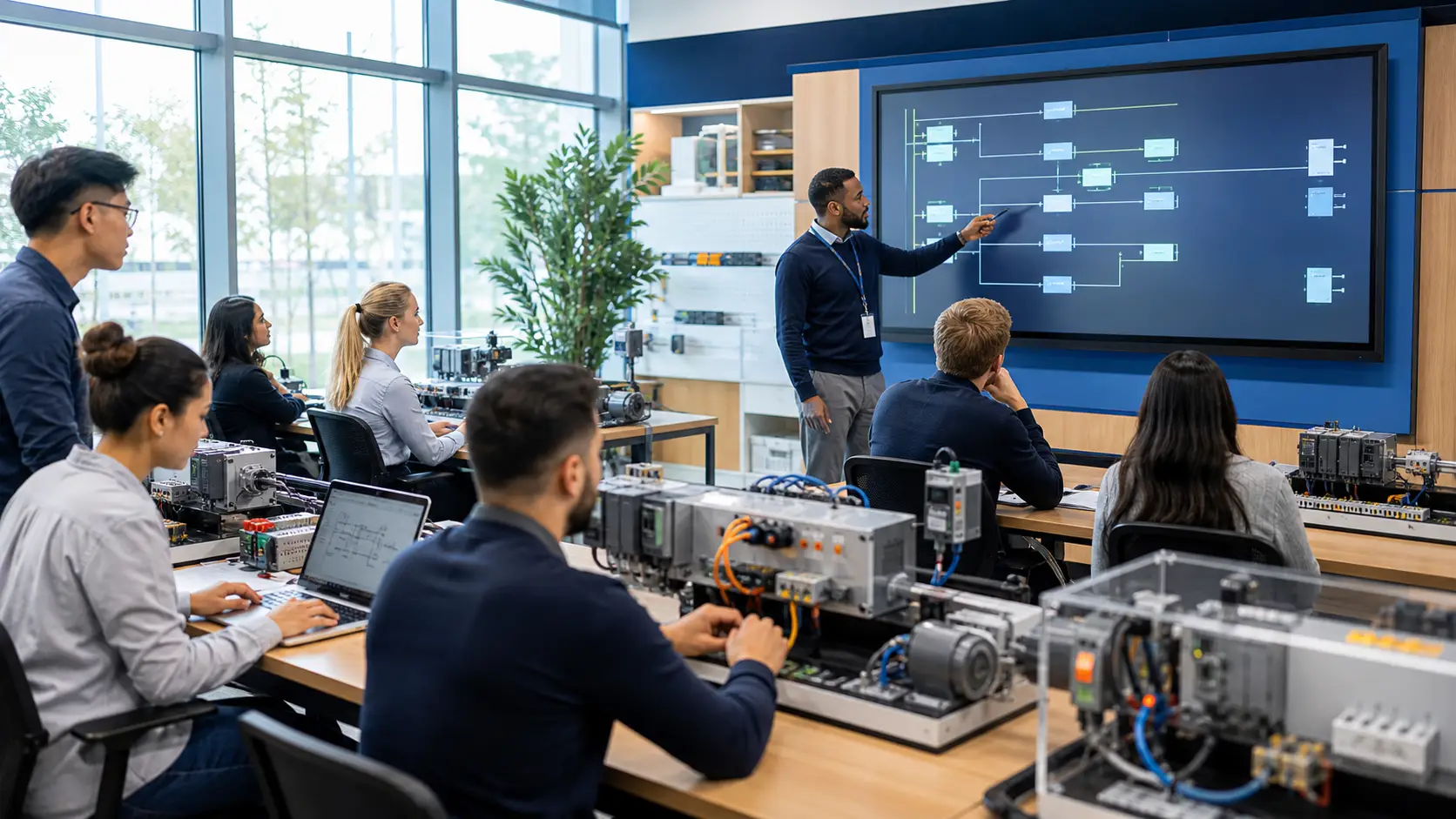
There’s a shift happening in the world of industrial automation education, and it’s changing the way engineers, technicians, and aspiring automation professionals learn some of the most in-demand technical skills in modern industry. For years, gaining hands-on knowledge of programmable logic controllers meant enrolling in expensive training programs, attending in-person workshops, or simply learning on the job through trial and error. Today, online PLC programming courses have made it possible for anyone with a computer and a genuine desire to learn to build a solid foundation in industrial automation — on their own time, at their own pace, and without breaking the bank.
The Skills Gap in Industrial Automation
Before diving into what these courses offer, it’s worth understanding why they matter so much right now. Manufacturing, utilities, food production, and countless other industries are becoming increasingly automated. Machines are doing more of the heavy lifting, but they still need skilled human professionals to program, maintain, and troubleshoot them. At the heart of most of these automated systems is a Programmable Logic Controller — a specialized industrial computer that manages the logic controlling everything from conveyor belts and robotic arms to pumps and packaging lines.
Despite the growing demand for automation expertise, there is a well-documented shortage of qualified professionals who truly understand how these systems work. Companies are actively struggling to find people who can walk onto a facility floor and immediately contribute. Online learning has emerged as one of the most effective solutions to this problem, putting quality education directly in the hands of motivated learners around the world.
What You Actually Learn in These Courses
One of the most common questions from beginners is straightforward: what does PLC Training actually cover? The answer depends on the course level, but most well-structured online programs take learners through a logical progression that starts with the fundamentals and builds toward real-world application.
At the beginner level, courses typically introduce students to the basic architecture of a PLC system — how inputs and outputs work, how a controller processes logic in a scan cycle, and how industrial components like sensors, actuators, and relays connect to the overall system. From there, learners move into programming languages, with Ladder Logic being the most common starting point due to its visual, relay-based design that many electrical professionals find intuitive.
More advanced courses go deeper into topics like:
- Timer and counter instructions — essential for controlling sequences and tracking production counts
- Data handling and math functions — used for monitoring process variables and performing calculations
- Analog input and output programming — critical for applications involving temperature, pressure, and flow control
- Troubleshooting techniques — arguably the most practical skill any automation professional can develop
Understanding PLC Programming at this level doesn’t just make someone better at their job — it makes them indispensable in environments where downtime costs thousands of dollars per minute.
Why Online Learning Works for Technical Subjects
A common skepticism about learning technical subjects online is that you can’t truly understand something hands-on without physically being in a lab or on a factory floor. While there’s certainly value in real-world experience, modern online PLC courses have become remarkably sophisticated in how they simulate that experience.
Many platforms now include software-based simulation tools that allow students to write actual ladder logic, run virtual programs, and test how their code would behave in a live environment — all without needing physical hardware. This kind of interactive learning is a game changer for people who don’t yet have access to industrial equipment.
Beyond simulations, the format of online learning itself offers genuine advantages:
Flexibility for working professionals — Many people pursuing PLC training are already employed in related fields. Online courses allow them to study in the evenings, on weekends, or during downtime without needing to take time off work.
Self-paced progression — Complex concepts in automation don’t always click the first time. Online learning gives students the freedom to revisit lessons, pause and practice, and truly absorb material before moving forward.
Access to experienced instructors — Quality online courses are often developed and delivered by seasoned automation professionals with decades of real industry experience. This kind of expertise would have been difficult to access outside of corporate training programs in the past.
Affordable pathways — Compared to traditional technical colleges or in-person workshops, online courses represent a significantly lower financial investment while delivering comparable — and sometimes superior — educational outcomes.
Who Should Enroll?
Online PLC programming courses are not limited to one type of learner. The range of people who benefit from this training is wider than most people expect.
Electricians and electrical technicians looking to expand their role beyond wiring and into programming are a natural fit. Their existing knowledge of circuits and control systems gives them a strong foundation to build on.
Mechanical engineers who work alongside automated systems but have limited programming knowledge often find that even a basic understanding of PLC logic dramatically improves their ability to contribute to troubleshooting and system design conversations.
Maintenance professionals who service automated equipment benefit enormously from understanding the logic that controls the machines they maintain every day. Reading a program and identifying a software-related fault is an incredibly valuable skill in a maintenance role.
Career changers seeking to enter the high-demand field of industrial automation will find that a completed online PLC course significantly strengthens a resume and demonstrates genuine initiative to potential employers.
Recent graduates from technical and engineering programs often find that their academic training doesn’t fully prepare them for the specific tools and languages used in industrial environments. Online courses bridge that practical gap quickly and effectively.
The Bigger Picture
Automation is not a trend — it’s the direction that virtually every industry is moving. The professionals who will succeed in the coming decades are those who proactively build skills that align with the realities of modern manufacturing and industrial operations. Online PLC programming courses represent one of the most direct and practical ways to do exactly that.
Whether you’re completely new to the field or looking to sharpen existing knowledge, the opportunity to learn has genuinely never been more accessible. The question isn’t whether this knowledge is valuable — it clearly is. The question is simply when you’ll decide to start building it.







Comment