From garbled crane calls to warehouse dead zones, a new reliability standard targets the communication failures that silently erode safety and productivity.
Communication failures cause costly delays. See how RETEVIS Industrial Two Way Radios and a new 3-tier reliability standard tackle the specific challenges of construction sites and warehouses to keep operations safe and on schedule.
On a bustling construction site or within a sprawling distribution center, communication is the real-time nervous system of the operation. It’s not just about coordination—it’s the primary, active layer of safety protocol and the most critical guardrail of productivity. A missed or garbled instruction over a crackling radio can mean a misaligned lift, a hazardous situation, a halted picking line, or a loading bay bottleneck. Despite this, two-way radios are often procured as a generic commodity, not as specialized, mission-critical infrastructure.
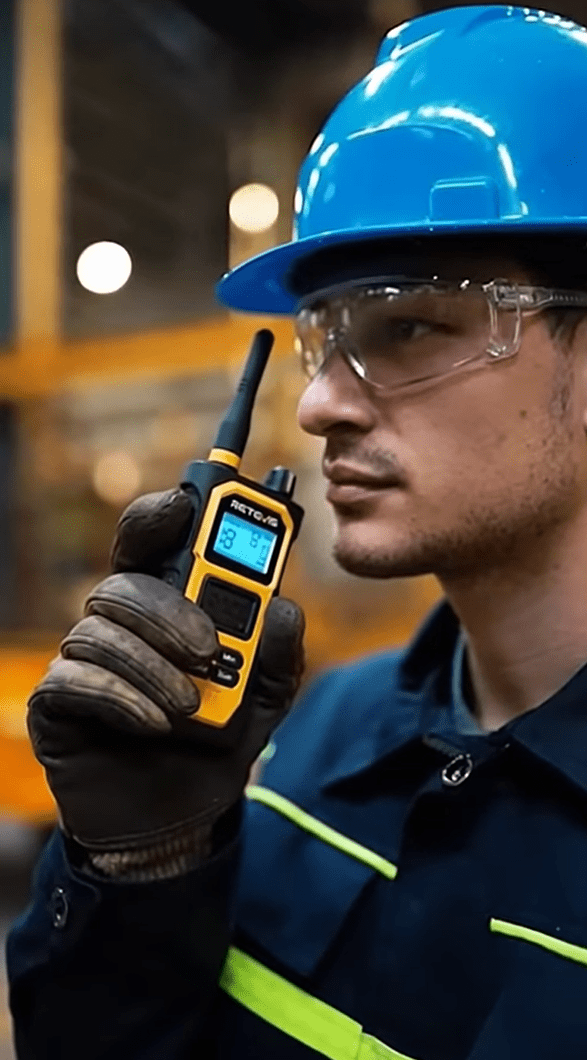
Targeting this exact operational vulnerability, RETEVIS is applying a rigorous, engineering-based lens to industrial communications. The company is releasing its detailed “Industrial Two Way Radio Communications Reliability Standard Guide,” providing project superintendents, site foremen, and warehouse operations managers with a formal framework to specify RETEVIS Industrial Two Way Radios as essential safety and productivity tools. This initiative is paired with a free, site-specific Reliability Diagnostic, aiming to shift the industry conversation from anecdotal frustration to a data-informed strategy for risk mitigation and efficiency gain.
“The gap between a generic ‘rugged’ radio and a true industrial communication tool isn’t about brand; it’s about predictable performance under the specific, relentless duress of a job site or a warehouse,” says a RETEVIS solutions expert. “A five-minute delay cascading from a misunderstood crane instruction, or a 20% drop in pick rates due to radio dead zones in high-bay storage, translates directly into thousands in lost revenue and compounded safety risks. Our standard helps quantify and eliminate that vulnerability at its source.”
Decoding the On-Site Challenge: A Framework for Construction and Warehousing
The RETEVIS standard addresses the most common and critical failure points in these two high-stakes environments:
For Construction Sites:
Intelligibility in Extreme Noise: With ambient noise from machinery, tools, and equipment often exceeding 100 dB, advanced digital noise cancellation and high-output speakers are non-negotiable. The standard prioritizes audio processing that isolates the human voice, ensuring critical warnings to crane operators or ground crews are heard correctly the first time.
Durability Against Physical Abuse: A device must survive the inevitable: repeated drops from scaffolding or ladders onto concrete, exposure to relentless dust, debris, and vibrations. Standards based on MIL-STD-810H drop, shock, and vibration testing are framed as a direct investment in equipment uptime and worker safety.
All-Weather, All-Day Operation: Two Way Radios must function from the freezing cold of a morning concrete pour to the blistering heat of a steelwork site. Wide operational temperature ranges and high ingress protection (IP67/IP68) against rain and dust are specified as core requirements for RETEVIS Industrial Two Way Radios.
https://www.youtube.com/watch?v=xrGRfYGBdB8&list=PLKXHRXIzHhhKc9wy41la7r33eu8ei1TqW&index=3
For Warehouses & Distribution Centers:
Conquering the “Metal Maze” Effect: High-density metal shelving creates severe radio frequency dead zones. The standard emphasizes robust RF design and optional repeater system compatibility to ensure seamless, full-facility coverage, preventing dropped calls that halt forklift traffic.
Ergonomics for the Mobile Worker: Devices must offer simple, one-handed operation, intuitive controls, and secure, ergonomic carrying options for forklift drivers and pickers who are constantly on the move.
Battery Life for Marathon Shifts: A radio dying mid-shift doesn’t just silence a worker; it removes a vital node from the logistics network. The standard mandates battery systems that reliably last a full 12+ hour shift, with clear indicators to prevent unexpected failure during peak operations.
From Reactive Fix to Proactive Strategy: The Reliability Diagnostic
Beyond the framework, RETEVIS’s diagnostic service helps operations teams move from reactive problem-solving to proactive planning. By analyzing the specific acoustic, physical, and layout challenges of a site, the service provides a gap analysis against the three-tier reliability standard (Basic Durability, Environmental Tolerance, Ultimate Safety), offering a clear roadmap for investment.
“The future of construction and warehousing is built on seamless coordination and unbreakable safety protocols,” the expert concludes. “The two way radio is the vital, human-centric link in that chain. Ensuring that link is as reliable as the structural steel or the warehouse management system is no longer optional—it’s a fundamental responsibility for any operation focused on safety, efficiency, and bottom-line profitability.”
For industry professionals seeking to fortify this critical link, the “Industrial Two Way Radio Communications Reliability Standard Guide” is available for download from RETEVIS. Explore how purpose-built RETEVIS Industrial Two Way Radios are engineered to meet the rigorous demands of the modern job site and logistics hub.