
Why Multilingual Product Documentation Matters for Repair and Product Longevity

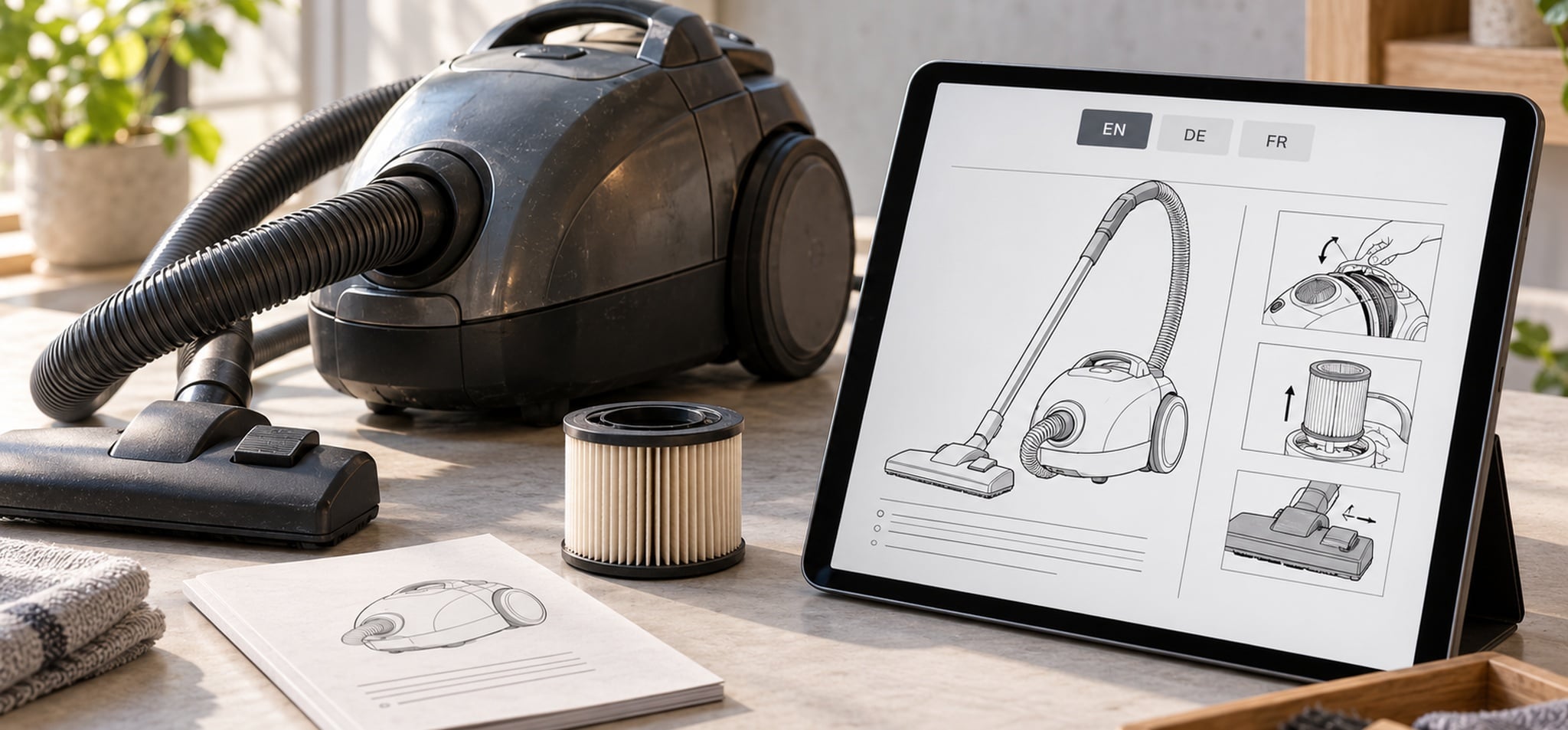
Buying second-hand means accepting a few small gaps. A scratch on the casing. A remote with worn buttons. Missing instructions are the easiest thing to ignore, until a warning appears or a part needs cleaning and the new owner has no idea where to begin.
Often the booklet was binned years ago. The manufacturer’s old download link doesn’t work anymore. Sometimes a copy does turn up, but it’s in a language the owner can’t read comfortably. The product still has plenty of use left in it. Strangely, though, its paper is more difficult to retrieve.
The gap is important if a person chooses to repair or replace. They must be given time to comprehend what the equipment is saying before they make that decision.
Finding instructions for an older product
A paper manual depends on somebody keeping it. An Internet-based library could give the same information to individuals who did not have the booklet to own. It does help to have organization. Go online, and you’ll find a combination of sales pages and products that don’t quite look the same. Brand directories, product categories and individual model listings give the search some order.
ManyManuals is one example of an online library of user manuals and product documentation. Readers can browse by brand and category, then follow listings for particular models. If you’re after instructions for an older device, it’s another place to look alongside the manufacturer’s own support service.
Check the label on the equipment first, before you open any document. The name printed on the front can cover a whole product range. What you want is the full model reference, especially when several versions share the same appearance. Regional variations can matter as well. A photo of the model label, kept with the saved manual, can prevent confusion when the equipment changes hands.
Once you’ve found a guide, see what it covers. An installation sheet might explain the connections and say little about cleaning or fault messages. The complete user manual usually has what the owner actually needs. A readable copy with clear illustrations and all its pages is far more useful than a promising filename.
Documentation helps before money changes hands, too. A buyer can compare the controls shown in the guide with the seller’s photographs and check which accessories are supposed to be included. It won’t establish the condition of a used machine. It can, though, bring a missing attachment or a misunderstood feature into the conversation before collection.
Reading the instructions in a familiar language
A product’s first owner and its current owner can live in different countries. Equipment travels with people who move abroad, and second-hand purchases don’t always come with paperwork that suits the buyer. Language becomes part of the support problem.
In Germany, a German-speaking owner trying to identify an unfamiliar appliance can start more easily with German category names. ManyManuals Germany offers German-language navigation through brands and product categories. A good brand name and model number make the search less cumbersome.
For someone in France, the missing information might concern an appliance inherited from a relative, or bought without its booklet. The French-language directories on ManyManuals France are another way to look through brands and equipment categories for the right instructions. What matters next is opening the document and checking what’s in it. A French website menu doesn’t mean every file is available in French.
This is why multilingual product documentation needs attention beyond translation. A warning should stay beside the step it concerns. A drawing needs to match the correct explanation. Part names and measurements have to stay consistent. Readers shouldn’t have to work out whether an unfamiliar word means a component they can safely remove or one they should leave alone.
Small details can affect maintenance
Take filter cleaning. An owner might know a filter can be washed and still miss the part about drying it.
Dyson’s published filter-care guidance gives a concrete example. A washed filter should be left to dry for at least 24 hours, and it must be completely dry before it goes back into the machine. Put it back damp, and you could damage the motor. Knowing a filter is washable is only part of the picture.
Still, that’s one vacuum. This is not a guideline applicable to all vacuum cleaners. Owners must be guided by the advice given for their own machine, as a care method that worked well on one model might not work on another, even if the product is similar.
Fault messages must be treated on par. A manual might tell the user what to check or refer the user to a repairer. Either answer helps. Instead of calling the symbol you don’t know to warn the user, the caller could call the correct model and warning.
An older manual should also be read if there are any later safety notices from the manufacturer. It can’t include updates issued after it was published. And having a guide doesn’t make specialist repairs a job for an untrained owner.
Giving the next owner the information they need
You should pass on instructions with the product. The setting might change in the other direction, or it might be a regular operating noise that they are accustomed to without bothering to think about it. The next player begins with none of these!
A seller can make the handover easier by supplying the complete model reference and a matching guide. Refurbishment businesses can do the same when preparing equipment for sale. Where it’s permitted, save a copy of the document. A bookmark can lead to a missing page later.
Some products will still be too costly to repair, lack replacement parts, or be unsafe to keep using. Better documentation can’t remove those limits. What it can do is help an owner reach that conclusion with more information, rather than assuming an unfamiliar warning means the product is finished.
For equipment that can stay in service, accessible instructions support ordinary, necessary care. Keeping them available in a language the owner understands gives a useful product a better chance of being looked after and passed on again.






Comment