Sales managers have been promising “more coaching” for decades, yet most reps still say they get feedback maybe once a quarter, if that. The gap between what leadership wants and what actually happens on the ground comes down to bandwidth. A manager with eight direct reports simply cannot sit in on every call, take notes, and deliver useful feedback within a week when the moment is still fresh. This is the exact problem that AI sales coaching tools were built to solve, and it’s worth understanding how they actually change the day-to-day rhythm of a sales floor.
The Real Bottleneck Isn’t Talent, It’s Attention
Ask any sales leader what separates their top performer from someone stuck at quota, and they’ll usually mention some intangible quality: confidence, timing, the ability to read a prospect. What they rarely mention is that their best rep probably got more attention early on. Maybe a mentor sat in on their calls. Maybe they got corrected on a bad habit before it calcified. Most reps don’t get that luxury, and the ones who struggle often just need someone to notice a pattern in their calls that they couldn’t see themselves.
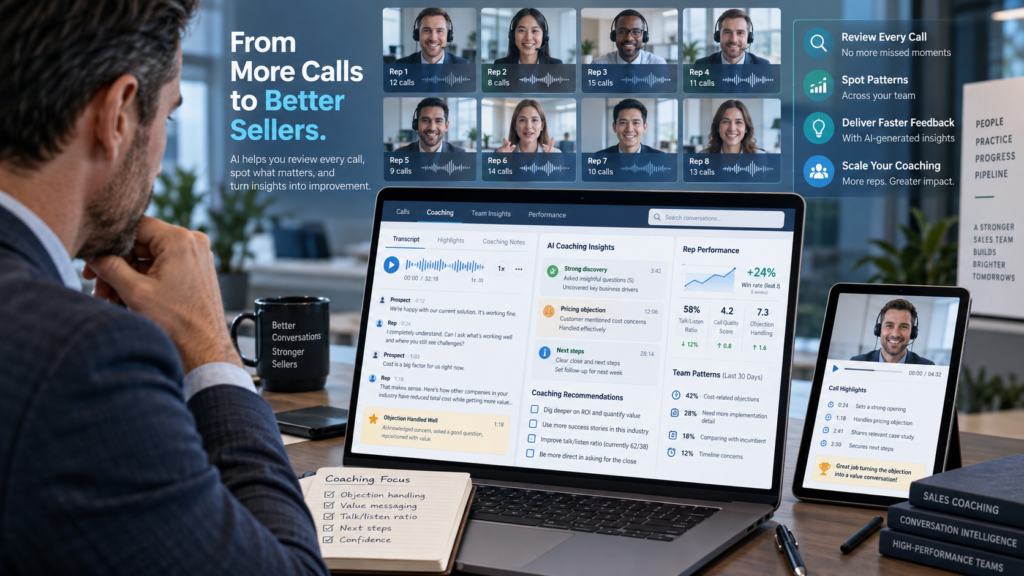
This is where call recording and conversation intelligence platforms have started to matter. Instead of relying on a manager’s memory of a call from three days ago, these tools capture what was actually said, how it was said, and where the conversation went sideways. A platform like Siro applies this to field sales specifically, picking up in-person conversations through mobile capture rather than only desk-based video calls, which matters a lot for industries like roofing, home services, or outside sales where the deal happens on a porch, not a Zoom screen.
What Changes When Every Call Gets Reviewed
Once a team has a searchable record of conversations, coaching stops being reactive. A manager can pull up the moment a rep lost control of a pricing objection instead of guessing what went wrong from a vague CRM note. Patterns become visible across the whole team too: if five reps are fumbling the same objection in the same way, that’s a training gap, not five individual weaknesses.
There’s also a quieter benefit here around consistency. New hires ramp faster when they can listen to how a top closer actually handles a tough question, rather than reading a script that sounds nothing like a real human conversation. Some teams build informal libraries of these moments, essentially crowdsourcing their own playbook from real calls instead of a slide deck written by someone in marketing.
Where Skepticism Is Still Reasonable
Not every team should rush to record everything. A few concerns come up often enough that they deserve a straight answer instead of dismissal:
- Rep anxiety: Some salespeople feel like they’re being surveilled rather than developed, especially if leadership rolls this out without explaining the purpose.
- Data overload: Recording hundreds of calls a week is useless if nobody has time to review the highlights, so the analysis layer matters as much as the capture itself.
- Compliance: Call recording laws vary by state, and any team adopting this needs to confirm consent requirements before turning on a single microphone.
None of these are reasons to avoid the technology outright, but they’re reasons to roll it out deliberately, with clear communication about why it exists.
Coaching That Happens in Days, Not Quarters
The bigger shift is cultural, not technical. Teams that adopt call intelligence tend to move from an annual review mindset to something closer to real-time development. A rep can get feedback on Tuesday’s objection handling by Wednesday morning instead of waiting for a monthly one-on-one that may or may not happen. That speed compounds over a year, and it’s a big part of why sales enablement budgets have shifted so heavily toward this category in the last few years.
The Bottom Line
AI-assisted coaching isn’t replacing sales managers; it’s giving them a way to actually do the job they were hired for, which is developing people rather than just tracking quota attainment. The teams getting the most out of it treat it as a mirror for their own process, not a surveillance tool, and that mindset shift matters more than the software itself.