The internet does not suffer from a shortage of personal finance advice. Anyone who opens a search engine will find millions of articles covering everything from annual percentage rates and emergency funds to index funds and retirement planning. Yet, for millions of readers facing an immediate financial dilemma, this sheer volume of material is often more paralyzing than helpful.
When people search for financial guidance, they rarely arrive with purely academic curiosity. Instead, they are usually dealing with a specific, time-sensitive circumstance: a missed car payment, an unexpected denial on an apartment application, a collector calling during dinner, or simply the persistent stress of having more month left than money. Dropping readers into an sprawling library of disconnected articles forces them to become their own curriculum designers at the exact moment they feel least equipped to do so.
MoneyFAQ’s Guided Paths platform offers a refreshing alternative to this information overload. Rather than demanding that visitors understand financial taxonomy before they can find an answer, the feature opens with a far more approachable question: Which financial situation sounds most like yours?
By organizing content into short, ordered sequences of plain-English reads, Guided Paths removes the guesswork of personal finance education, giving readers a clear starting point and a calm, structured route toward meaningful financial stability.
The Paralysis of the Unstructured Archive
Traditional financial websites tend to organize their libraries by broad technical categories: “Credit,” “Banking,” “Debt,” “Loans,” or “Taxes.” While logical from an editorial standpoint, this framework presumes that the reader already knows which technical topic will solve their underlying problem.
Consider a person struggling to find housing because of past financial setbacks. Should they begin by researching credit scores? Should they learn about tenant background checks, dispute errors on their consumer reports, or search for government rent subsidies? If they read an article on building a credit score from scratch, it will do little to help them negotiate with a prospective landlord by Friday afternoon.
When readers are unsure where to begin, one of three things typically happens:
- Decision fatigue: They browse dozens of headlines, open multiple tabs, and become so overwhelmed by conflicting terminology that they abandon the search altogether.
- Out-of-order learning: They dive into advanced or downstream strategies before mastering fundamental protections, such as trying to invest spare change while paying triple-digit interest on high-cost loans.
- Vulnerability to bad advice: Disoriented readers seeking quick relief are easy targets for predatory lending offers, credit-repair scams, or high-fee financial products.
Guided Paths solves this friction by shifting the organizing principle from subject matter to human circumstance. It acknowledges that what people need most is not simply information, but direction.
Why Sequential Learning Makes Financial Information Usable
Information presented in a structured order is inherently easier to comprehend, retain, and put into practice. In educational psychology, this method is known as scaffolding: introducing basic, actionable concepts first so that subsequent details have a stable framework to attach to.
In personal finance, sequence is everything. Knowing what an annual percentage rate (APR) means is valuable, but learning it after signing a loan agreement helps nobody. Understanding how to build a budget is helpful, but trying to construct a strict monthly spending plan while an eviction notice sits on the kitchen counter is completely detached from reality.
By breaking complex topics into a deliberate series, typically between 6 and 15 focused reads, Guided Paths creates a structured narrative arc:
- Immediate triage precedes long-term strategy: Urgent needs, consumer rights, and harm reduction are addressed before introducing optimization habits.
- Concepts build naturally: Early reads establish vocabulary and foundational mechanisms, ensuring that subsequent articles can introduce tactical decisions without overwhelming the reader.
- Action items remain manageable: Rather than presenting an exhaustive 40-step checklist, each read introduces a single, logical next step.
When readers consume information in a logical progression, anxiety drops. Financial education ceases to feel like a high-stakes exam and begins to feel like a steady, guided conversation.
The Guided Paths Experience: Three Steps to Clarity
The experience of using Guided Paths is designed to feel deliberate, reassuring, and completely free of financial jargon.
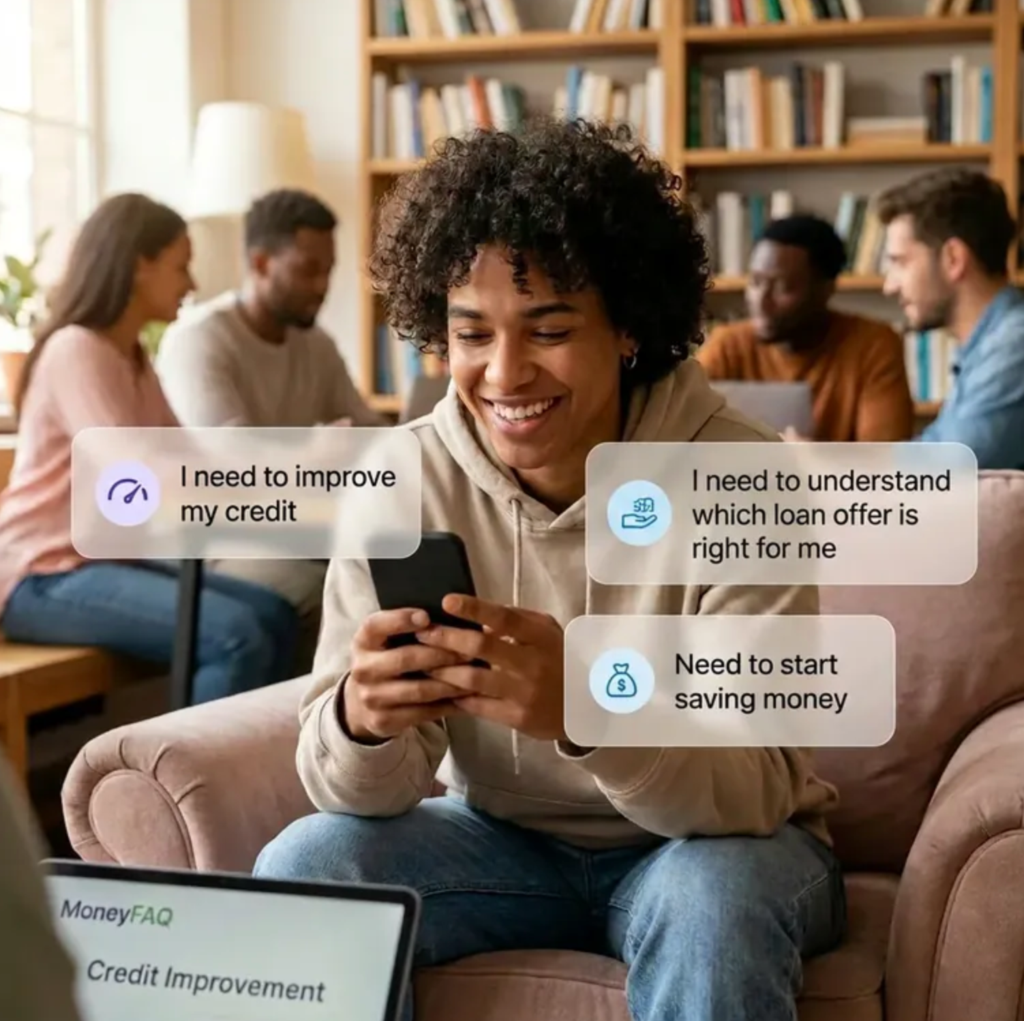
- Identify Your Situation: The user does not need to know whether their challenge belongs in consumer law, banking, or credit underwriting. They simply scan a collection of plain-English statements that reflect real-world human conditions. The focus is entirely on where the reader stands right now.
- Start With the First Read: Upon choosing a path, the reader is not confronted with an endless wall of text. They are given a clear, finite starting point: Read 1 of a short sequence. This first article generally establishes calm: demystifying the situation, laying out basic consumer protections, or providing an immediate roadmap of what will follow.
- Build Understanding Step by Step: As the reader advances through each short guide, the path gradually broadens from immediate triage to long-term resilience. By the time they complete the final read, they have progressed from confusion to an actionable, personalized understanding of their choices.
Exploring the Live Paths
The live directory at www.moneyfaq.com/paths features sequences crafted around specific financial inflection points. These paths address everything from urgent crises to foundational money management.
Urgent Relief and Problem-Solving
When circumstances are precarious, readers need direct answers and verified resources, not abstract advice.
- I need help right now (8 reads)
Built for readers confronting an immediate emergency: a utility shutoff notice, impending eviction, or an empty refrigerator. This path skips theoretical budgeting and points directly to actionable safety-net resources, including legitimate programs providing rent relief, utility assistance, food access, healthcare, and emergency cash, accompanied by straightforward application walk-throughs.
- I need money help this week (7 reads)
Focuses on the acute stress of money running out before the next payday arrives. It provides a grounded, fast-acting plan to prioritize critical household expenses, negotiate brief breathing room with service providers, and locate immediate community aid without resorting to predatory loans.
- Debt collectors are contacting me (6 reads)
Collection calls can be intimidating. This path grounds readers in their legal rights under federal and state law, offering exact guidance on how to speak with collectors, how to formally verify whether an alleged debt is accurate and legally collectible, and how to resolve or dispute accounts safely.
- I missed payments and need help understanding next steps (7 reads)
Missing a payment is stressful, but it is rarely an unfixable disaster. These reads systematically outline the timeline of missed payments, from grace periods to credit bureau reporting, explaining what happens next, what steps to take first, and how to communicate with creditors to catch up smoothly.
- I was denied for a loan – what now? (7 reads)
A loan rejection often leaves applicants feeling dismissed and confused. This sequence treats a loan denial not as a permanent verdict, but as diagnostic data. It explains adverse action notices, details actions an applicant can take over the subsequent 30 days to address red flags, and identifies alternatives tailored to non-prime credit profiles.
Credit, Borrowing, and Major Purchases
Credit scoring and borrowing products are rife with technical traps and confusing marketing language. These paths illuminate the rules of the road before readers sign binding contracts.
| Guided Path | Length | Primary Focus |
| I need to improve my credit | 7 reads | Moves from demystifying credit scoring formulas to introducing small, daily habits that sustainably build scores over time. |
| I want my first credit card | 7 reads | Walks beginners through secured vs. unsecured cards, annual fees, and safe balance habits to avoid interest charges while establishing positive history. |
| I need to understand loan offers | 6 reads | Cuts through marketing language to explain APR, origination fees, compounding, and total borrowing costs so consumers can compare terms fairly. |
| I’m trying to avoid expensive borrowing mistakes | 6 reads | Unpacks the hidden mechanics of payday loans, title pawns, and short-term cash advances, detailing the traps that keep borrowers trapped in high-cost debt cycles. |
| I need to buy a used car | 7 reads | Covers used-car evaluation, financing realities with modest credit, and dealership add-on traps before contracts are signed. |
| I need a car but my credit is bad | 12 reads | Explores subprime auto financing options, buy-here-pay-here risks, and realistic steps to avoid repossession or excessive loan terms. |
Housing and Recovery
Few financial situations carry higher stakes than securing shelter or recovering after a serious financial disruption.
- I need affordable housing (15 reads)
Navigating Section 8 housing choice vouchers, public housing developments, and income-restricted properties can be labyrinthine. This comprehensive path unpacks the entire system: eligibility standards, application processes, managing long waitlists, and maintaining assistance once approved.
- I’m trying to rent a place with bad credit (7 reads)
Bad credit should not mean homelessness. This sequence outlines what property managers look for during tenant screening, how to prepare rental applications that address credit marks proactively, and how to utilize co-signers, guarantors, or alternative proof of income.
- I want to rebuild after a setback (7 reads)
A default, vehicle repossession, or bankruptcy can feel like the end of one’s financial road. This path provides a calm, gradual plan for stabilizing finances, rebuilding credit profiles, and establishing new baselines.
- I can’t get a bank account (7 reads)
Being flagged in reporting databases like ChexSystems can lock individuals out of the traditional banking system. This path highlights second-chance checking accounts, community credit unions, and trustworthy alternatives that let people cash checks and save money without paying exorbitant check-cashing fees.
Daily Habits, Earning, and Financial Beginnings
Long-term financial resilience is built through small, durable routines and an understanding of how cash flows through a household.
- I’m new to managing money (7 reads): An accessible introduction to basic personal finance: budgeting methods, checking accounts, emergency cushions, and simple credit rules.
- Understand my paycheck and gig income (9 reads): Unpacks the mechanics of gross vs. net pay, payroll tax withholding, deductions, wage garnishment limits, and tax planning for app-based independent contractors.
- Trim your monthly bills (8 reads): Offers high-impact negotiation and reduction strategies for recurring utility, phone, internet, and insurance bills to unlock monthly cash flow without sacrificing quality of life.
- Spend smarter every day (8 reads): Targets quiet budget leaks, such as subscription bloat, hidden account fees, and impulse buys, using simple routines rather than extreme austerity.
- I need to start saving money (6 reads): Demonstrates that saving is viable even on tight, irregular incomes by using automation, micro-savings, and targeted expense trimming.
Life Transitions, Security, and Modern Topics
When personal circumstances shift or unfamiliar technologies emerge, consumers benefit from calm, impartial analysis.
- I’m new to the U.S. and setting up my money (9 reads)
Arriving in a new country means facing an entirely unfamiliar financial ecosystem. This guide helps immigrants navigate banking without an SSN (using ITINs), build U.S. credit from scratch, protect savings, and send remittances home safely.
- Money and family changes (6 reads)
Divorce, legal separation, child support, aging parents, or the loss of a spouse introduce complicated legal and financial considerations. This path outlines how to safeguard household finances, credit standing, and personal records during family upheavals.
- I want to protect myself from scams and fraud (7 reads)
Scammers frequently target consumers experiencing acute financial distress. These guides expose common imposter schemes, deceptive fee structures, phishing attempts, and emergency-relief scams, teaching readers how to verify incoming requests and freeze their credit if compromised.
- I want to get my tax refund safely (7 reads)
Tax refunds represent the single largest annual cash infusion for many households. This path explains how to file taxes for free, claim lucrative credits (such as the EITC and Child Tax Credit), and avoid costly refund-anticipation loans.
- Crypto, explained calmly (11 reads)
Stripping away both promotional hype and alarmism, this educational path provides an objective, plain-language primer on digital assets. It explains blockchain mechanics, digital wallets, extreme price volatility, transaction fees, and common fraudulent schemes; purely as consumer education, not investment speculation.
A Clearer Route to Practical Financial Literacy
The true innovation of MoneyFAQ’s Guided Paths is not proprietary financial theory; it is thoughtful curation.
By meeting readers directly at their current challenge and presenting information in a measured, sequential order, the platform bridges the gap between searching for help and actually feeling helped. Consumers do not need to read through hundreds of disparate guides to discover what to do next. They simply select the path that mirrors their life today, read the first entry, and follow the sequence toward a more informed, stable financial tomorrow.