Global finance runs on systems most people never see. When foreign exchange trades are priced, when treasuries rebalance positions across currencies, or when a controller signs off on the month-end close, there is software underneath deciding which requests clear, how exposure is tracked, and what shows up on the ledger. If those platforms stall or drift even slightly, the impact shows up in missed opportunities, manual work, and uncomfortable risk conversations.
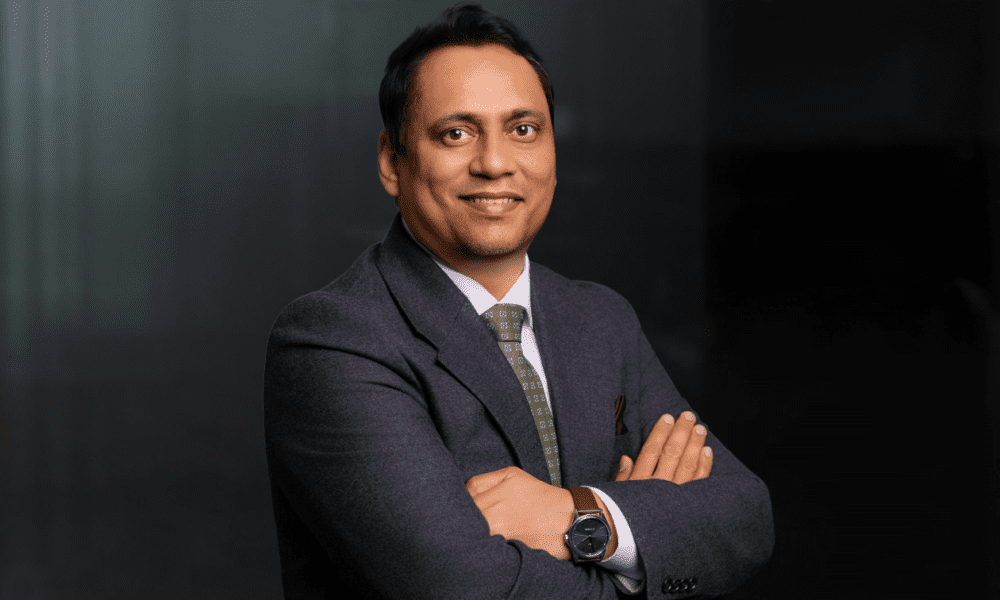
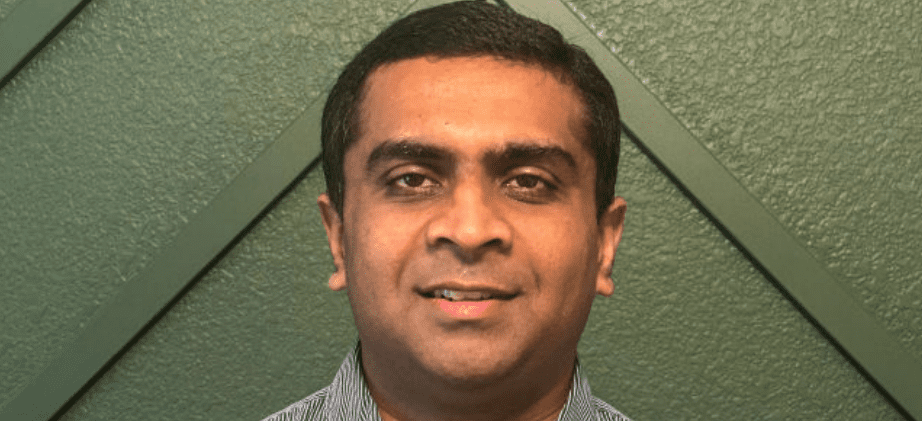
Vishnu Vardhan Rao Chitneni has spent nearly two decades inside those systems. A Lead Technical Program Manager at Visa with 19 years of global experience across payments, treasury, trading, insurance, shipping, supply chain, and e-commerce, he leads large, multi-million-dollar programs that sit directly in the financial plumbing. He is the inventor of the patent filing titled Failsafe Authorization Systems and Method , and the author of a published paper on payment authorization systems, an experience that shapes how he thinks about safety and correctness in modern foreign exchange trading and treasury platforms. In this interview, he talks about what it takes to modernize financial infrastructure without losing control of risk, why architecture decisions matter for business users, and how his earlier work continues to inform what he does today.
Vishnu, thanks for joining us. For readers who do not live in the world of financial infrastructure, how do you explain the platforms you work on?
At a simple level, I tell people that these platforms decide how money moves and how that movement is recorded. A foreign exchange trading platform, for example, is where prices are pulled in, trades are negotiated or agreed, and positions are booked so treasury teams know their exposure. Treasury systems ensure that what you think you hold actually lines up with what the market and your counterparties say you hold.
Underneath that description are a lot of details. You have applications that talk to each other, integration points with external rate providers, risk and P&L attributions that must remain aligned, and operational teams that need the system to behave predictably even on the busiest days. Because I have worked across domains, from shipping to insurance to payments, I tend to look for patterns in how people want to use the system. That helps keep the design grounded in real workflows, not just diagrams.
At what point did it become clear to you that Foreign Exchange trading and treasury systems needed a sustained, multi-year modernization?
If you sit with the treasury teams long enough, you see the friction points very quickly. Rates are moving, volumes spike, and yet some steps still depend on manual spreadsheets or systems that cannot quite keep up with new products or currencies. You hear about time lost coordinating between applications, delays in getting a complete picture of exposure, and the difficulty of making changes without a long, risky release cycle.
For me, the turning point was realizing that the technology was not just a background tool. In a modern environment, the foreign exchange and treasury platform is a product in its own right. It has users, it has business outcomes, and it has a roadmap. Once you accept that, you treat the work differently. You start focusing on scalability, functionality, and clear ownership, because you know that a new product launch or a market event will test whatever you have built.
Can you walk us through the foreign exchange trading platform you led at Visa and what made it different?
The foreign exchange trading platform I worked on at Visa was designed to bring a fragmented set of capabilities into a single, scalable system. I served as the Lead Technical Program Manager for this product, overseeing a program budget of more than 20 million dollars over three years.The platform now supports multiple billion dollars in currency trading volume each month and is used to trade and settle across all major global currencies on a daily basis.
What made it different was the decision to treat scalability and extensibility as first-class requirements from the beginning. Instead of a monolithic application, we built on a microservices based architecture so that new trading products and features could be introduced without destabilizing existing flows. That meant spending serious time up front on service boundaries, contracts, and reliability expectations, and then following through during execution with cross-functional planning and clear risk management. The result is a platform that can support current needs and is also positioned to launch additional foreign exchange products over time.
From a technical program management perspective, what were some of the hardest decisions in getting that platform into production?
The hardest decisions were usually about sequencing. When you work with a tier one application that touches many other systems, you cannot just focus on one codebase. You have to think across 15 or more dependent systems, each with its own release calendar, risk appetite, and set of priorities.
One example was planning how and when to introduce high availability patterns such as Active-Active instances. We had to design for a situation where trading is continued even if a component or a node had a problem, and we needed to avoid any data inconsistencies between various applications. That meant long sessions with architects, developers, and operations teams to map edge cases and agree on specific behaviors under stress.
Another challenge was balancing the need for speed with the realities of governance. A platform like this must not only be fast and available; it also has to meet internal standards, including accessibility. Achieving Web Content Accessibility Guidelines, for example, required careful attention to user interfaces and flows, which we had to weave into the existing delivery schedule. You learn to negotiate scope while still protecting the properties that keep the platform safe to run.
You have also worked on accounting and reconciliation systems for a major insurance company. How did that experience shape your approach to developing and maintaining critical Financial Systems and Technologies?
That project was an important reference point for me. I led a five-member development team at Mphasis to design and deliver a reinsurance accounting and reserves reconciliation solution for AIG. The system ingested data from multiple countries, including Puerto Rico, Colombia, and Chile, processed it through an end-to-end pipeline, and then presented the results in dashboards that allowed comptrollers to drill from summarized variance categories down to individual transactions.
The impact was very tangible. We reduced the monthly financial close time from two days to roughly four hours. That change was not just about speed; it also meant fewer reconciliation errors and a more repeatable, auditable process. The work was recognized with the AIG Excellence Award, which I value because it came directly from the business stakeholders who used the system.
When I work on accounting reconciliation and foreign exchange platforms now, I remember how stressed those close cycles used to feel. If your system can give controllers and finance teams a clear, timely view of positions and differences, they are more likely to trust it and to advocate for further improvements. That trust is as important as any technical metric.
You also spent time in a startup building a talent supply chain SaaS product. Did anything from that environment carry into your work on large financial systems?
Absolutely. At Sherpaz, the product we built was designed to manage the lifecycle of contractors, from sourcing to onboarding. The platform used a modular approach, allowing clients to select and pay for only the modules they needed. I led the design and development of the Candidate module, including front-end work with Web 2.0 JavaScript libraries, backend development in Java, and database design.
Because the team was small, everyone wore multiple hats. I fixed critical bugs ahead of demos, contributed to architecture decisions, and supported the onboarding of the first two or three pilot clients. That environment teaches you to connect technical design to customer outcomes very directly. If something broke, you did not have to imagine the impact; you saw it in the next demo or call.
When you move into larger organizations and more complex financial systems, that mindset is still useful. You may have more processes and more stakeholders, but at the end of the day, someone is still relying on the platform to do their job. Thinking in terms of modules, pilots, and clear value helps keep large programs grounded.
You hold an MBA in Finance and a B.Tech from top Indian schools. How do your academic and research experiences influence the way you design and run these programs?
The academic background helps in a few ways. The MBA in Finance from IIM Lucknow gives me a structured way to think about concepts like risk, capital, and return, which is important when you work on platforms that directly affect treasury and trading. I can understand how a treasury team is framing a problem, not just the technical symptoms they describe.
My engineering degree from IIT (BHU) Varanasi gave me a solid foundation in engineering fundamentals, which still matters when you are dealing with system design and performance. It also made it easier to collaborate with architects and senior engineers because we could discuss trade-offs in precise terms.
On top of that, I have published a paper on payment authorization systems, and that experience of formalizing a concept and thinking through edge cases feeds back into daily decisions. Writing that paper forced me to look closely at how authorization flows behave under failure conditions, which aligns very naturally with my patent on failsafe authorization. Together, those experiences keep me focused on building systems where theory and practice actually meet.
For teams that are just starting to modernize their foreign exchange trading and treasury platforms, what advice would you offer?
First, spend time with the users before you draw the architecture. Sit with traders during busy sessions, join treasury calls, and listen to business stakeholders using dependent systems. The patterns you notice there will tell you more about what the system needs than any single document.
Second, be honest about dependencies. If your platform touches many other systems, map those relationships carefully and plan your releases accordingly. It is tempting to rush a feature out, but in critical financial flows, you want predictable, staged change more than you want a quick headline.
Finally, remember that modernization is not a one-time event. The best platforms I have seen are the ones that are designed to evolve. They are observable, testable, and understandable. If you can give your teams that kind of foundation, they will keep improving the system long after the initial launch.