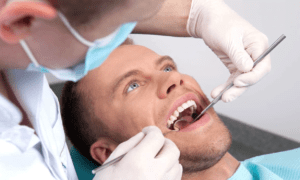
Many people don’t realize that dentistry is one of the most physically and psycho-emotionally demanding medical professions. Because of this, dental practitioners experience extremely high rates of musculoskeletal disorders, burnout, chronic pain, and various stress-related conditions.
Dr. Vera Maslova, a doctor of medicine, researcher, and interdisciplinary specialist, works at the intersection of dentistry, ergonomics, psychology, and preventive healthcare. Her interdisciplinary background in dentistry, psychology, neurophysiology, and physical education has helped her discover and implement modern, scientifically informed approaches to prevent occupational diseases in dentistry.

Musculoskeletal and Postural Risks in Dentistry
Over 70% of dental practitioners have reported experiencing chronic pain and fatigue over the years. Musculoskeletal disorders are among the top occupational hazards in dentistry. Dental practitioners spend prolonged periods in static postures, leading to ergonomic imbalances. The risks associated with these static postures and ergonomic imbalances include:
- Chronic neck and back pain
- Shoulder strain
- Carpal tunnel syndrome
- Visual fatigue
Dr. Maslova worked in several dental clinics in both Russia and the United States. Some of these roles required significant ergonomic load, such as surgical assisting, prosthodontics, and general dentistry. All the extended seated positions and fast transitions between treatments created significant occupational challenges.
Her clinical experience and early research of dental students form a strong foundation for analyzing occupational risk factors. She discovered that musculoskeletal pain and disorders are not isolated incidents but predictable outcomes of the ergonomic imbalances in the static postures of dental practitioners on the job.
Evidence-based Ergonomic Solutions
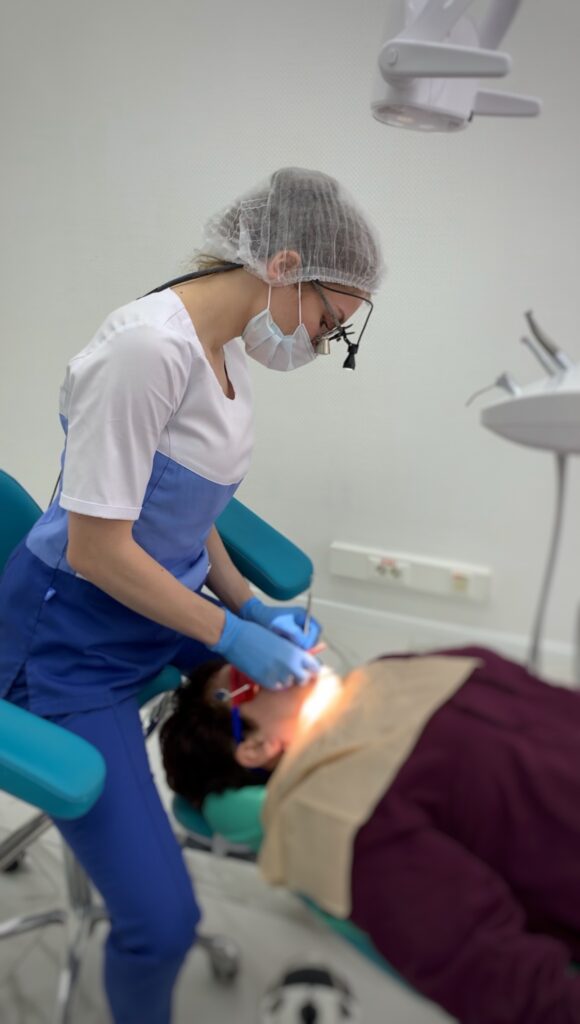
There have been significant advances made in the development and implementation of evidence-based ergonomic solutions in dental environments. All dental practitioners and professionals can greatly improve their physical health if they consider implementing the following modern ergonomic strategies on the job:
- Neutral Zone Positioning – Focuses on neutral spinal alignment by keeping the back straight and avoiding too much cervical flexion when examining a patient’s oral cavity.
- Redesigned Operator Stools – Sit on stools with pelvic support mechanisms and postural adjustability. It will help a dental practitioner maintain good posture as they frequently reposition themselves during exams.
- Four-handed Dentistry Optimization – Use ergonomic setups to support dental assistant teamwork, minimize motion, enhance focus, and reduce fatigue.
- Adjustment of the Patient Chair and Lighting – Adjust the patient’s chair to position them within the dental practitioner’s optimal field of vision. It will reduce forward head posture. Adjustable LED lighting is also needed so that the dentist doesn’t need to squint, lean, or make any usual movements to see what they are doing.
- Use of Magnification to Reduce Cervical Strain – Implementing magnification systems or devices makes it easier to analyze patients while maintaining an upright posture. Dentists won’t need to bend their heads and necks too much to get a closer look.
- Micro-break Protocols Supported by Research – Research studies have shown that dental practitioners who take mandatory breaks of 15 to 30 seconds will reduce strain to the musculoskeletal system and improve circulation.
Current scientific literature supports all these solutions. Dr. Maslova has actively reviewed these solutions and confirmed their viability as a peer reviewer for Multidisciplinary Digital Publishing Institute (MDPI) and other international journals.
Neurofunctional Approaches and Psycho-emotional Resilience
Ergonomics addresses physical posture realignment and proper movement. However, additional focus must also be placed on the central nervous system and the chronic stress and cognitive fatigue associated with it. Since dentistry requires quick, multitasking work with seamless precision and accuracy, it can lead to cognitive overload. Cognitive load refers to the mental effort needed to understand complex information, regulate emotions, and make critical decisions.
Dr. Maslova’s interdisciplinary background revealed how neurophysiology and psychology intersect with dentistry. The mechanisms of chronic stress and cognitive load can directly impact a dentist’s clinical performance. All the precision and hyperfocus performance requirements when sitting or standing for prolonged periods can aggravate the central nervous system, which then releases stress hormones to boost alertness.
Unfortunately, stress increases cognitive load, leading to burnout. Early markers of burnout include exhaustion, unhappiness, impatience, low productivity, and increased irritability. Long-term clinical practices can eventually lead to nervous system dysregulation. In this condition, the central nervous system remains in heightened alert mode or a prolonged fight or flight response due to the overwhelming stress, anxiety, and burnout.
Modern Neurofunctional Strategies That Could Help
Dr. Maslova is a strong advocate for using modern neurofunctional strategies to create more psych-emotional resilience. These strategies include:
- Breathwork Protocols – Specific breathing techniques designed to improve parasympathetic balance.
- Proprioceptive Training – Balance exercises and weight-bearing activities to help dental practitioners improve their sense of balance, position, and movement. The result is improved balance, more body awareness, and reduced risk of injury.
- Stress-Modulation Routines – Dentists should practice stress-modulation routines between patients to regulate their stress and anxiety levels throughout the workday.
- Sensory-Motor Exercises – Structured routines that connect movement with sensory input, such as balance, sight, and touch. It can help reconnect the brain with the body to reduce perceptions of pain and anxiety and increase awareness.
- Neurocognitive Mapping – Neurocognitive mapping of dental fatigue enables professionals to create detailed neurological maps that help them easily recognize when their cognitive state has declined. That way, they can avoid errors with patients before treating them.
These modern neurofunctional strategies are rarely discussed in mainstream media. That is why every dental practitioner must learn about them, as they are likely to encounter the same neurophysiological and psychological crises on the job.
Burnout Prevention and Mental Health Support in Dental Professionals
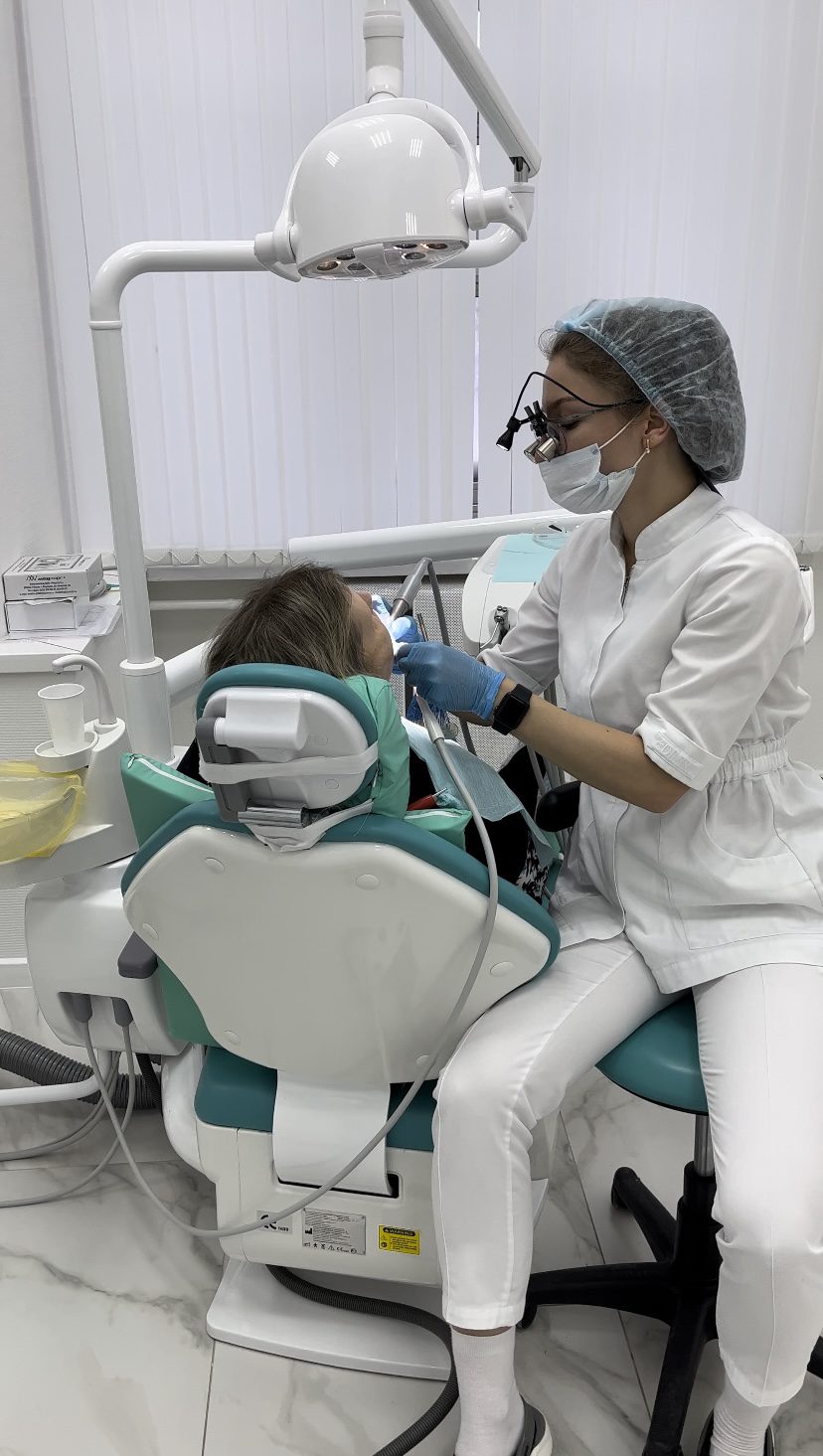
Dentistry is facing a global burnout crisis. It is not driven by physical pain alone. The real factor is the emotional labor of clinical decision-making and patient care management. If dental students receive insufficient training in mental-health sustainability, they will not know how to manage the psychological demands of the dental profession once they graduate.
Systematic support programs are essential to help prevent burnout and support mental health in the dental profession. Dr. Maslova developed educational modules specifically designed to teach dental teams about burnout prevention and mental health support. The modules focus on the following:
- How to recognize burnout systems early before they escalate and impact patients.
- The best ways to improve communication skills when conveying information to patients.
- Techniques for regulating emotions in stressful clinical environments and difficult patient interactions.
- The best self-assessment tools for achieving psycho-emotional balance.
Public Health Impact & Interdisciplinary Significance
The mental and physical health of a dental practitioner will also affect public health. For this reason, the topic of occupational diseases in dentistry is not only relevant to dental practitioners. They are also relevant to healthcare systems, dental schools, policymakers, and patients.
When a dental practitioner’s health is improved, it has a direct positive impact on the quality of their treatment, the continuity of their care, and the level of safety provided to patients. If more stakeholders in dentistry can recognize these facts, it will go a long way toward making dentistry safer and more efficient for everyone.
Dr. Maslova has seen evidence of this after researching international journals like Dentistry Journal and the International Journal of Environmental Research and Public Health. In addition, her interdisciplinary research, leadership experience in dental clinics, and educational work with dental staff and vulnerable patient groups demonstrate her knowledge and commitment to protecting public health.
Conclusion
It is quite uncommon for dental practitioners to work at the intersection of dentistry, neurophysiology, and psychology. Such interdisciplinary specialization remains rare in dentistry; fewer than 1-3% of practitioners combine clinical practice with neurofunctional research. Although Dr. Maslova’s interdisciplinary approach is still relatively rare in the field, her work is a testament to the power and impact of these modern approaches on dental practitioners and their patients.