Artificial intelligence is currently the rave of the moment, attracting big bets and investments from some of the world’s biggest tech companies. The figures associated with AI investment are staggering, prompting financial and tech analysts to describe the sector as a potential bubble.
Last year, OpenAI, the creators of ChatGpt raised $40 billion at a valuation of $300 billion. Amazon later entered a strategic partnership with OpenAI valued at $38 billion. Early this year, Anthropic, the creators of Claude, signed a term sheet for a $10 billion funding round at a $350 billion valuation.
These billion-dollar figures highlight the significant inflow of capital into the AI sector, especially in infrastructure development. While the majority of the action is happening in the United States.
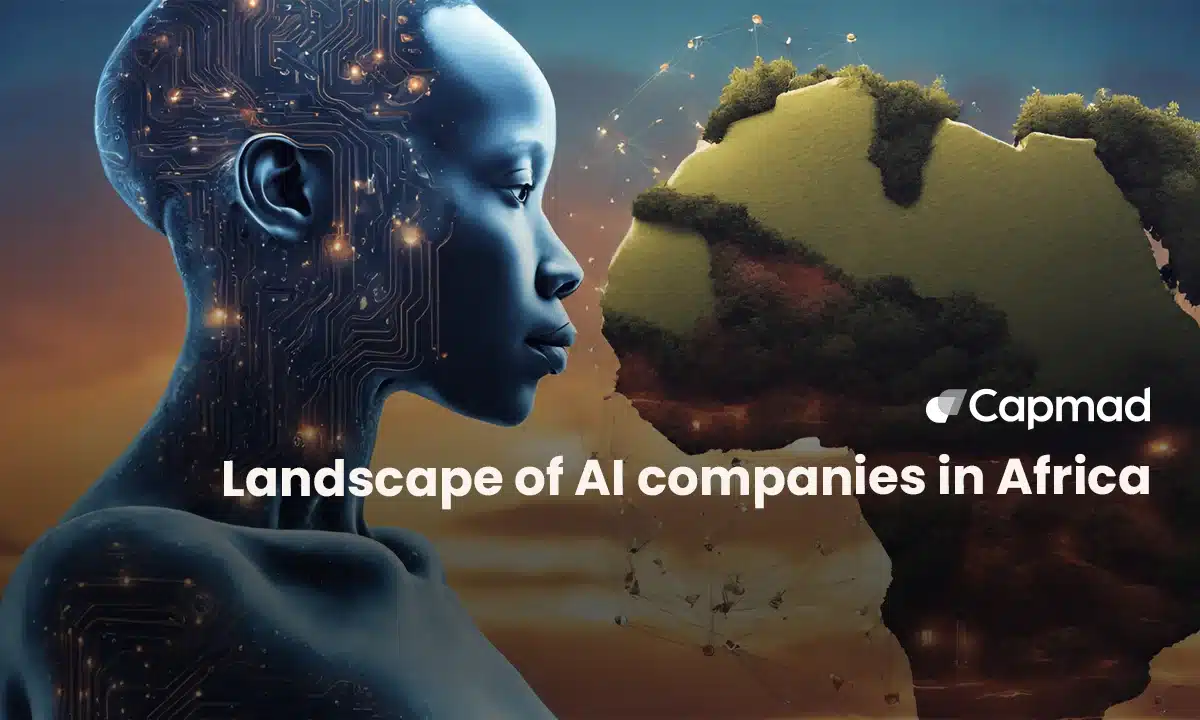
In faraway Africa, big US companies are already betting on the continent’s AI market with a strong focus on infrastructure and connectivity. The continent has seen a significant inflow of capital and material investments aimed at jump-starting its AI ecosystem and supporting the global infrastructure of the subsequent tech companies.
Big Tech Companies Betting on Africa’s AI market
Microsoft
Microsoft is arguably the most aggressive investor on the continent, sinking the most money and running a multinational operation.
In Kenya, Microsoft is collaborating with G42 to build a $1 billion geothermal-powered data centre in Olkaria. This facility is designed specifically for AI workloads, utilising Kenya’s renewable energy to power high-performance compute clusters.
In South Africa, Microsoft committed an additional $285 million to expand its cloud and AI infrastructure in Johannesburg and Cape Town. This brings their total 3-year investment in the country to over $1.3 billion.
Besides capital investment, Microsoft is also contributing to the growth of human resources on the continent. The American tech giant pledged to skill 1 million South Africans in AI and cloud architecture by the end of 2026.
Google’s contribution to Africa’s AI ecosystem borders on infrastructure and human resources. The US tech company’s strategy focuses on what can be described as Digital Corridors that link its massive subsea cables to terrestrial AI hubs.
Regarding infrastructure, Google is building four major digital infrastructure hubs across North, South, East, and West Africa to connect its Equiano and Umoja subsea cables. These hubs include landing stations and data centres optimised for AI research.
In human resources, Google is promoting AI research on the continent. The tech company recently committed an additional $9 million to African universities to support AI research, specifically focusing on voice datasets for over 50 African languages by late 2026.
Google’s foray into AI is interesting giving the new technology remains one of the biggest disruptors of its search engine business. The launch of Gemini and the integration of AI into organic search stem from an effort to stay in tune with the times in information technology.
Amazon Web Services
AWS is big on AI infrastructure, focusing on a local Zone and an AI Factory model to address data sovereignty.
AWS has launched AI Factories in partnership with local entities, such as Cassava Technologies. These allow African enterprises to run NVIDIA-powered AI clusters powered by H100S and Grace Blackwell chips within their own borders to comply with strict data residency laws.
In South Africa, AWS continues to scale its Cape Town region, which is a primary hub for AI model training for African fintech and retail giants.
In 2024, the US tech company pledged to invest $1.7 billion in South Africa to expand the country’s data centre capacity to support the high compute demands of generative AI.
Oracle
Oracle is the newest major player to enter the East African infrastructure market. The US tech company is floating an area of focus in Kenya known as the Nairobi OCI region.
Early this year, Oracle announced that iXAfrica would host its first Oracle Cloud Infrastructure (OCI) region in Nairobi. This region is specifically built to support AI-powered government services and latency-sensitive enterprise applications in East and Central Africa.
Meta
Meta, the parent company of Facebook, Instagram, and WhatsApp, is heavily invested in infrastructure that enables AI to work in Africa.
Despite less focus on public cloud services, it is the primary investor in the physical infrastructure that enables AI. Meta owns the 2Africa subsea cable, known as the longest in the world, connecting 33 countries. The company also announced investments in Edge data centres in Nigeria and Ghana to reduce latency for its AI-Powered features, such as Meta AI on WhatsApp and Instagram.
Read More From Techbullion