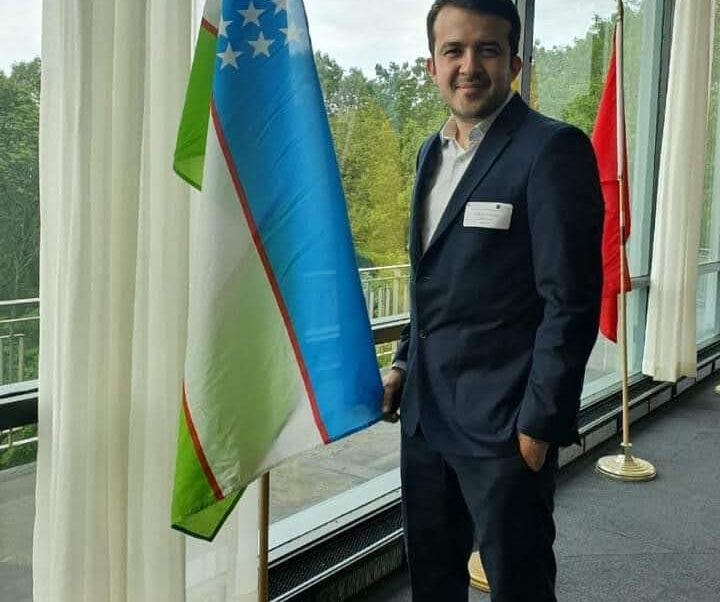
Malik Normuradov’s professional journey reflects a consistent theme: helping organizations make better decisions under uncertainty. Working at the intersection of entrepreneurship, business intelligence, and applied analytics, he has built a reputation for turning complex information into practical direction for leaders, founders, and teams. His experience spans startups, universities, and advisory environments across the United States and Central Asia, giving him a perspective that is both global and grounded in execution.
Rather than positioning innovation as experimentation alone, Normuradov approaches it as a structured process one that blends analytical discipline with entrepreneurial judgment. His work focuses on designing systems that enable organizations to scale responsibly, allocate resources intelligently, and respond to change with confidence.
A Practical Lens on Data-Driven Leadership
At the core of Normuradov’s work is a belief that data should serve decision-makers, not overwhelm them. He treats organizations as living systems where strategy, operations, finance, and technology must work in alignment.
His leadership style emphasizes:
- Turning fragmented data into clear decision pathways
- Aligning analytics with real operational and financial constraints
- Connecting technical teams and executive stakeholders through shared metrics
- Designing processes that support long-term scalability, not short-term fixes
This approach allows organizations to move beyond dashboards and reports toward actionable intelligence insight that directly informs strategy and execution.
Entrepreneurship Guided by Evidence
One of Normuradov’s most visible entrepreneurial roles is his leadership at MABLE Maps, where he manages strategy and execution for an accessibility-focused navigation technology. In this setting, innovation is not abstract; it must translate into real-world usability and sustainable growth.
His contributions at MABLE Maps include:
- Shortening development timelines by 25%through disciplined agile practices
- Introducing AI-supported features informed by user data and testing
- Building financial and operational models to improve forecasting and planning
- Coordinating research, engineering, and product teams around shared priorities
What distinguishes his work is not just the use of advanced tools, but how they are applied. Technology decisions are evaluated against user needs, feasibility, and long-term impact ensuring innovation remains purposeful rather than experimental.
Strengthening Decision Systems Inside Institutions
Normuradov’s analytical mindset extends beyond startups. In his role supporting research operations at Lehigh University, he focused on improving data integrity, reporting accuracy, and compliance processes.
His system redesign efforts led to:
- Full federal grant compliance
- Fewer reporting errors through standardized workflows
- Consolidated datasets that supported faster, clearer administrative decisions
This work underscores a recurring theme in his career: strong systems enable confident leadership. By improving how information flows, he helps organizations reduce risk and improve accountability.
Advancing Early-Stage Ventures with Business Intelligence
Normuradov has also played a key role in guiding entrepreneurs through the uncertainty of early-stage growth. While advising founders through the Small Business Development Center, he focused on helping startups replace intuition-driven decisions with structured analysis.
His advisory work supported founders by:
- Building financial models that increased capital efficiency by 20%
- Using data to refine pricing, customer segmentation, and cost structures
- Preparing ventures for investor scrutiny through stronger forecasts and narratives
Beyond individual outcomes, his work contributed to a broader shift toward evidence-based entrepreneurship, equipping founders with tools to scale thoughtfully rather than reactively.
Engineering Roots and a Global Outlook
Normuradov’s analytical discipline is rooted in his early training in engineering and project management. Educated in Uzbekistan, he began his career managing large-scale infrastructure projects, where budget accuracy, procurement planning, and coordination were mission-critical.
These experiences shaped his ability to:
- Break down complex challenges into solvable components
- Balance technical constraints with real-world limitations
- Manage risk in high-stakes environments
Complementing this foundation is his international experience across Central Asia and the United States. At Westminster International University in Tashkent, he worked on industry partnerships and alumni engagement, strengthening collaboration between academic institutions and the private sector. This cross-border exposure sharpened his ability to adapt strategies to different cultural, regulatory, and organizational contexts.
Looking Ahead: Intelligence as a Strategic Asset
Looking forward, Malik Normuradov continues to focus on the evolving role of AI and advanced analytics in organizational decision-making. His future work centers on helping organizations move from reactive analysis to anticipatory strategy.
Key areas of focus include:
- Embedding AI into operational and strategic decision processes
- Translating complex data environments into executive-level insight
- Supporting founders and innovation teams with scalable analytical frameworks
- Contributing to global entrepreneurship ecosystems through mentorship and thought leadership
At a time when organizations face accelerating technological change and increasing uncertainty, Normuradov’s work highlights a clear principle: better systems produce better decisions. By combining entrepreneurial thinking with disciplined analytics, he continues to help organizations navigate complexity and turn data into durable advantage.