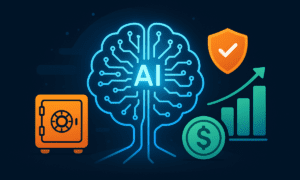
In recent years, machine learning (ML) has emerged as a transformative force in the world of finance and risk management. Promising the ability to process massive datasets, detect hidden patterns, and predict potential risks with unprecedented accuracy, ML has captured the imagination of executives and regulators alike. However, amidst the excitement, it’s essential to separate the genuine potential of ML from the hype that often surrounds it. Understanding its capabilities and limitations is key for organizations aiming to integrate ML into their risk management strategies effectively.
The Promise of Machine Learning in Risk Management
At its core, machine learning leverages algorithms to identify patterns in historical data and make predictions about future events. In risk management, this capability can be applied across various domains, including credit risk, market risk, operational risk, and fraud detection.
Credit Risk Assessment: Traditional credit scoring models rely on predefined rules and limited datasets. Machine learning, on the other hand, can analyze millions of data points, including unconventional sources such as social media activity, transaction patterns, or utility payments. By doing so, ML can potentially offer more nuanced insights into borrower behavior and reduce default rates.
Fraud Detection: Fraud is inherently dynamic. Fraudsters continuously adapt their strategies, making static rules less effective. ML algorithms can detect anomalies in real-time transaction data and flag suspicious activity. Techniques like unsupervised learning and anomaly detection help identify unusual patterns that human analysts might overlook.
Market and Operational Risk: ML models can analyze vast amounts of financial market data, identifying correlations and trends that may signal risk exposure. Similarly, operational risk—such as system failures, cybersecurity threats, or human errors—can be assessed using predictive analytics, allowing organizations to proactively manage potential disruptions.
The Hype: Expectations vs. Reality
Despite these promising applications, there is considerable hype around ML in risk management, sometimes overstating what it can deliver. Several misconceptions often arise:
ML as a Magic Bullet: Organizations may expect machine learning to completely replace human judgment in risk decision-making. While ML can enhance predictive accuracy and automate routine analysis, human oversight remains critical. Complex scenarios, ethical considerations, and regulatory requirements cannot be fully captured by algorithms alone.
Unlimited Data Equals Unlimited Insight: Many believe that simply feeding an ML model more data guarantees better predictions. In reality, data quality is far more important than quantity. Poor, biased, or incomplete datasets can lead to inaccurate models and even amplify existing biases, resulting in flawed risk assessments.
Short-Term ROI: Some organizations expect immediate returns from ML implementation. In practice, developing, training, and validating ML models requires time, domain expertise, and iterative refinement. Risk management is a high-stakes domain where errors can have severe financial and reputational consequences.
Separating Reality from Hype: Best Practices
To harness ML effectively in risk management, organizations must adopt a realistic and structured approach:
Start with Clear Objectives: Identify specific risk areas where ML can add tangible value, such as fraud detection or stress testing. Avoid deploying ML for the sake of innovation alone.
Invest in Quality Data and Governance: High-quality, structured, and clean data is essential. Organizations must also establish governance frameworks to monitor model performance, detect drift, and ensure regulatory compliance.
Combine Human Expertise with ML: Hybrid approaches often work best. ML can provide predictive insights, but human analysts must interpret results, make judgment calls, and address ethical or regulatory concerns.
Continuous Learning and Adaptation: Risk environments are dynamic. ML models must be regularly updated and recalibrated to account for changing patterns, market volatility, and emerging threats.
Conclusion
Machine learning holds substantial promise for transforming risk management by enhancing predictive accuracy, improving efficiency, and uncovering insights from complex data. However, separating hype from reality is crucial. ML is not a panacea—it is a tool that complements human judgment, dependent on high-quality data, rigorous validation, and ongoing oversight.
Organizations that approach ML with realistic expectations, strong governance, and strategic alignment with their risk management objectives are likely to achieve meaningful outcomes. Those that chase hype without careful planning risk wasted investment, model failure, and even regulatory scrutiny. In essence, the real power of machine learning lies not in replacing humans but in empowering them to make smarter, data-driven decisions in an increasingly complex risk landscape.