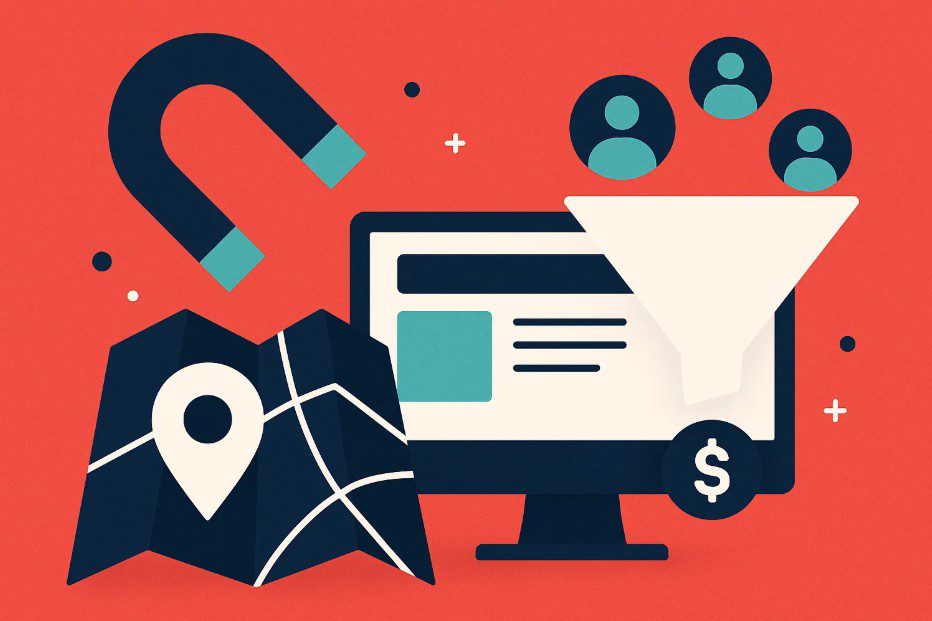
Small and mid-sized businesses consistently struggle with the same challenge: finding customers who are actually ready to buy. While digital advertising platforms promise global reach, the reality for most service providers, contractors, and consultants is far simpler. Their customers live within a twenty-mile radius, and their growth depends entirely on connecting with prospects in their immediate area.
Local business lead generation has evolved dramatically over the past five years. What used to require door-to-door sales calls, newspaper ads, or expensive direct mail campaigns now happens through strategic digital touchpoints. The businesses winning in their markets aren’t necessarily the ones with the biggest budgets-they’re the ones building systematic processes to identify, reach, and convert nearby prospects.
The Economics Behind Localized Lead Generation
When a roofing company in Dallas generates a lead from someone searching for roof repairs in their zip code, that prospect has fundamentally different value than a random website visitor. They have immediate intent, geographic proximity, and a problem that needs solving now. This is why local lead generation consistently delivers higher conversion rates and shorter sales cycles compared to broad-based marketing approaches.
The unit economics are compelling. A single commercial HVAC client might represent $15,000 in annual revenue. A personal injury law firm could earn $50,000 from one qualified case referral. Real estate agents close transactions worth tens of thousands in commissions. When you calculate customer lifetime value against acquisition cost, local leads often deliver 3-5x better returns than cold outbound or generic advertising.
This explains why agencies and independent operators have built entire businesses around ranking local websites and forwarding qualified calls. The model is straightforward: identify service categories with high transaction values, build digital properties that capture local search traffic, then lease that lead flow to businesses willing to pay monthly fees. Some operators report forwarding 50+ calls within the first 90 days of launching a new site, with monthly retainers ranging from $250 to over $2,000 depending on industry and call volume.
Building Your Prospect Database From Scratch
The foundation of any local lead generation system is knowing who to target. Before you can optimize landing pages or run advertising campaigns, you need a comprehensive database of potential clients in your service area. This is where most businesses fail-they rely on incomplete directories, outdated lists purchased from brokers, or manual research that consumes dozens of hours.
Modern prospecting starts with data extraction. Tools like a google maps scraper allow sales teams to build targeted lists in minutes rather than days. By extracting business names, phone numbers, addresses, websites, and review data from any Google Maps search, teams can quickly identify every potential prospect in a specific category and location. A marketing agency targeting dental practices in Phoenix can generate a list of 200+ prospects with complete contact information in a single afternoon.
The competitive advantage isn’t just speed-it’s completeness. When you can see every competitor, every potential client, and every market gap in your territory, your outreach becomes strategic rather than random. You can segment by review ratings to find businesses struggling with reputation issues. You can identify new openings that haven’t established vendor relationships yet. You can map concentration areas to plan door-to-door visits or direct mail campaigns more efficiently.
Verifying and Enriching Contact Information
Raw data is only valuable when it’s accurate. Phone numbers change, businesses close, and email addresses get abandoned. Before launching outreach campaigns, smart operators verify and enrich their prospect data to maximize deliverability and response rates.
This step often gets skipped, leading to wasted effort and damaged sender reputation. Free verification tools help sales professionals confirm email addresses actually exist before hitting send, find direct mobile numbers for decision-makers, and research background information that makes initial conversations more relevant. When you can reference specific details about a prospect’s business in your opening message, response rates double or triple compared to generic templates.
Email verification is particularly critical for cold outreach. Bounce rates above 5% trigger spam filters and can get your domain blacklisted. Taking ten minutes to verify a list of 500 emails before a campaign launch protects your sender reputation and ensures your messages actually reach inboxes. For high-value prospects, finding verified mobile numbers allows for text message follow-ups or direct calls that bypass gatekeepers entirely.
Strategic Approaches That Actually Convert
Once you have clean, verified prospect data, execution determines results. Local lead generation isn’t about blasting the same message to thousands of businesses and hoping for responses. It’s about creating multiple touchpoints that build familiarity and demonstrate value before asking for anything in return.
The most effective operators use a sequenced approach. An initial direct mail piece introduces your service and includes a specific offer or case study relevant to their industry. Three days later, an email references the mailer and provides additional proof points. A phone call the following week mentions both previous touchpoints and asks for a brief conversation. This layered approach typically generates 8-12% response rates compared to 1-2% for single-touch outreach.
Google Local Service Ads and hyperlocal PPC campaigns work when structured properly. The key is extreme geographic targeting combined with service-specific landing pages. A plumber shouldn’t send all clicks to their homepage-emergency drain cleaning searches should land on a page specifically about that service, with local phone numbers, service area maps, and same-day availability prominently displayed. This alignment between search intent and landing page experience improves conversion rates by 40-60%.
Choosing Technology That Supports Your Process
The gap between mediocre results and exceptional performance often comes down to tooling. Businesses that invest in the right technology stack move faster, waste less money on ineffective tactics, and scale their lead generation without proportionally increasing labor costs.
The challenge is evaluation. The B2B software market is crowded with tools that promise similar outcomes but deliver vastly different user experiences, pricing models, and actual capabilities. Independent software reviews help cut through marketing claims to understand which platforms actually solve specific problems, what hidden costs exist, and which alternatives offer better value for particular use cases.
Your technology stack should minimize manual work while maximizing output quality. That means CRM systems that actually get used rather than becoming data graveyards. Email automation that feels personal rather than robotic. Analytics that show which lead sources drive revenue, not just which generate the most form fills. Most businesses overcomplicate their stack with eight different tools when three well-chosen platforms would deliver better results at lower cost.
Measuring What Matters Beyond Vanity Metrics
Lead generation is only valuable when it generates revenue. Too many businesses obsess over website traffic, social media followers, or email open rates while ignoring the metrics that actually predict business growth. The discipline of local lead generation demands ruthless focus on conversion economics.
Track cost per qualified lead, not cost per click. Monitor close rates by lead source, not aggregate pipeline size. Calculate actual customer acquisition cost including all labor, technology, and advertising spend. Measure customer lifetime value to understand which lead channels attract buyers who stay longest and spend most. These metrics reveal which tactics deserve increased investment and which are consuming resources without delivering proportional returns.
The best operators build simple dashboards that answer three questions: How many qualified leads did we generate this month? What did we pay for them? How many converted to paying customers? When you can answer these questions accurately for each lead source-organic search, paid ads, direct mail, cold calling, referrals-resource allocation becomes obvious. Double down on what works, eliminate what doesn’t, and test new approaches with defined budgets and success criteria.
Building Sustainable Competitive Advantages
Local markets reward consistency more than brilliance. The HVAC company that publishes helpful content every week, the law firm that sponsors little league teams for five consecutive years, the contractor who maintains a 4.9-star rating across hundreds of reviews-these businesses dominate their territories not through single campaigns but through sustained commitment to visibility and reputation.
The real opportunity in local lead generation isn’t finding a secret tactic competitors don’t know about. It’s executing known strategies with discipline over months and years while others chase novelty. Claim and optimize your Google Business Profile. Build legitimate local citations. Generate authentic customer reviews. Create content that answers the specific questions your prospects search for. None of this is revolutionary, but consistent execution creates compound advantages that become nearly impossible for competitors to overcome.
The businesses winning local markets in 2025 treat lead generation as a system rather than a series of disconnected tactics. They build databases, nurture relationships, measure religiously, and optimize continuously. They understand that sustainable growth comes from predictable, repeatable processes that consistently fill their pipeline with qualified prospects who are ready to buy, located nearby, and able to be served profitably. That clarity of purpose, more than any specific tool or technique, separates the businesses that thrive from those that struggle.