
Less Timeline Scrubbing, More Editorial Review with Video Cutter AI


Manual timeline scrubbing can make short-form editing feel slower than it should. The editor watches, rewinds, marks, listens again, checks the source context, and repeats the process until a few possible clips appear. That work matters, but it is not where the best editorial value always lives. Video Cutter AI can reduce the search burden so editors spend more time reviewing what a clip means, how it reads, and whether it deserves to be published.
Search Time Is Not the Same as Editing Quality
Video Cutter AI helps most when the source video is long enough that manual scanning becomes inefficient. A creator may know a useful moment exists somewhere in a 50-minute recording, but finding it through timeline scrubbing can drain attention before the real edit begins.
The problem is not that editors should avoid watching source material. The problem is that repeated searching often consumes the energy needed for sharper decisions. A faster first pass creates room for better review.
Moving from Hunting to Judging
The shift is simple: let the early workflow produce candidates, then judge those candidates carefully. This changes the editor’s role from hunter to reviewer.
Review is where the important questions appear. Is the hook honest? Is the point complete? Are captions correct? Does the clip fit the platform? Does the edit preserve the speaker’s meaning?
What Editorial Review Should Catch
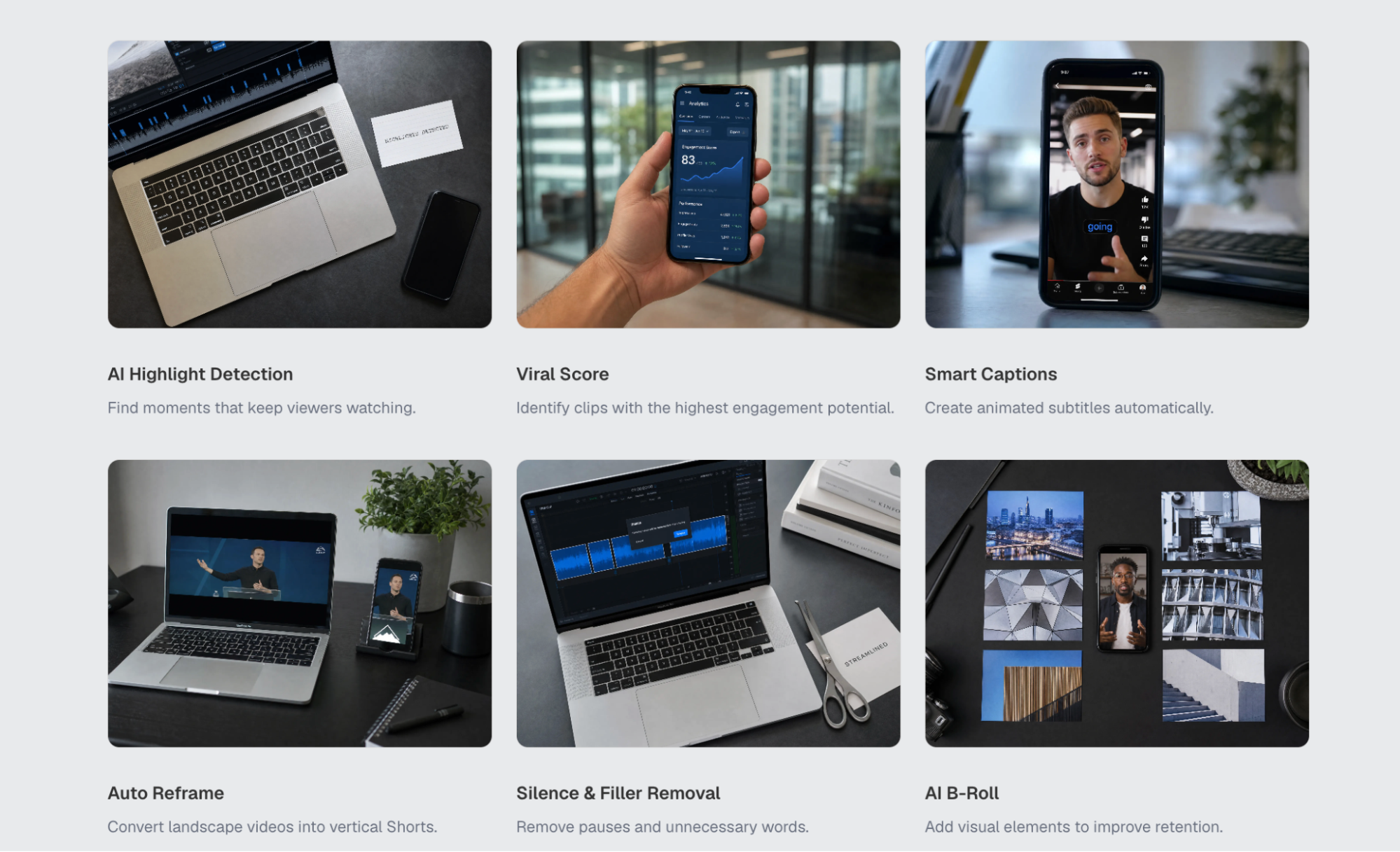
(Highlights of Video Cutter AI)
A good review pass looks beyond whether the clip sounds interesting. It checks whether the clip can stand alone. Many long-form moments work because the viewer already heard the setup. Once separated, they may feel vague or misleading.
Review should also catch pacing problems. Some clips need a tighter start. Others need a few extra seconds for context. Over-trimming can make a thoughtful answer feel rushed, while under-trimming can lose the viewer before the point lands.
The Caption and Context Pass
Captions need a careful pass because they are part of the viewing experience. Wrong names, numbers, or technical terms can damage trust. Poor line breaks can slow comprehension.
Context needs the same attention. If a clip removes an example, caveat, or condition, the meaning may change. This is a human judgment problem, not just a technical editing task.
Review-First Workflows Help Teams Scale
For teams, reducing timeline scrubbing can make collaboration easier. Instead of one editor disappearing into a long file, the team can review a queue of possible clips and approve the strongest ones.
This helps marketing, education, and agency teams compare options. A team can reject weak candidates early, assign caption review, request framing changes, and schedule only the clips that pass quality checks.
The workflow also creates better records. Notes about why a clip was rejected or approved can improve future recording and editing briefs.
I would keep rejection notes short but specific. “Needs too much context,” “caption risk,” “weak first line,” and “off-brand tone” are more useful than simply marking a clip as bad. Those notes turn review into training data for the next recording session.
Better Review Leads to Better Source Content
When editors spend more time reviewing clips, they start noticing patterns in the source material. Maybe guests give better clips when asked for examples. Maybe webinars produce stronger clips during Q&A. Maybe tutorials work best when each section starts with a clear problem.
Those patterns should feed back into production. Recordings can be designed with clearer topic shifts, stronger questions, cleaner pauses, and more specific examples.
This is where short-form editing becomes more than repurposing. It becomes a feedback system that improves the original long-form content.
That feedback loop is easy to miss when the editor spends all day searching through footage. Once the search phase is lighter, there is more space to ask why certain moments worked, why others failed, and what the next recording should capture more deliberately.
Conclusion
The mistake is assuming the goal is to automate judgment. A better goal is to reduce repetitive searching so the editor can spend more time checking clarity, context, captions, and platform fit. Creators should also avoid publishing every candidate clip; review should make the final batch smaller and stronger.
Video Cutter AI (https://video-cutter.ai/) has successfully bridged the gap between time-consuming timeline scrubbing and a more useful editorial review process, helping creators find candidates faster while keeping final decisions grounded in human quality control.
Try Video Cutter AI: https://video-cutter.ai/





Comment