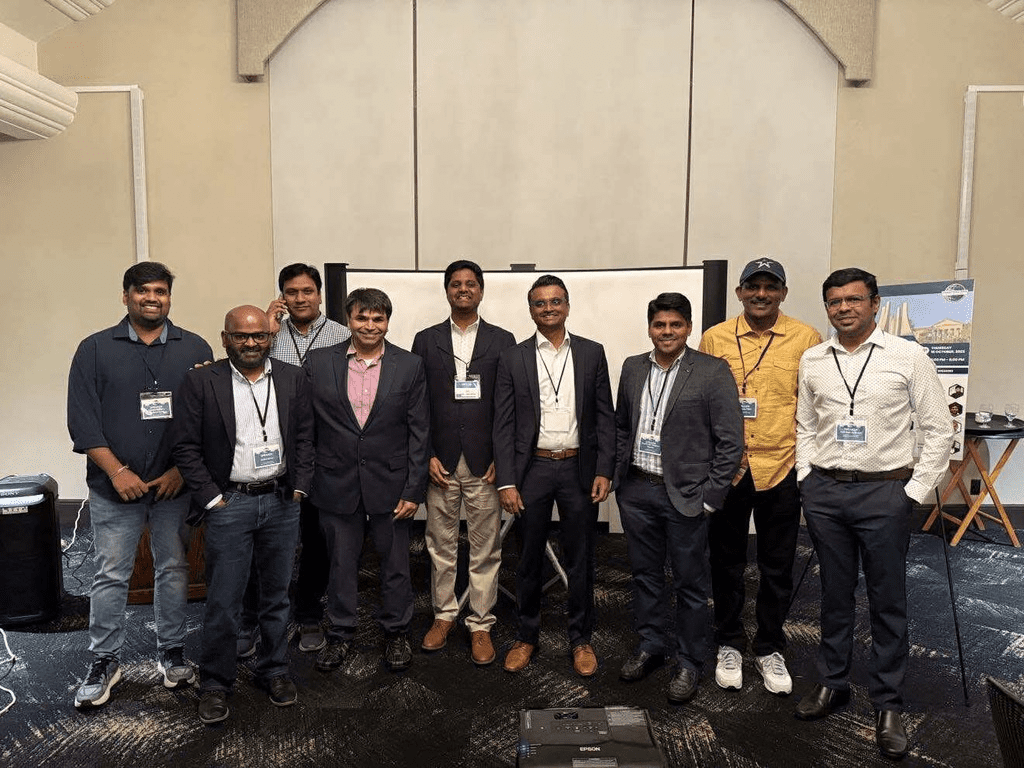
At Purdue University, the conversation around artificial intelligence unfolded not as a spectacle but as a study in restraint. On an October afternoon, “Win with AI: Use it Right & Gain Real-world Leverage” brought together Purdue students, faculty, and industry professionals to examine how a technology that promises efficiency and insight might also challenge ethics, expression, and education. The event was hosted by Toastmasters at Purdue (the Purdue chapter of Toastmasters International) in collaboration with Ascend HSI Advisory Partners and Purdue University’s Roger C. Stewart Leadership and Professional Development Department. This pairing reflected an ambition to merge technical literacy with the art of responsible communication.
Eight experts shared their perspectives in turn, followed by candid exchanges with students. It was a rhythm closer to seminar than summit, more about understanding than evangelizing. The day’s quiet question was simple enough: how does one win with AI without losing judgment?
Rethinking Learning and Work in an AI era
The event’s premise was pragmatic. Speakers discussed how to use AI to study without violating academic integrity, how to read workplace policies on data use, and how to keep pace with a discipline that evolves faster than any syllabus. Students were encouraged to draft modest personal goals, a 90-day plan, perhaps, to experiment, learn, and stay informed without surrendering to automation.
The conversation had less to do with hype and more to do with boundaries. AI, several speakers noted, is as powerful as it is indifferent. It can assist a student in editing a report or help a researcher organize data, but it cannot think ethically, nor can it explain itself without human mediation. The underlying lesson: intelligence, whether human or synthetic, still requires context.
When Machines Meet Judgment
One of the session’s central voices, Madhusudan Banglore Nagaraja, an IT project management leader with long experience in healthcare and finance, spoke about the slow, deliberate work of modernization. His talk, “Adaptive AI in Project Management: Building Intelligent Delivery Systems,” was neither utopian nor alarmist. Madhusudan has spent nearly two decades steering large-scale transformations in institutions where the human stakes are high, such as banks, hospitals, and public agencies.
“The promise of AI lies not in replacing human intelligence, but in amplifying it,” he told the audience, his tone careful rather than declarative. He outlined how predictive analytics can guide decision-making in complex projects, forecasting risks, reallocating resources, and avoiding duplication. Yet, he cautioned, when automation replaces attention, even the best tools can distort what they intend to clarify.
His remarks landed with students who recognized the gap between using technology and understanding it. AI, Nagaraja suggested, is not the future arriving; it is the present demanding maturity.
Opening Reflections: The Power of Clarity
The afternoon began with David Gilmartin, the Toastmaster of the Day and President of the Donald A. Campbell Toastmasters Club. Gilmartin’s introduction, steady and deliberate, positioned communication not as an accessory to innovation but as its precondition. He reminded the audience that Toastmasters is, above all, a discipline, one that sharpens thinking through the act of speaking. “AI can generate answers,” he said, “but only humans can build understanding.”
His words framed the hours that followed. The presentations moved briskly between subjects, from AI in healthcare diagnostics to ethical design in education, yet each circled back to a single theme: clarity. The ability to articulate what technology does, and why, may soon become the most essential skill of all.
Collaboration as Ethic, Not Endorsement
For Ascend HSI Advisory Partners, co-organizer of the event, the Purdue collaboration was an extension of its broader work at the intersection of immigration, professional advancement, and emerging technology. The Chicago-based firm, which supports high-skilled professionals in documenting their careers and navigating global mobility, has increasingly turned its attention to how AI reshapes the professional landscape.
“AI is no longer a niche skill; it’s a shared language across professions,” said Vasanthan Ramakrishnan, CEO of Ascend. “Our goal is to help students not just use these tools, but understand the systems and responsibilities behind them. Empowerment begins with awareness.”
That sentiment echoed through the sessions: mastery, the speakers suggested, does not mean control; it means comprehension. Ascend’s presence underscored a subtle point: that fluency in technology is inseparable from fluency in ethics, communication, and adaptability.
In the Audience, a Shift in Perspective
If the event offered frameworks, it also inspired reflection. The audience absorbed the ideas with keen interest, noting how the sessions moved from practical applications to ethical considerations. Many students discussed the balance between innovation and accountability, sharing their thoughts on how AI reshapes both learning and work. The atmosphere in the room was one of curiosity tempered by caution, and enthusiasm guided by inquiry. Even after the formal program concluded, conversations continued, not about the newest tools, but about responsible habits and mindful integration of technology into everyday practice.
The Continuing Dialogue
For Toastmasters at Purdue, Win with AI was not an isolated event but part of a longer tradition. The club has long served as a platform for students and staff to refine their voices through practice speeches, peer feedback, and a shared respect for articulation. Its mission, timeless yet newly relevant, is to make thought audible and accountability visible.
By the event’s close, there were no grand pronouncements about the destiny of AI. What remained instead was a sense of proportion. Technology, the speakers implied, will always advance faster than our institutions or imaginations. The task, then, is not to chase it but to converse with it, critically, clearly, and without fear.
In that spirit, Win with AI was less a showcase of intelligence than an act of collective reasoning, a reminder that progress begins not with speed, but with understanding.
About Toastmasters at Purdue University
Toastmasters at Purdue is a student-led club and the Purdue chapter of Toastmasters International, that helps members build clear communication and leadership skills through structured meetings, practice speeches, and supportive evaluations. The club welcomes students, staff, and guests who want to improve public speaking in a positive environment.
About Ascend HSI Advisory Partners
Ascend HSI Advisory Partners is a Chicago-based immigration consulting and law practice focused on high-skilled talent. The firm helps professionals document their work clearly, plan profile-building steps, and navigate changing rules with practical options. Ascend works across the United States and India, with expansion plans for Canada and the European Union.