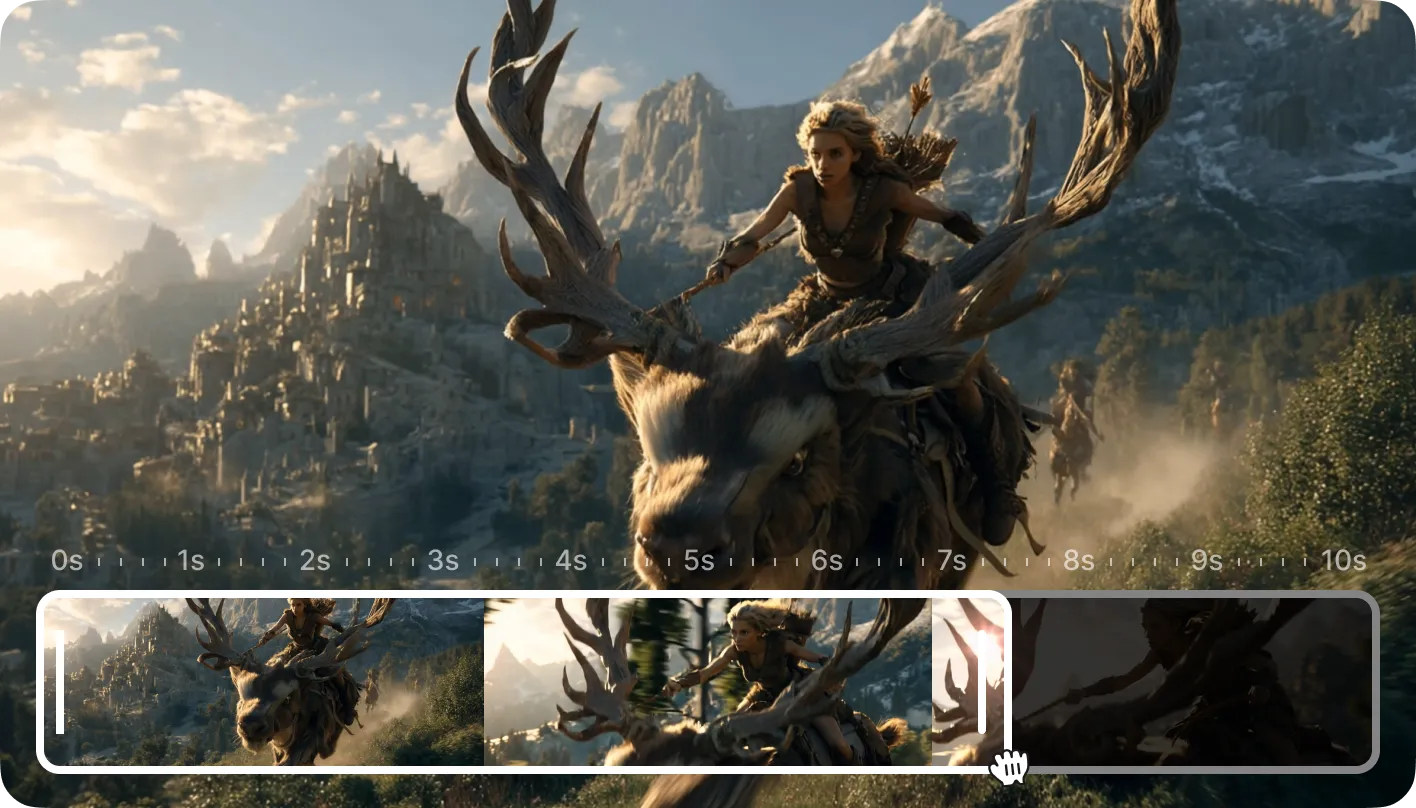
While the industry focused on “better pixels,” Kuaishou rebuilt the engine. Kling 3.0 arrives on Higgsfield as the world’s first unified multimodal visual framework, promising to eliminate the friction between generation and post-production.
For years, professional video production has been a series of “silos.” You generate a character in one tool, animate it in another, and attempt to fix lighting or physics in a third. It is a disjointed, expensive, and often frustrating process. But as of this week, that pipeline is being officially disrupted. Kling 3.0, the highly anticipated “Generalist Framework” from Kuaishou, has officially launched its preview phase on Higgsfield, signaling the end of the “pipeline problem” for AI-assisted video production.
Beyond Generative Video: The Generalist Architecture
Kling 3.0 is being hailed as the best AI video generator not because of its resolution alone, but because of its Unified Multimodal (MVL) Logic. According to recent technical reports, Kling 3.0 moves away from “pipeline-based” generation—where audio and physics are added as secondary layers—to an end-to-end framework where instruction understanding, visual generation, and refinement happen in a single, shared embedding space.
On Higgsfield, this architectural leap allows for “Reasoning-Based Editing.” Instead of just prompting “a cat running,” professional editors can now use natural language to interact with the scene’s semantic layers. You can instruct the model to “change the camera lens to a 35mm anamorphic” or “adjust the depth of field to focus on the background,” and the 3.0 engine understands the 3D spatiotemporal laws required to execute that change without breaking the character’s identity.
The Physics of Contact: Solving the “Melting” Problem
The most significant technical hurdle for AI video has always been high-difficulty physical interaction. For VFX artists, the “uncanny valley” was most visible when characters touched objects or each other, resulting in visual “melting.” Kling 3.0 introduces a Physics-Aware Generation engine that explicitly simulates cloth dynamics, hair movement, and contact physics.
This makes it the best AI video generator for high-action sequences. Whether it’s a character engaged in a complex martial arts sequence or a product being handled with precision, Kling 3.0 on Higgsfield ensures that motion integrity is preserved. The model understands the weight and speed of objects, delivering “contact physics” that allow AI footage to blend seamlessly with traditional live-action plates a massive win for the VFX and commercial industries.
Elements 3.0: In-Context Character Persistence
Persistence has long been the primary barrier to long-form AI filmmaking. Kling 3.0’s Elements 3.0 system, now active on Higgsfield, introduces “Director Memory.” Unlike previous models that only “guessed” at a character’s likeness from a single image, 3.0 supports Multi-Dimensional Referencing.
Creators can upload a library of “Elements”—including 3D-style character sheets and vocal references—which the model stores in a dedicated context bank. When generating a new 15-second cinematic shot, the 3.0 Omni engine refers back to this “memory” to ensure that facial features, body proportions, and even wardrobe textures remain 100% stable across different lighting and camera moves. This “Identity Lock” is what makes Kling 3.0 the first viable solution for serialized storytelling and brand-consistent mascots.
The Higgsfield Advantage: Cinema Studio and API Speed
Higgsfield has become the indispensable hub for this new era because it bridges the gap between raw AI power and professional workflow. By hosting Kling 3.0 within its Cinema Studio, Higgsfield provides:
- Frame-Accurate Keyframing: The ability to set start and end frames with precise interpolation, giving editors control over the exact arc of a camera move.
- Multimodal Refinement: Users can generate a clip and immediately apply Regional Inpainting to fix a specific pixel area without regenerating the entire scene.
- Unified Subscription: Rather than managing separate enterprise licenses for Kuaishou, OpenAI, and Google, Higgsfield users gain access to the best AI video generators including Sora 2 and Kling 3.0 under one centralized prosumer dashboard.
Availability and Economic Impact
With over 12 million monthly active users and a revenue run rate of $240M, Kling AI is no longer a “niche” tool. The launch of 3.0 on Higgsfield is expected to significantly reduce production costs for small studios and individual creators. What previously required a team of lighting and motion specialists can now be achieved by a single “AI Cinematographer” using the 3.0 Omni framework.
Kling 3.0 is currently rolling out to early access tiers on Higgsfield. As the “AI Director” becomes a reality, the industry is looking toward Q1 2026 as the definitive turning point for generative filmmaking.
The future of VFX isn’t just about pixels, it’s about logic. Experience the Kling 3.0 Generalist Framework on Higgsfield today.