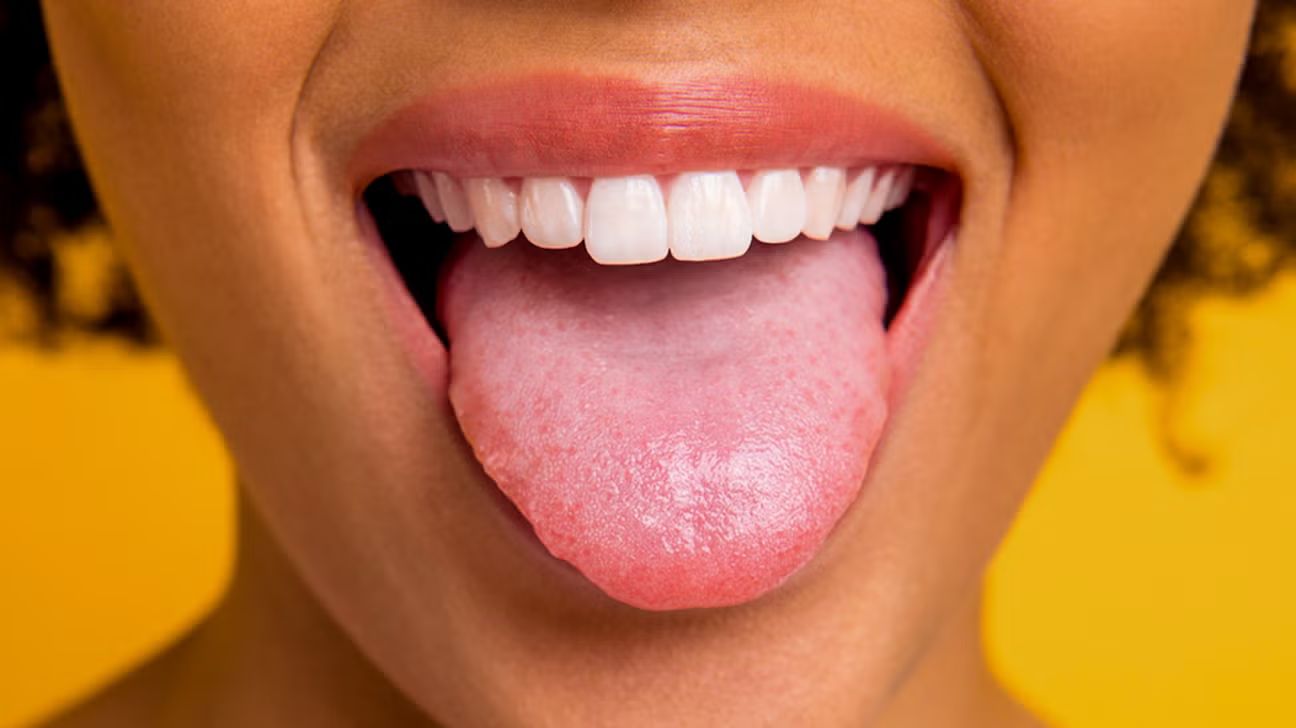
Equipped with genomic sequencing, constant glucose monitors, and sophisticated panels of biomarkers, we stand on the cutting edge of medical science. Still, the most familiar of terrain—our own mouths—houses an ancient and humble organ that might provide observations no wearable technology has yet been able to duplicate.
Beyond a tool for language and taste, your tongue is a dynamic terrain offering a direct, real-time mirror of your systemic inflammation, immunological response, and metabolic condition. It goes much beyond that. A fresh, science-informed perspective is growing, even if traditional treatments like TCM and Ayurveda brilliantly mapped the tongue to organ meridians and elemental balances.
This perspective views the tongue as a dynamic show of your body’s cellular interaction, microbial diplomacy, and nutritional state rather than just as a stationary organ chart. Should this small bit of tissue provide clues that go beyond your stomach, addressing your hormonal harmony, your ability to endure stress, even the underlying tenets of your longevity?
How Does the Tongue’s Microbiome Act as a Messenger?
Beyond its observable geography, the tongue houses a complicated and important ecosystem central to tongue health: the oral microbiota. This goes beyond cavities or poor breath. A biofilm, a flourishing city of bacteria, fungi, and viruses that continuously interacts with your immune system and your gut, coats the tongue. Seldom is a change in this fragile balance—from a vivid, pink tone to a dense, discolored covering—an independent event. Modern studies point to its capacity to indicate a series of interior happenings.
Hence, in a really literal sense, looking at your tongue is checking in on a significant immigration barrier for your inner landscape. Your body’s capacity to keep microbial balance, your antibiotic history, and your diet are all silently reflected in its condition.
Can a “Geographic” or Fissured Tongue Reveal Deeper Imbalances?
Some tongue signals are very bright. Though usually benign, a “geographic tongue”—with smooth, red, map-like patches—may be linked to psoriasis, hormonal changes, or nutritional shortages. More typically, deep cracks or fissures going down the middle might be a long-running ledger of intestinal effectiveness. In functional medicine, a central crack often points toward problems with protein digestion or enzymatic output, as it is strongly related to stomach and pancreatic function.
What Role Does the Tongue Play in the Hormonal Conversation?
Though the original piece addressed systematic cues, the sensitivity of the tongue to hormone changes is a deep and often disregarded link. Including the tongue, the mouth tissues are thick in hormone receptors. For women going through perimenopause and menopause, the tongue can be an unanticipated indicator of alteration.
Dry mouth (xerostomia), which changes the environment of the tongue and thus makes it more prone to burning sensations, inflammation, and changed taste, can result from decreased oestrogen. Reflecting the “hot” inflammatory condition that may come with this life phase, a redder, more sensitive tongue can show up.
This link emphasizes the importance of a holistic health approach. It is uncommon for a symptom in one region to be distinct. The brave discussions going on in venues like the revolutionary documentary series “Four Days,” which reunites women and professionals to remove menopause from mystery, underscore how important it is to see the body as an interconnected system.
The appearance of the tongue during such transitions is not an arbitrary occurrence but rather part of the integrated body language indicating nutritional needs, inflammatory state, and hydration requirements that change with our hormone environment.
How Can You Responsibly Respond to Your Tongue’s Signals?
Watching your tongue should be a curious act rather than one of fear. Not a conclusive diagnosis, it is a screening instrument. Rather than driving you to self-prescribe, let those consistent changes direct your discussion with a healthcare provider. With a nutritionist, a thick white coating might spark a talk on sugar consumption and gut health. A doctor may examine likely dietary causes or nutritional levels if redness is constant.
For a sleep specialist or an endocrinologist, a scalloped, fluffy tongue might be rather important information. Professional insight should underlie your action plan, yet your observation is the potent first step. Universal supports for a healthy tongue and a healthy body are supportive behaviors like staying well hydrated, consuming a nutrient-rich, anti-inflammatory diet, managing stress, and maintaining flawless oral hygiene.
When Does a Tongue Sign Demand Immediate Medical Attention?
Though most alterations are mild and related to lifestyle or momentary imbalances, some indicators call for immediate medical examination. These comprise:
- Every ulcer or lesion that takes more than two weeks to heal.
- Red or white patches that cannot be washed away.
- A rapid variation in texture, like hard, lumpy spots forming.
- Major swelling affecting voice, swallowing, or breathing.
- A hairy, black appearance—usually a harmless excess of papillae related to antibiotics or bad oral hygiene, but needing professional review.
Non-negotiable indicators to stop self-inquiry and get professional help are these. Although it is not flawless, the tongue is an amazing sensor and functions best in a cooperative health discussion.
Are We Ready to Listen to Our Body’s Ancient Displays?
In the hunt for peak health optimization, we run the danger of ignoring the natural intelligence of our own biology. The tongue health is a bridge between ancient observational wisdom and contemporary systematic biology—a daily, readily available, and very illuminating exhibit of our inner condition. Technology, which helps us remember, is a complement to self-awareness and clinical intuition, not a substitute for them.
In this new age, platforms like Ravoke which aim to further these discussions, are really rather important. They enable people to become active participants in their health by raising the voice of pioneering medical specialists and allowing for open debate on all, from the subtleties of menopause to the borders of longevity research. The upcoming docuseries “Four Days,” which will debut on Ravoke, is a tribute to the power of sharing human experiences next to expert knowledge to create a community devoted to better health outcomes.
The objective here is synthesis: honoring the intuitive diagnostics of the past while meticulously applying the science of the present. Tomorrow morning, therefore, pause. Look past the reflection in the mirror. In its silent, textured language, your tongue is waiting to share a story about your resiliency, your imbalances, and your possibilities for vitality. The query is, will you listen?
Inspired by the complex language of the body and the necessity of integrative health conversation, this paper presents platforms such as Ravoke.com that are blazing this path for individuals who want more thorough investigations of health narratives and expert-driven content by presenting original series like “Four Days” that highlight important health issues.