
Is Hand-Dyed Yarn Worth It? A Knitter’s Honest Look at Cost, Care, and Knit-Up

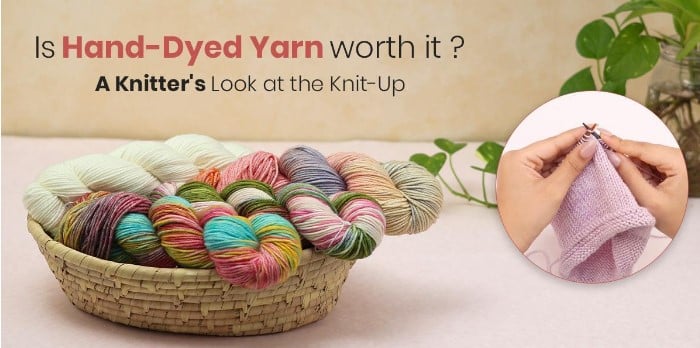
Yes, hand-dyed yarn is worth it for single-skein projects like shawls, socks, and shrugs, but not ideal for large or heavily washed projects. Have you felt it while scrolling through a yarn shop’s website, minding your own business, when you suddenly stopped after looking at a skein? The colors shift from moss green to rust to something between plum and midnight, all in one twist of fiber. You check the price. It’s three, sometimes four times what you’d pay for a mill-dyed skein in a similar weight.
You close the tab, and the question remains: is hand-dyed yarn worth it, or is it just pretty packaging for your money? You can’t simply say yes or no. It generally depends on what you want to create and how you care for your finished pieces. Let’s discuss it further.
‘Hand-Dyed’ — A Magical Touch
Unlike industrial dye vats that process thousands of skeins at a time, hand-dyed yarn is produced in small batches. One common technique is kettle-dyeing, where the yarn sits in a pot of dye and absorbs color unevenly on purpose, creating a rich, watercolor-like ‘tonal’ look.
Others hand-paint sections of a skein for sharper color changes, which is how you get speckled or striped variegated yarn. This is different from the hand-dyed yarn style, which has been mass-produced to mimic the look. These are not bad yarns, but true artisan yarn comes from a real dyer’s hand, not a factory line.
Your base yarn plays a crucial role. A skilled dyer can coax color out of a mediocre base — but a good base makes their job easier and the results better. Something like Symfonie Yarns’ fiber blends gives dyers a canvas that takes dye evenly and doesn’t shift gauge or texture once it’s off the skein — the kind of thing you only notice by having knit with a base that doesn’t do that.
Does Yarn Weight Change How Hand-Dyed Color Behaves?
Most crafters overlook this part when they plan to buy yarns. Yarn sizes aren’t just about gauge; they change how color reads once it’s on your needles.
Fingering-weight yarn shows color in small, tight stitches, so a variegated colorway tends to blend into a soft, speckled effect rather than bold blocks. That’s why this yarn is ideal for creating a sock project. A busy, saturated colorway that might feel overwhelming in a sweater looks fantastic on a pair of socks, where the repeat is short and the fabric is meant to be playful. Something like Luna yarn, spun from extrafine Merino wool, holds up especially well here. It takes dye evenly and has enough softness and next-to-skin comfort to justify the extra care sock knitting demands.
DK-weight yarn falls into the middle category. The stitches are bigger than fingering-weight yarn, but still small enough that most variegated colorways read as gentle color-shifting rather than obvious blocks. It’s a forgiving weight for a first hand-dyed project.
Worsted-weight yarn is where color choice matters most. Bigger stitches mean each color section in a variegated skein covers more visual ground, so pooling shows up faster and more obviously.
Knowing your yarn weight changes your experience and saves time from buying yarn that turns into a muddy, blotchy fabric once it’s knit up.
The Reason Why Hand-Dyed Yarn Costs More
The price difference has nothing to do with color — it comes down to time and volume.
A commercial mill can dye thousands of skeins in a single run using automated systems. Hand-dyeing works differently. In this, a dyer is often working alone or with a small team, mixing dye by eye or by carefully measured recipe, monitoring temperature, and turning skeins by hand so the color takes evenly, or unevenly, exactly as intended. A single dye day might produce anywhere from twenty to a couple of hundred skeins, not thousands.
Add the base yarn, dye and chemicals, water and energy, drying and winding time, labeling, and often the dyer’s own packaging and shipping — multiply that across twenty skeins instead of ten thousand, and the price gap explains itself.
There’s also the small-batch factor. Because dye lots are small, no two batches are ever identical. That inconsistency is actually the appeal for a lot of knitters, but it also means dyers can’t buy dye or fiber in the same bulk quantities a mill can, so their per-skein cost stays higher.
None of this means hand-dyed yarn is automatically “worth it” for every project. It means the price tag reflects actual labor, not just branding.
Hand-Dyed Yarn Problems: Pooling, Colorwork, and Dye Lots
Hand-dyed yarn can be tricky, and most guides gloss over that.
For colorwork and stranded knitting, variegated yarns are often a nightmare. Those pretty tonal shifts blur crisp Fair Isle patterns instead of sharpening them. Semi-solids can work; wild variegated usually won’t.
The biggest culprit is pooling—when color repeats line up with your stitches and create ugly blotches or stripes. Alternate two skeins every few rows, and always swatch first so you know what you’re getting.
Dye lot variation is also real. Even skeins from the same batch can differ slightly. Make sure you buy all you need at once, and alternate them throughout the project to blend any differences and avoid visible lines.
How to Care for Hand-Dyed Yarn (This Part Actually Matters)
Bold or dark hand-dyed colors almost always bleed at first — and skipping the prep is how knitters ruin a project they just paid a premium for. Skip good care, and your beautiful project can stain itself or your clothes.
- Wash it alone the first couple of times. Use cool water and a gentle wool wash. A little color in the water is totally normal. Rinse gently until the water stays mostly clear.
- Don’t wring it out. Just press the water out gently. Twisting can stretch your stitches or felt the fiber.
- Dry flat, out of the sun. Sunlight fades hand-dyed colors fast.
- Test first. If you’re mixing it with other yarns, wash a small swatch together first. It takes ten minutes and can save everything.
A well-prepped base takes dye deeper into the fiber instead of just coating the surface — that’s why some skeins bleed for three washes and others stop after one.
Final Verdict: Is Hand-dyed Worth The Price
Honestly? Yes — for the right project, and with your eyes wide open. Hand-dyed yarn shines when you use it for simple, one-color projects where you want something truly unique. That beautiful unpredictability is hard to fake, and it’s exactly why it costs more.
But if you’re doing detailed colorwork, watching your budget, or making something you’ll wash often and roughly, skip it. Grab a reliable semi-solid instead.
It’s not about which yarn is “better.” It’s about picking the right one for the job and being honest about how much care you’ll actually give it later. Match them well, and hand-dyed yarn becomes a smart investment — not just a pretty splurge.
This is exactly the gap Symfonie Yarns bases are built to close — a canvas made for dyers, from fingering to worsted, that takes color evenly and knits up the way it looked in the skein. No surprises between the shop photo and your finished project.
FAQ
Q1 Is hand-dyed yarn worth the extra cost?
A: If you are buying for single-skein projects like shawls and socks, then yes. You’re paying for small-batch labor and a one-of-a-kind result. For large or budget projects, a semi-solid or mill-dyed yarn is usually the smarter buy.
Q 2. Is hand-dyed sock yarn different from regular sock yarn?
- The base fiber and construction can be the same. The difference is the dye process: hand-dyed sock yarn is dyed in small batches, so colorways are more unique but less consistent from batch to batch than commercially dyed sock yarn.
Q 3. What yarn weight works best for hand-dyed colorways?
- Fingering and DK weight yarn tend to blend variegated color into a soft, speckled look, making it popular sock yarn. Worsted-weight yarn shows bolder, more obvious color blocks, so it needs more planning around pooling.







Comment