
The Invisible Engine of Modern Innovation: Why Precision CNC Machining Drives Global Industry

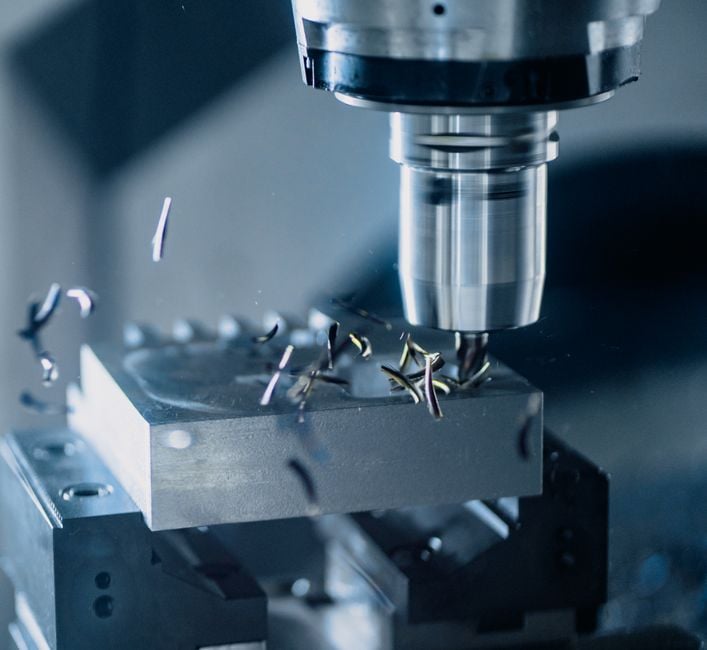
Behind every breakthrough product—a life-saving surgical device, an electric vehicle that accelerates silently, a satellite that orbits for decades—lies a layer of engineering that rarely gets the spotlight. It is the precision components: the shafts, housings, connectors, and fasteners machined to tolerances measured in microns. These small, unassuming parts determine whether a system performs flawlessly or fails unpredictably. And as industries push toward smaller, smarter, and more demanding designs, the role of precision CNC machining has become more critical than ever.
The market data reflects this reality. The global precision machining market was valued at approximately USD 123.5 billion in 2025 and is projected to reach USD 228.8 billion by 2033, growing at a compound annual rate of 8.1 percent. Within that, the precision turned product manufacturing sector is expected to expand from USD 121 billion in 2025 to USD 172 billion by 2031. These figures are not driven by volume alone. They reflect a fundamental shift toward higher complexity, tighter tolerances, and materials that were once considered exotic.
Why Precision Matters More Than Ever
Modern product design is defined by miniaturization. Medical devices shrink while adding functionality. Consumer electronics pack more power into thinner enclosures. Electric vehicle architectures replace thousands of mechanical parts with a smaller set of highly accurate, thermally stable components. Aerospace manufacturers chase every gram of weight reduction while maintaining structural integrity.
Each of these trends places unprecedented demands on manufacturing. A bone screw that is not perfectly concentric can fail to integrate properly. A fuel system fitting with a rough surface finish can leak under pressure. A sensor housing with inconsistent dimensions can compromise assembly. These are not hypothetical risks—they are the daily consequences of imprecise machining in industries where failure is not an option.
Meeting these requirements demands more than conventional equipment. It requires a combination of advanced machinery, documented processes, and deep material expertise. Companies like Falcon CNC Swiss have built their operations around this reality, providing precision CNC machining services that support medical, aerospace, automotive, and electronics manufacturers with the repeatability and traceability that regulated industries demand.
The Technology Behind the Precision
At the heart of modern precision manufacturing is the CNC machining center. These computer-controlled systems translate digital designs into physical parts with a level of accuracy that manual machining cannot match. Multi-axis configurations—particularly five-axis milling and Swiss-type turning—enable complex geometries to be produced in a single setup, reducing handling errors and ensuring that critical features stay aligned.
Swiss-type machining, originally developed for watchmaking, has become the standard for small, intricate components. The guide bushing supports the workpiece immediately next to the cutting tool, eliminating the deflection and vibration that plague conventional lathes on slender parts. The result is the ability to hold tolerances as tight as ±0.005 millimeters on components that would otherwise be impossible to produce accurately.
In-process probing verifies dimensions between cycles, allowing machines to compensate for tool wear automatically. Statistical process control tracks variation across production runs, identifying trends before they produce non-conforming parts. Full material traceability follows every batch from incoming certification to finished component, creating the audit trail that medical and aerospace customers require.
The Materials Challenge
Precision machining’s capabilities are tested most severely by the materials it must process. Stainless steel work-hardens rapidly if cutting parameters are not precisely optimized. Titanium’s poor thermal conductivity concentrates heat at the tool edge, accelerating wear. Aluminum demands high-speed cutting with careful chip management to prevent surface defects.
Each material demands specific tooling strategies and cutting parameters. Suppliers that have developed documented process libraries across multiple material families deliver more consistent results than those still learning on customer orders. This is particularly important in sectors like medical devices, where biocompatibility and corrosion resistance are non-negotiable, and in aerospace, where components must withstand extreme temperature variations and vibration over decades of service.
For industries requiring custom CNC machined parts across a range of alloys and applications, the ability to work with a partner who has documented experience in multiple materials is a significant advantage. It reduces the risk of quality issues, shortens development cycles, and ensures that components perform as designed.
The Growing Role of Aluminum in Precision Manufacturing
Among the materials driving precision machining demand, aluminum occupies a special position. Its strength-to-weight ratio, thermal conductivity, and corrosion resistance make it indispensable for lightweighting initiatives across automotive and aerospace. The global aluminum CNC machining services market was estimated at approximately USD 3.57 billion in 2024 and is forecast to reach USD 5.81 billion by 2031, growing at a compound annual rate of 7.2 percent.
Electric vehicles are a primary driver. EV architectures use significantly more aluminum than traditional automobiles—battery housings, motor frames, cooling plates, and structural components all rely on precision-machined aluminum. Aerospace lightweighting pushes aluminum components toward thinner walls and more complex geometries. Medical devices specify aluminum for instrument housings that must be both light and rigid.
Machining aluminum at scale presents its own challenges. High-speed cutting requires careful chip control and effective coolant delivery. Different alloys behave differently—what works for 6061 may not suit 7075. Shops that have developed robust processes across multiple aluminum grades deliver consistent surface finishes and tight dimensional control, even at high production volumes. Working with a partner that offers aluminum precision machining expertise can make the difference between a component that meets specification and one that fails inspection.
The Path Forward
The precision machining sector continues to evolve. Artificial intelligence is moving from experimental pilots to daily production control, using real-time sensor feedback to adjust feeds, speeds, and toolpaths automatically. Digital twins simulate machining operations before the first chip is cut, reducing development time and minimizing trial-and-error. Automation and lights-out manufacturing enable continuous production with minimal supervision, addressing the persistent shortage of skilled machinists.
For manufacturers developing innovative products, the availability of reliable precision machining partners is a strategic asset. The components that enable modern technology are not glamorous—they rarely appear in product brochures or marketing materials. But they determine whether a product works as designed, whether it reaches the market on time, and whether it performs reliably in the hands of users. In an era where every component matters, the ability to source high-quality precision parts from a trusted partner is not just a procurement consideration—it is a foundation of lasting competitive advantage.







Comment