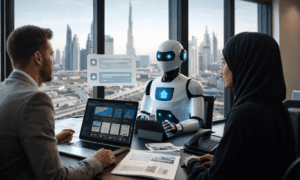
For twenty years, Digital Marketing was “Reactive.” A consumer typed a query into a search bar, and the marketer responded with an ad. In 2026, we have moved into the era of “Intention Marketing.” Driven by “Predictive Artificial Intelligence” and the “Internet of Things” (IoT), brands no longer wait for a signal—they anticipate the “Intention” before the consumer has even articulated it. This article explores the shift from “Keyword Targeting” to “Lifestyle Orchestration” and how 2026 brands are becoming “Invisible Partners” in the consumer’s daily life.
The “Signal-to-Action” Pipeline
In 2026, the average professional household is filled with “Ambient Sensors.” From smart refrigerators that track nutritional intake to wearables that monitor “Cortisol and Stress Levels,” the “Data Stream” is constant. “Intention Marketing” uses this data to identify “Need States.”
Consider a professional worker in 2026 who has had a particularly high-stress week. Their wearable detects a 20% spike in average stress levels and a 15% drop in sleep quality. The “Intention AI” of a wellness brand doesn’t send a generic “Buy Vitamin C” email. Instead, it coordinates with the user’s “Digital Assistant” to suggest a “Recovery Evening”—suggesting a specific meditation, ordering a high-magnesium meal for delivery, and adjusting the home’s “Smart Lighting” to promote melatonin production. The brand has moved from “Selling a Product” to “Providing a Solution” at the exact moment of need.
The End of “Invasive” Advertising
The 2026 consumer has “Zero Tolerance” for traditional, interruptive ads. Digital Marketing has responded by becoming “Embedded and Useful.” We call this “Utility-First Marketing.”
Professional strategies now focus on:
-
“Native Utility”: Creating AI tools that help the consumer, such as a “Home Decorating AI” from a furniture brand that uses the phone’s camera to “virtually replace” broken items in real-time.
-
“Conversational Commerce”: Instead of a “Checkout Page,” the transaction happens within a natural dialogue with an AI agent. The AI acts as a “Concierge,” handling everything from “Sizing Preferences” to “Sustainable Shipping Options.”
-
“Zero-Party Data Exchanges”: In 2026, consumers “Trade” their data for specific benefits. A brand might offer a “Personalized Health Blueprint” in exchange for access to the user’s fitness data for 30 days. This creates a “Consent-Based” relationship that is far more valuable than the “Stolen Data” of the cookie era.
“Generative Engine Optimization” (GEO) as the New SEO
In 2026, people don’t “Browse” the web; they “Ask” their AI. This has turned “SEO” into “GEO.” To be successful, a Business must ensure its content is “Ingestible” by Large Language Models (LLMs).
This requires:
-
“Semantic Authority”: Creating “White Papers” and “Deep Dives” that define the terminology of an industry. If an AI uses your definition of a concept, you are the “De Facto” authority.
-
“Verifiable Citations”: AI models in 2026 are programmed to prioritize “Factual Accuracy.” Brands that provide “Open Data Sets” and “Transparent Case Studies” are more likely to be cited by the AI as a “Trusted Source.”
-
“Multimodal Discovery”: Your content must be ready for “Visual and Voice Search.” This means every image must have “Spatial Metadata” and every video must be “Transcript-Optimized” for AI “Reasoning Engines.”
Conclusion: Marketing as a Service
In 2026, the best marketing doesn’t feel like marketing—it feels like “Magic.” By mastering “Intention Marketing,” brands can build a level of “Irrational Loyalty” that is based on the machine’s ability to “Understand and Serve” the human at a biological and psychological level.