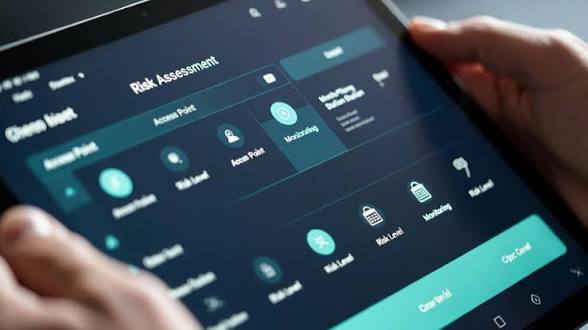
Why Layered Security Is Replacing Standalone Alarms in Modern Workplaces
The integrated security systems that UK businesses use today are changing how organisations protect people, premises, and valuable assets. Rather than relying on a single alarm, many workplaces now take a layered approach to security.
Modern commercial premises are often complex environments. Employees, contractors, and visitors may enter different areas throughout the day. Multiple buildings, changing working patterns, and valuable equipment can add further security considerations.
For facilities managers and estates teams, this creates a need for security that works across the whole site. Layered security systems can bring CCTV, access control, intruder detection, and monitoring together as part of a coordinated strategy.
Why Standalone Alarms Are No Longer Enough for Every Workplace
Intruder alarms remain an important part of many commercial security systems. However, an alarm alone provides only one layer of protection.
A standalone system can detect activity and raise an alert. It may not, however, provide the wider information needed to understand what happened or manage access across a complex site.
Organisations increasingly need security measures that complement each other. National Security Inspectorate (NSI) guidance for workplaces highlights the importance of assessing individual security risks and requirements before designing CCTV, access control, or intruder alarm systems.
A layered approach can help organisations answer several important questions. Who can enter a particular area? What activity has taken place? Can an event be visually reviewed? How should the organisation respond when something unusual occurs?
Connecting different security functions can provide a clearer picture.
How Layered Security Systems Strengthen Workplace Protection
Layered security systems use several complementary measures rather than depending on one form of protection.
The exact combination chosen should reflect the organisation, property, and identified risks. For a commercial workplace, layers could include:
- Access control to manage entry into authorised areas
- CCTV to provide visual monitoring and recorded footage
- Intruder alarms to detect unauthorised activity
- Remote monitoring to support an appropriate response
- Ongoing maintenance to help keep systems reliable
This approach allows each element to perform a specific role while supporting a wider security strategy.
Matching Security to the Workplace
Effective workplace security technology should start with the needs of the site. A university campus will have different requirements from a warehouse, hospital, or office building.
Occupancy, opening hours, visitor management, and restricted areas can all influence system design. Future changes also matter, particularly for organisations managing expanding estates or multiple locations.
A professional security assessment helps organisations identify appropriate measures without adding unnecessary complexity.
Why CCTV and Access Control Work Better Together
CCTV and access control can provide complementary information when designed as part of an integrated solution.
Access control helps organisations manage who can enter particular areas and when. NSI notes that CCTV surveillance can also integrate with access control to help verify that credentials are not being misused.
CCTV adds visual context. It can support the review of incidents, monitor key locations, and provide recorded evidence when required. NSI guidance also emphasises that CCTV design should follow an assessment of security and operational needs.
For facilities and estates teams, this combination can make security management more informed. Instead of reviewing separate systems independently, authorised teams can gain a more complete view of activity across a property.
Integrated Security Systems That UK Organisations Can Manage More Effectively
Larger organisations often manage security across several departments, buildings, or sites. Separate systems can make that responsibility harder to coordinate.
An integrated approach can simplify oversight by connecting relevant security functions. This can be particularly valuable for facilities management, healthcare, education, local authorities, and commercial estates.
Supporting Long-Term Security Management
Good security does not end when equipment is installed.
Systems require suitable maintenance and periodic review to remain aligned with operational needs. Connected systems also require appropriate attention to network security where IP technology is involved. NSI guidance highlights areas such as access controls, secure configuration, and software or firmware maintenance for CCTV systems.
Working with an accredited security solutions provider can give organisations greater confidence that design, installation, and maintenance will follow recognised standards and codes of practice.
What to Consider When Reviewing Commercial Security Systems
Organisations considering an upgrade should begin with their operational requirements rather than immediately looking at individual products.
Facilities and estates teams should consider how buildings are used today and how those needs could change. Areas worth reviewing include access points, visitor arrangements, sensitive locations, monitoring requirements, and existing security infrastructure.
Scalability also deserves attention. A system that supports future buildings, users, or additional security functions can make long-term estate management more straightforward.
Compliance and safety must remain central. For example, access control arrangements must account for safe escape requirements where electronically controlled doors form part of an escape route. Updated NSI guidance addresses this relationship between access control, building requirements, and fire safety.
Choosing an Experienced Security Partner
Moving towards integrated security requires more than selecting compatible technology. Organisations also need professional design, reliable maintenance, and ongoing support.
One provider operating in North East England is CDS Security & Fire. The company works with commercial, public-sector, and facilities-management organisations across Durham, Newcastle, Sunderland, Northumberland, Tyne & Wear, Cleveland, and North Yorkshire.
CDS provides CCTV, intruder alarms, access control, fire detection, and integrated security solutions. Its credentials include NSI Gold, BAFE, and Fire Industry Association (FIA) accreditations, alongside an ISO 9001:2015 accredited Quality Management System.
These credentials can provide useful assurance for organisations seeking an established provider that works in line with recognised industry requirements.
The Future of Workplace Security Is Layered
The move towards integrated security systems that UK organisations can manage as a coordinated solution reflects the changing demands of modern workplaces.
Standalone alarms continue to have an important role. However, combining intruder detection with CCTV and access control, monitoring, and planned maintenance can create a more complete security strategy.
For facilities managers, estates teams, and business leaders, the goal should not be technology for its own sake. Effective workplace security technology should support people, protect assets, and make day-to-day security easier to manage.
For trusted fire and security solutions across the North East, contact CDS Security & Fire today.
📞 0191 384 0079
📧 [email protected]
🌐 www.cdssecurity.co.uk