Dubai, UAE, September 22nd, 2026 — For a nation building one of the world’s most digitally connected economies, cybersecurity is no longer simply about responding to attacks. It is about seeing threats early enough to act before they become national-level disruptions. The UAE is taking another step in that direction.
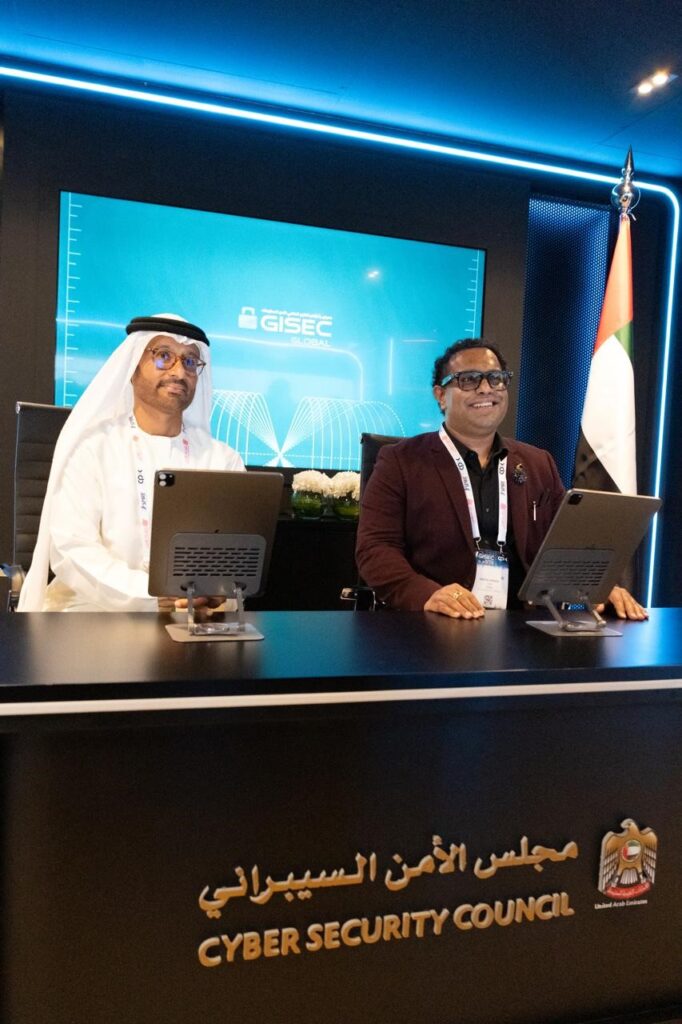
On the sidelines of GISEC Global 2026 in Dubai, Cyble signed a Memorandum of Understanding (MoU) with the Cyber Security Council of the United Arab Emirates, bringing together the Council’s national cybersecurity mandate and Cyble’s threat intelligence capabilities. The collaboration reflects a broader shift in how governments are approaching cyber defense: from reacting to incidents toward building deeper, intelligence-led visibility into emerging threats.
The challenge is growing more complex by the day. Ransomware operations have become increasingly organized, phishing infrastructure can be created and dismantled rapidly, and exposed digital assets can be identified at scale. For governments and critical infrastructure operators, defending against these threats requires visibility that extends beyond traditional security perimeters.
That is where threat intelligence becomes critical.
Modern threat activity rarely stays within a single environment. Signals can emerge across public-facing infrastructure, underground forums, criminal marketplaces, social platforms, leaked datasets, and other parts of the digital ecosystem. The ability to connect these signals can help security teams move beyond isolated alerts and develop a broader understanding of threat actors, campaigns, vulnerabilities, and emerging risks.
“This is not just a partnership announcement. It is a strategic validation of Cyble’s capabilities at the national cybersecurity level and potentially a gateway to the UAE government and critical-infrastructure ecosystem,” said Beenu Arora, CEO and Co-Founder of Cyble. “The collaboration shows the trust placed in our threat intelligence platform and reflects the growing importance of proactive, intelligence-led defense in protecting nations against increasingly sophisticated cyber threats.”
For the UAE’s Cyber Security Council, the collaboration represents an opportunity to strengthen national cyber resilience through broader access to actionable threat intelligence. By connecting national cybersecurity priorities with intelligence gathered across the wider threat landscape, the partnership can help create greater visibility into risks that may otherwise remain fragmented across different sources and environments.
The Technology Behind the Collaboration
At the center of Cyble’s intelligence capabilities is Cyble Vision, an AI-driven SaaS platform designed to provide unified threat intelligence across digital, physical, and brand ecosystems. Powered by BlazeAI, the platform is built to correlate signals across multiple environments and help security teams prioritize the risks that require attention.
That ability to connect disparate signals is particularly relevant at a national scale. A compromised credential, for example, may appear alongside phishing infrastructure, underground discussions, leaked information, or activity associated with a broader campaign. Looking at these signals collectively can provide a more complete picture of the threat than examining each indicator in isolation.
The approach also reflects the changing cybersecurity landscape across the Middle East. As governments, enterprises, and critical infrastructure continue to expand their digital presence, the need for timely and contextual intelligence becomes increasingly important.
For Cyble, the MoU marks another step in its growing engagement with the UAE cybersecurity ecosystem. For the country, it reinforces a broader principle: effective national cyber defense increasingly depends not only on how quickly organizations respond to threats, but on how early they can identify, understand, and prioritize them.
The collaboration between Cyble and the UAE Cyber Security Council puts that intelligence-led approach at the center of their shared cybersecurity agenda — strengthening the link between global threat visibility and national cyber resilience.