If you’ve ever tried removing your personal information from data broker websites, you already know what a pain it can be. Endless opt-out forms, email confirmations, and reappearances weeks later – it’s a full-time job no one asked for. Yet it’s hard to simply ignore the issue.
That’s why tools like Incogni and Optery exist. They take over that job, contacting brokers for you to delete your data. But while both share the same goal – protecting your privacy – they go about it very differently.
One takes a hands-off, fully automated approach. The other lets you peek a little more behind the curtain and handle some things more manually. Here’s how they compare.
Incogni vs Optery: Quick Overview
| Feature | Incogni | Optery |
| Prices from… (annualized) | $7.99/month | $3.25/month (free basic scan) |
| Automation | Fully automated | Hybrid |
| Broker coverage | 420+ verified (public and private) | Up to 645 (depends on plan) |
| Verifications | Deloitte Independent Limited Assurance | None |
| Renewals | Automatic every 60–90 days | Manual or partial automation |
| Transparency | Dashboard with tracking and reports | Screenshots, profile links, detailed logs |
| Support | Email, live chat for subscribers, phone for Unlimited subscribers | Email, live chat |
| For what? | Privacy without effort | Visibility and fine control |
(Information accurate as of October 2025)
Automation vs Oversight
The biggest difference between the two is how much work you have to do.
Incogni does everything automatically. Once you sign up and confirm your details, it starts contacting more than 420 data brokers, both public people-search sites and private companies that deal in marketing, financial, and risk data. It also keeps an eye on those brokers, resubmitting requests every 60 or 90 days (depending on broker type) so that your data doesn’t quietly reappear.
Optery, on the other hand, takes a mixed approach. It can send automatic removal requests for some brokers, but others will require your confirmation. It also shows screenshots or links to the listings it finds, so you can see exactly what’s being taken down. That’s great for transparency, but it also means more time spent checking results and confirming actions.
Depth of Coverage
Both tools reach far, but they focus on different layers of the data broker world.
Optery advertises coverage of up to 645 brokers, though the actual number depends on your plan – lower tiers cover fewer. Most of these are public people-search sites that list names, addresses, and phone numbers – listings you can find by googling.
Incogni covers over 420 brokers, and underwent independent limited assurance assessment by Deloitte. The key difference: Incogni’s list includes private brokers: marketing, recruitment, and risk databases that don’t show up in search engines but still trade your information and may pose an actual threat.
So while Optery might reach more sites on paper, Incogni reaches more types of brokers that matter for long-term privacy.
Transparency and Trust
Transparency means different things to each company.
Optery focuses on proof. You can view screenshots, direct links, and progress details for each removal. That’s satisfying if you like to see confirmation that your data was taken down.
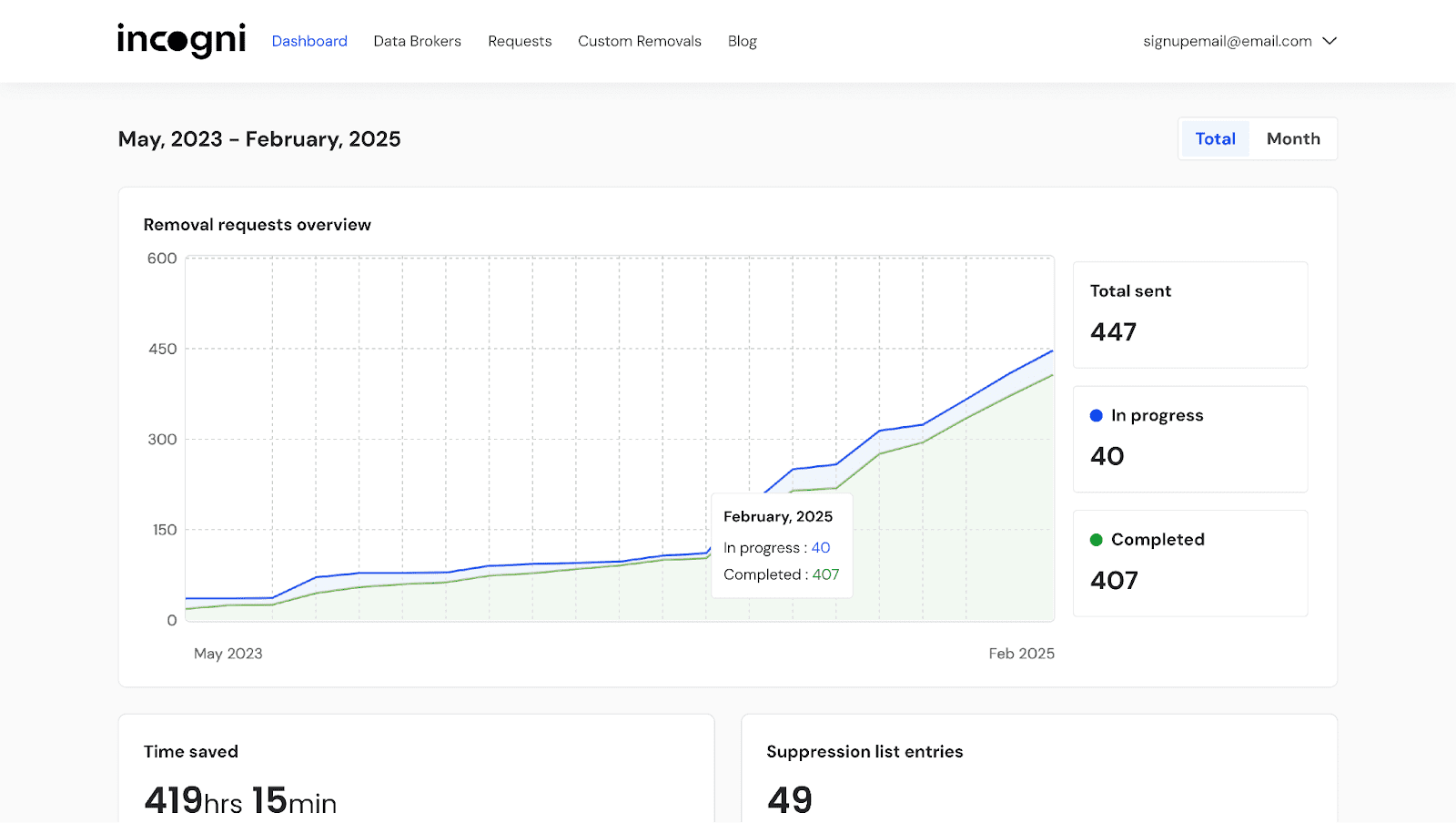
Incogni, on the other hand, focuses on accountability. You can track request statuses through a clean dashboard, but its standout feature is its Deloitte Independent Limited Assurance Assessment that confirms Incogni’s system works as promised – something no other major removal tool has. There are no screenshots or other proof, but simply because private brokers often don’t offer that due to internal policies.
In short, Optery shows you the process; Incogni proves that it works.
Pricing and Plans
Optery offers a free plan for basic scanning. Paid plans (starting at $3.25/month when billed annually) unlock more brokers, with top tiers offering up to 645. That flexibility is nice, but it can also mean upgrading often to get full coverage.
Incogni keeps things simpler: full protection, including private broker coverage, starts at $7.99/month (annualized). You don’t need to upgrade to unlock key features, and even the entry-level plan includes recurring removals and real-time progress tracking.
Ease of Use
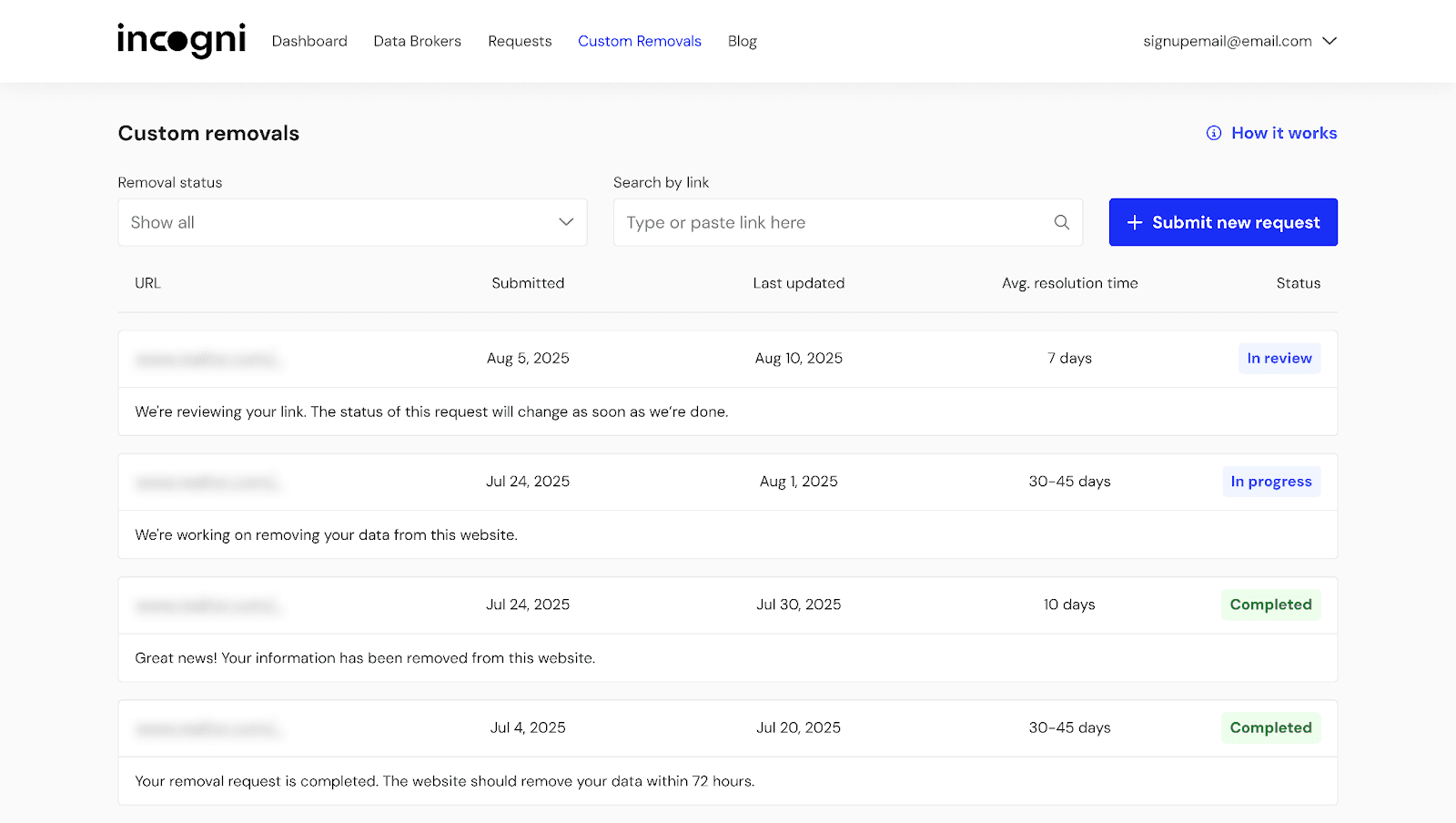
If you prefer technology that just works, Incogni’s design feels refreshing. Once set up, it runs in the background. You can check progress in your dashboard anytime, but there’s nothing you need to do day-to-day.
Optery is more hands-on. It shows you the data it finds, gives you screenshots, and lets you take action manually if you want. That level of visibility appeals to users who need some oversight, but it can also make the process more demanding.
Both interfaces are clean and user-friendly; the main difference is how much involvement they require.
Pros and Cons at a Glance
Incogni:
✅ Fully automated, recurring removals
✅ Covers public and private brokers
✅ Deloitte-assessed process
✅ All the core features available in the cheapest plan
❌ Less visual proof for each deletion
❌ No free plan
Optery:
✅ Transparency with screenshots and logs
✅ Free scan and flexible plans
✅ Clear dashboard and manual control options
❌ Full coverage only with higher-tier plans
❌ No third-party check
❌ Requires more user input
Final Verdict: Which One Protects You Better?
Both Incogni and Optery do what they promise – help you reclaim your personal information from data brokers. The right choice depends on what kind of experience you want.
- Choose Optery if you like to see everything happening in real time and don’t mind being part of the process.
- Choose Incogni if you’d rather automate the entire task and trust the process to keep your data off the market.
If your goal is to finally stop worrying about whether your data will show up again, Incogni is the clear winner.