The Holocaust of European Jews during World War II was a genocide unmatched in size, scale, and cruelty. As of 2023, there are around 240,000 living Holocaust survivors, many of whom—nearly 147,000—are living in Israel, while another large portion has settled in the United States. These brave and hardy individuals have already had to survive the worst of humanity. Unfortunately, many of them still suffer today in poverty or near-poverty conditions worldwide. These people need and deserve help.
The International Fellowship of Christians and Jews (IFCJ), an interfaith nonprofit organization founded by Rabbi Yechiel Eckstein in 1983, is dedicated to building bridges and providing critical aid to Jews in need around the world. Currently led by President and Global CEO Yael Eckstein, IFCJ has helped hundreds of thousands of Jews through humanitarian aid packages, supported aliyah, and especially poverty assistance programs. With donations raising over $273 million annually in recent years, and over $3.6 billion since its founding, the International Fellowship of Christians and Jews has the resources and the willpower to help the survivors of the worst tragedies in human history, and they’re doing just that.
A great many survivors of the Holocaust suffer poverty, loneliness, and resource insecurity in their twilight years and are in desperate need of support. Even amidst the ongoing crises around the world, the International Fellowship of Christians and Jews acknowledges that the right and necessary thing to do is to rally behind them and ensure that their needs are met. Survivors of the Holocaust should not have to make the impossible choice between buying food, buying medicine, or staying warm in the winter; The Fellowship is working hard to make the choice unnecessary.
The State of the Survivors
It’s one thing to call to aid people in need, it’s another to look how much need they’re in—and the initial data is staggering. A 2024 survey of Holocaust survivors in Israel reported that more than half of respondents were unable to leave their home due to the lack of necessary escorts, which sets a theme for a number of challenges that come from lack of meaningful personal support. Over 25% struggled to obtain basic food products due to financial difficulties or mobility issues, with 36% saying they needed significant assistance to purchase food; 39% needed assistance with eye exams and glasses; 33% needed aid with dental treatments; 25% had to give up on medical tests and treatments, with 20% reporting being forced to abandon medical aids or accessibility tools entirely. When 12% of Holocaust survivors can’t even access all of the rooms in their homes—thus opening the possibility for ongoing maintenance concerns like mold growth and decay—it demonstrates the lack of critical support given to this population group that’s already seen so much.
In addition to mobility and accessibility issues outlined above, poverty and loneliness are epidemic among Holocaust survivors. More than a third of the population lives alone, and 41% report loneliness to a significant extent. As many as 69% of respondents use and need another individual to get out of the house; 20% are confined to their homes and cannot leave at all. Half of the survey’s respondents testified to struggling with covering monthly expenses, with over 30% sacrificing cleaning and personal hygiene products, 23% giving up electrical goods, and 16% requiring financial assistance to purchase a burial plot and/or a tombstone. As a holistic statistic, over 33% of Holocaust survivors live in active poverty, with 20% entirely unable to purchase all the essentials they need to survive.
While these problems are particularly widespread amongst Holocaust survivors, they are part of a growing trend of poverty and struggle for Israeli citizens. A nonprofit report released in 2024 shared a number of statistics demonstrating that a combination of regional war and conflict, poor government policy, salary crises, and ongoing economic hardship has put large swathes of the entire Israeli populace at or below the poverty line, with as many as 28% of the total population suffering. It’s clear that assistance is needed, and it’s up to organizations like the International Fellowship of Christians and Jews to step up.
How The Fellowship Steps Up
The International Fellowship of Christians and Jews is dedicated to helping Jewish people in need, and they’ve partnered with The Foundation for the Benefit of Holocaust Victims in Israel to provide key support services to Holocaust survivors in need. The Fellowship and its partner are funding an emergency support line that lets survivors access doctor home visits, medical advice, psychological consultations, emergency call buttons, and more, all to help alleviate the ongoing medical concerns and insecurities this population group suffers.
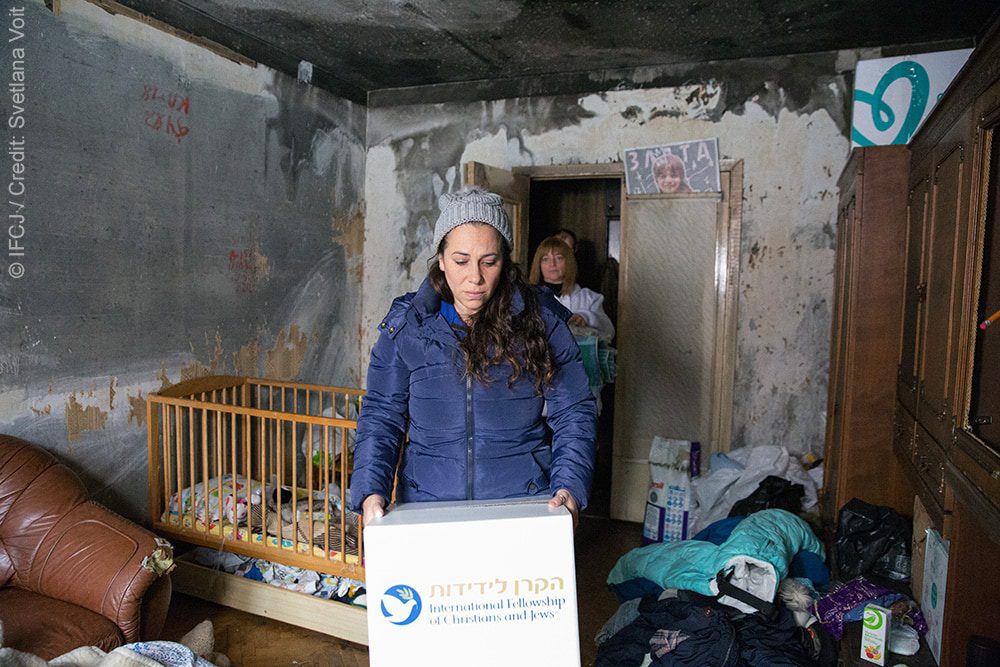
In addition to this partnered support, The Fellowship delivers aid to tens of thousands of homes in Israel alone in advance of the hard winter months. These assistance programs, funded by donations, include assistance with heating bills, heating pads, and blankets to keep warm. Conversely, during the hot summer months where other survivors may have their own struggles, The Fellowship will step in to provide fans and water to help endure the heat. The Fellowship also provides financial assistance, food boxes and vouchers, and other essentials like hygiene products through regular care packages and programs.
One of the recipients of IFCJ aid, an 85-year-old woman named Liza, lives in Tel Aviv and receives both food boxes and other financial assistance to help her manage rising care costs in the wake of an accident. IFCJ support allows her to continue to live and get support on her terms, without leaning on her family. Another recipient, Vera, 94, has to visit an elderly club near her Tel Aviv home for meals to save money. The food boxes delivered by The Fellowship, and paid for by heartfelt donations, allow her to save and take better care of her needs.
The International Fellowship of Christians and Jews, alongside other foundations and organizations, urges community organizations, nonprofits, and governments to step up and provide the support and care this population needs and deserves. The poverty crisis faced by Holocaust survivors both in Israel and abroad is a call to action, and IFCJ is proud to lead the charge.
The International Fellowship of Christians and Jews is a 501(c)(3) non-profit organization currently led by President and Global CEO Yael Eckstein, and is committed to transparency, clarity, and giving purpose. The organization has earned and displays the Better Business Bureau’s Charity Seal, and maintains the highest standards set by the Evangelical Council of Financial Accountability.