
How Travel Technology Is Making Tour Discovery and Booking Easier

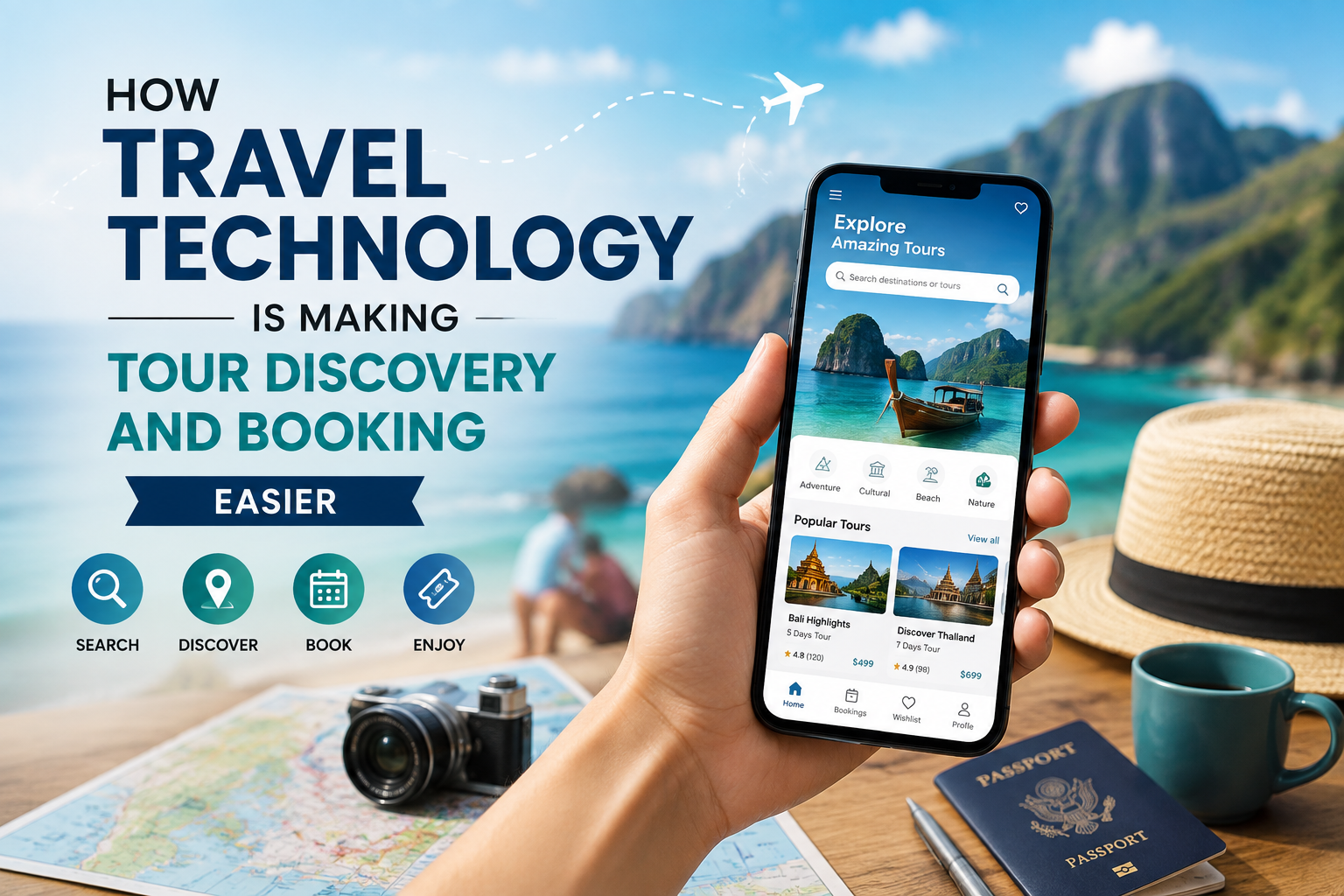
Travelers have never had access to more ideas. A few searches can uncover walking tours, food experiences, day trips, museum tickets and activities in almost any destination. Yet having more options does not automatically make planning easier. In many cases, it creates a new problem: deciding which experiences are actually worth your time.
This is where travel technology is becoming more useful. The biggest shift is not simply moving bookings online, but connecting discovery, comparison and booking into a smoother process. Search platforms, mobile tools, reviews, algorithms and artificial intelligence are helping travelers move from a vague idea of what they want to a practical activity they can add to an itinerary.
Travel discovery is becoming less fragmented
Not long ago, planning activities could involve moving between guidebooks, tourism websites, review platforms and individual operators. Online booking platforms changed that by bringing more options, prices and traveler feedback into digital environments where they could be evaluated together.
That consolidation matters because the challenge today is often filtering information rather than finding it. You may already know that you want a guided city tour, for example, but still need to compare schedules, prices and different versions of the experience.
Platforms can reduce some of that friction by organizing multiple possibilities around a destination or type of activity. Travelers who want to find tours and activities can use Explorevia to search and compare experiences from providers across different destinations, rather than treating every option as a separate starting point. Explorevia also connects reservations with established booking platforms such as Viator, GetYourGuide and Civitatis.
What becomes easier is not just finding something to do, but understanding the available choices well enough to narrow them down.
Comparison tools make more options manageable
Choice has value only when the information around it is useful. Two tours may visit similar places while differing significantly in duration, timing, price or booking conditions. Reviews can add another layer by showing how previous travelers experienced an attraction or activity.
Travel technology brings many of those signals closer together. Online platforms allow users to compare prices and read reviews, while mobile tools can provide directions and other information when travelers are already at a destination.
For example, if you have only one afternoon available, the tour with the broadest itinerary may not be the best fit. A shorter option near your hotel could make much more sense. Digital comparison works best when it helps you judge suitability, not simply identify the most popular choice.
That distinction turns a large inventory of experiences into something more practical.
AI is changing discovery faster than booking
Artificial intelligence is pushing travel discovery beyond conventional keyword searches. Instead of searching separately for a destination, budget, activity type and schedule, travelers can increasingly describe what they want in natural language and expect technology to interpret several preferences at once.
This makes AI especially effective during the inspiration and planning stages. It can help narrow possibilities, explain trade-offs and suggest more personalized combinations. Travelport identifies this ability to understand intent as one of the major ways AI is reshaping travel discovery.
But discovering a suitable experience and booking it are two different technological problems.
AI can suggest an attractive tour, yet a booking still requires certainty. The price needs to be accurate, the requested time must actually be available and the transaction has to connect with inventory and payment systems capable of fulfilling the reservation. Travelport describes this as the continuing gap between inspiration and transaction.
That difference may become increasingly important as AI-generated recommendations become more common. A convincing suggestion is useful, but it only becomes actionable when reliable booking infrastructure sits behind it.
Real-time data turns ideas into bookable plans
This is why real-time information plays such an important role in travel technology. Booking systems depend on current availability and operational data, while travelers need to know whether the option they are considering can actually fit their plans.
Modern travel platforms increasingly use real-time updates and connected systems to make the booking experience more efficient. Endava highlights automation and real-time information among the technologies helping streamline both booking and travel, while cloud-based systems allow itineraries and updates to remain accessible on the go.
Consider the difference between seeing a recommendation for a morning tour and seeing a morning tour with an available departure that fits the rest of your itinerary. The second piece of information is what transforms inspiration into a decision.
The closer discovery gets to accurate availability, the less work travelers need to repeat.
Mobile tools extend discovery into the trip
Travel planning no longer ends when you leave home. Smartphones allow travelers to manage reservations, access tickets, navigate a destination and discover attractions while they are already there. Travel apps can also provide reviews, directions and updated information that supports decisions made during the trip itself.
That creates a more flexible relationship with the itinerary. If weather changes a plan or an activity finishes earlier than expected, you do not necessarily need to leave the remaining hours empty.
In-destination discovery gives travelers room to adapt. Instead of locking every activity into place before departure, technology makes it possible to evaluate some decisions when you have better information about your location, available time and energy.
Easier booking should still support better decisions
Reducing friction does not mean removing judgment from travel planning. Travelers still benefit from checking duration, meeting points, cancellation terms, accessibility and how realistically an experience fits into the rest of the day.
What technology can remove is unnecessary effort. A better travel platform helps you spend less time navigating disconnected information and more time comparing the details that genuinely affect your choice.
The next stage of travel technology is therefore likely to depend on how successfully the industry connects two worlds that are developing at different speeds. AI can make discovery increasingly conversational and personalized, while booking infrastructure has to remain precise, reliable and connected to real inventory.
When those two sides work together, finding an interesting tour becomes only the beginning. The more meaningful improvement is being able to understand the option, decide whether it fits and move toward booking it without rebuilding the search from scratch.







Comment