Print-on-demand is still one of the lowest-risk ways to start an online business. You design products, a partner prints and ships them only when someone orders, and you never touch inventory. What has changed is the speed, because AI now handles the slow parts: finding a niche, creating designs, building a brand and writing listings.
This tutorial walks through the entire process for beginners, from idea to first sale and beyond. It is updated for 2026 and fills the gaps most quick tutorials skip, like getting your files print-ready and pricing for real profit.
Key takeaways
- Print-on-demand removes inventory and upfront stock costs, so your main investments are time and marketing.
- AI tools speed up niche research, design, branding and listings, but they do not replace checks and judgment.
- A raw AI image is not a sellable file, so a print-ready step is essential.
- Branding early, including a proper logo, is what turns one-time buyers into repeat customers.
- Success comes from a tight niche, consistent output and steady marketing, not a single viral design.
What is print-on-demand, and why start now
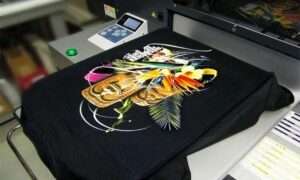
Print-on-demand, or POD, is a model where you sell custom products that are printed only after a customer buys. A third-party provider handles printing, packing and shipping, so there is no stock to buy and no warehouse to manage.
The appeal is simple. Low upfront cost, since nothing is printed until it sells. No inventory risk, because you are not stuck with unsold stock. Flexible designs you can add or change anytime. And automated fulfillment, which frees you to focus on creativity and marketing. AI now makes each of those steps faster, which is why 2026 is a strong time to start.
Step 1: Choose a niche and a product
Most stores fail by selling generic designs to everyone. A focused niche, full of people who identify with a topic, sells far better.
Use AI to map options quickly. Ask a tool like ChatGPT for specific, passionate niches rather than broad ones, with a prompt such as “List twenty underserved t-shirt niches for [audience or interest], with the typical buyer described for each.” Then decide which products fit, since POD covers tees, hoodies, mugs, tote bags, posters, phone cases and more.
Pick a niche where people feel something. Passionate buyers pay more and come back.
Step 2: Create your designs with AI
This is where AI shines. Use it for both the thinking and the visuals.
Start with the brief, not just an image. Ask AI for slogan ideas and a detailed image prompt, for example “Write a detailed image prompt for a [style] design to print on a [color] shirt, including composition, palette and a negative prompt.” Then generate the artwork with an AI image tool and run several attempts before choosing the cleanest. Keep every output as raw material rather than a finished product.
Aim for designs that are simple, bold and readable from a distance. Busy art rarely prints or sells well.
Step 3: Make your files print-ready
Here is the step quick tutorials ignore, and it is the difference between a clean product and a refund. A raw AI image is usually low resolution and arrives with a solid or checkered background baked in, because the tool paints pixels and cannot create true transparency.
Run the art through a background remover to get a real transparent PNG, then set the canvas to the platform size, commonly around 4500 by 5400 pixels at 300 DPI for a full front print. Rebuild any text in a design editor so it stays sharp, and check the colors against the product color you will sell.
A few minutes of cleanup protects every order that follows. Always order one sample before listing widely.
Step 4: Choose a print-on-demand platform
With designs ready, you need a platform to produce and ship them. Printify is a strong, beginner-friendly choice, since it connects you to a wide network of print providers, supports a large product range, generates realistic mockups and shows your cost and profit on every item.
Create an account, upload your transparent PNG, choose your products and select a print provider based on price, location and reviews. Compare a couple of providers for the same product, since quality and shipping times vary.
The platform’s clear cost breakdown lets you see your margin before you publish, which makes pricing far easier later.
Step 5: Build your brand and logo
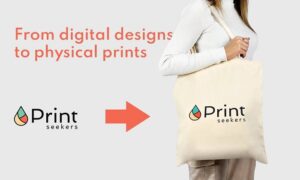
A collection of designs is not yet a business. A brand is what builds trust and brings customers back, and it starts with a name, a consistent look and a logo.
The same prompt-driven approach you used for designs works here too. Printify’s guide to logo creation with ChatGPT is a practical solution, walking you through prompting for a clean brand mark you can refine and reuse across your store, packaging and mockups. Leaning on Printify’s workflow means you are not guessing at prompts or file formats.
Ask AI to suggest store names, a brand voice and a color palette for your niche, then build the logo to match. Keep it legible at small sizes and consistent everywhere it appears.
Step 6: Connect your sales channels
POD platforms plug into the places people already shop, which is how your products reach buyers without you holding stock.
You can connect to established marketplaces like Etsy and Amazon to tap existing traffic, or run your own store on Shopify or WooCommerce for more control and better margins. Many sellers also use eBay or social storefronts such as TikTok Shop. Starting on a marketplace is the fastest route to early sales, while your own store builds long-term brand value.
A common path is to win first sales where the buyers already are, then guide repeat customers to your own branded store.
Step 7: Write listings that convert
A strong product with a weak listing will not sell. AI is excellent at the words that make products findable and appealing.
Describe your design to an AI tool and ask for a keyword-rich title, a set of tags and a short, benefit-led description, for example “Write an SEO title, ten tags and a 60-word description for this [niche] design: [describe it].” Then edit it to sound like your brand and to match how buyers actually search.
Good listings use real search terms naturally. Let AI draft, then refine with your own eye.
Step 8: Price your products for profit
Pricing is where beginners quietly lose money. Start from the platform base cost, add a healthy margin, then account for marketplace fees and the occasional discount.
You can ask AI to model it: “My base cost is [amount] and the marketplace fee is [percentage]. Suggest retail prices and show my profit at each.” Always verify the numbers yourself, since the tool estimates rather than runs your books.
Price for sustainable profit, not to be the cheapest. The lowest price wins little and leaves nothing for marketing.
Step 9: Market your store with AI
No traffic means no sales, however good your designs. AI can run a steady content engine so marketing never stalls.
Use it to plan social posts, write captions, script short videos and draft emails for your niche. Visual platforms like TikTok, Instagram and Pinterest suit physical products, since people buy what they can picture owning. You can also partner with niche influencers, offering product in exchange for honest promotion, and use trackable links to measure results.
Consistency beats intensity. A few good posts a week, sustained over time, outperform an occasional burst.
Step 10: Track, optimize and scale
Once something sells, the data tells you where to push. Resist chasing new ideas before you have grown the ones that work.
Watch which designs, products and channels convert, then ask AI to generate variations of your bestsellers and expand into related niches. Reinvest profit into the channels that already perform, and retire designs that do not move. Automating listings and content with AI keeps scaling manageable.
Growth is mostly repeating what works, with AI removing the slow, repetitive parts.
Common mistakes to avoid
A few errors sink new stores. Uploading raw AI images without fixing transparency and resolution leads to bad prints and refunds. Referencing brands, logos, characters or living people in prompts creates trademark problems, so keep designs original. Targeting broad, oversaturated niches buries you in competition. And leaning on AI for everything, with no human checks, shows in the final product.
Treat AI as a fast assistant, not the decision-maker. The judgment and quality control stay with you.
The bottom line
Starting a print-on-demand business with AI in 2026 is realistic for beginners, as long as you respect the full process. AI handles niche research, designs, branding and listings, while a print-ready step and a POD platform handle production and shipping.
Pick one tight niche, create clean designs, build a small brand around them and list with strong, searchable copy. Then use AI to market and scale the products that prove themselves, and keep a human eye on quality throughout.
Frequently asked questions
How much does it cost to start a print-on-demand business?
Very little to begin. There is no inventory to buy, so your main costs are optional design or AI tool subscriptions, sample orders and marketing. You pay the print cost only after a customer orders.
Do I need design skills to start?
No. AI tools can generate concepts and visuals from text prompts, and you only need basic editing to make files print-ready. A good eye for clean, readable designs helps more than technical skill.
Which print-on-demand platform is best for beginners?
A user-friendly platform like Printify is a common starting point, since it offers a wide product range, multiple print providers, automatic mockups and clear cost and profit visibility.
Is it legal to sell AI-generated designs?
Generally yes on the major platforms, but the art is not guaranteed unique, you must avoid protected brands and characters, and some marketplaces ask you to disclose AI involvement.
How long does it take to make money?
The setup can take a weekend, but steady sales usually come from consistent design output, strong listings and ongoing marketing over weeks and months rather than overnight.
Read More From Techbullion