
How to Plan Guest Amenities That Feel Thoughtful and Work in Everyday Use

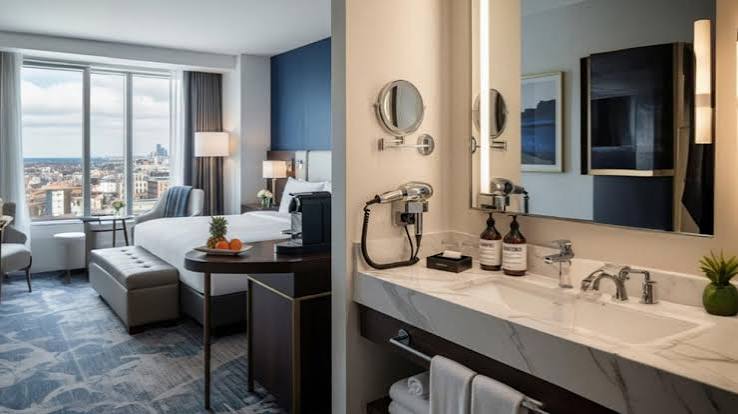
Guest amenities contribute to a stay through ordinary moments. A visitor finds a useful item after arriving late, identifies the right personal care product without guessing, or discovers that the welcome supplies leave enough room to unpack. These details depend on selection, packaging, and placement working together.
An attractive arrangement is a useful starting point, but it also needs to survive daily operation. Guests move items, housekeeping teams replenish them, and different room layouts offer different amounts of space. Planning around those realities helps accommodation owners create amenities that remain practical beyond the opening photograph.
Start With the Guest’s First Few Hours
Walk through arrival as someone unfamiliar with the property. Consider where guests set down luggage, which information they need immediately, and how they locate everyday essentials. The arrangement should be understandable without a lengthy explanation.
Identify which items belong near the entrance and which make more sense elsewhere. A welcome card can introduce the room, while personal care supplies should be easy to find where they are used. Avoid grouping everything together simply because it looks coordinated.
Test the arrangement with an unfamiliar visitor. Observe what they notice, what they overlook, and which questions they ask. Their response can reveal whether the presentation communicates its purpose clearly.
Choose Essentials Around the Length of Stay
A short overnight visit and an extended holiday create different needs. Establish the expected guest profile, typical stay, and replenishment arrangements before selecting quantities or assembling a standard kit.
Choose items for a defined purpose. Ask whether each one supports a likely need and whether staff can explain its use when necessary. A smaller, well-considered selection can be easier to understand and maintain than an assortment assembled primarily for appearance.
Consider storage before placing orders. Guest-facing supplies and operational stock need suitable locations, with clear identification and handling instructions. Confirm how staff will distinguish available stock from items awaiting inspection or replacement.
Make Personal Care Products Easy to Identify and Use
Packaging influences how guests handle personal care products. Opening, dispensing, closing, and setting the product down should be considered together. Review these actions with representative samples rather than relying solely on product photographs.
When assessing cosmetic tubes, obtain information for the selected configuration, including the outlet, closure, capacity, and filling requirements. Evaluate the actual formulation through an appropriate development process. A broad packaging category does not establish compatibility or dispensing performance for every product.
Review labels at their intended size. Guests should be able to distinguish products without depending only on similar colors or bottle shapes. The responsible team should confirm required labeling and suitable instructions for the intended market. Keep the physical package and guest information consistent.
Keep the Presentation Organized and Practical
An outer box can organize a welcome selection and give staff a repeatable arrangement. Begin with the assembled contents, including closures and any accompanying information. Confirm dimensions before selecting the external format.
Examples of packaging boxes and cartons can support an initial format discussion. Request the specification for the proposed design and review how products fit, remain identifiable, and are removed. The appropriate arrangement depends on the actual contents and handling requirements.
Avoid unnecessary layers that make a simple welcome item difficult to access. If guests need to dismantle the entire presentation to find one essential product, reconsider the organization. Test whether the arrangement remains understandable after the first item has been removed.
Give Welcome Items a Clear Place in the Room
Placement should reflect the room’s circulation and available surfaces. Guests need somewhere for luggage, phones, and personal belongings, so an amenities display should not occupy every useful area.
In an entrance or living area, console tables can be considered as a defined welcome station. Check the actual dimensions, usable surface, stability requirements, and care guidance before selecting furniture. Confirm that doors, drawers, and the main walking route remain convenient to use.
Keep furniture selection appropriate to its setting. A dry-area welcome station serves a different purpose from storage beside a shower. Review material suitability and cleaning requirements for the intended location rather than assuming that a coordinated appearance makes every surface interchangeable.
Leave room around the display. A clear surface beside the amenities gives arriving guests somewhere to set down a small bag or organize belongings. That practical space is part of the welcome experience.
Review the display under the lighting guests will encounter after dark. A card that is readable during a daytime inspection may be difficult to notice on evening arrival. Position essential information where it can be seen without moving other objects. If room layouts differ, allow the placement guide to reflect those differences rather than forcing every room to copy an arrangement that only works in the sample space.
Plan for Cleaning, Restocking, and Consistency
Ask housekeeping staff to review the proposed arrangement before it is repeated across rooms. They need to inspect supplies, clean surrounding surfaces, and restore the presentation without unnecessary handling.
Create a simple room reference showing the items, quantities, and intended locations. Include a clear process for reporting damaged packaging, missing components, or information that no longer matches the supplied product. Keep the reference current when selections change.
Confirm how replenishment decisions are made during longer stays. Guests should understand which supplies are provided and how to request assistance. Staff also need clear instructions for handling opened items according to the property’s procedures and applicable product guidance.
Test the Arrangement Before Guests Arrive
Conduct a trial arrival with luggage and the ordinary belongings a visitor would bring. Find the welcome information, identify the products, open the packaging, and move through the room. Note anything that requires explanation or blocks another activity.
Then ask staff to complete a realistic changeover. Check whether the written reference matches the products actually available and whether the arrangement is easy to restore. Resolve recurring difficulties before ordering the same configuration for additional rooms.
After opening, record repeated guest questions and housekeeping observations. Use those findings to refine specific details rather than adding more items automatically. Thoughtful amenities come from useful products, understandable packaging, and appropriate placement, supported by a routine that staff can maintain consistently.







Comment