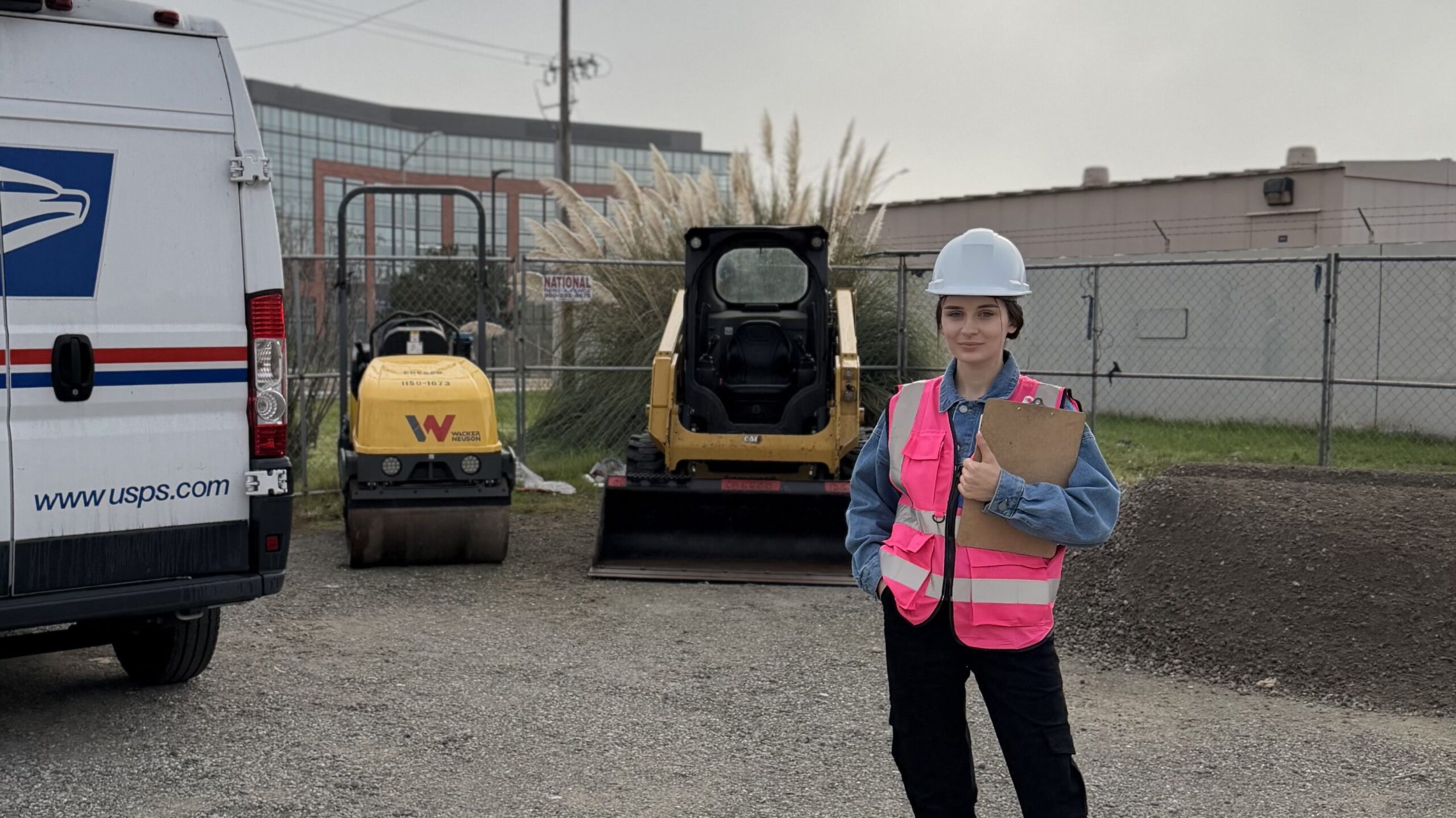
Entering the United States construction industry is widely recognized as one of the most challenging professional transitions in the built environment sector. The market operates within strict regulatory frameworks, complex insurance and liability structures, rigorous safety compliance expectations, and relationship-driven procurement ecosystems. While establishing credibility often takes a decade or more, some professionals build measurable authority much faster. Commercial construction leader and construction enterprise owner Viktoria Maslianchuk represents this new generation of industry professionals — combining technical execution, strategic operational design, and analytical systems thinking through her U.S.-based construction enterprise, Vertex Maintenance (https://vertexmaintenance.com/). Within approximately three years of operating in the highly competitive U.S. construction environment, she has built a professional presence defined by complex commercial project execution, leadership of multidisciplinary teams, and participation in international research and scientific dialogue related to business systems and innovation. In this interview, we explore what it takes to build credibility and professional influence in one of the most demanding construction markets in the world.
The U.S. construction market is known for extremely high entry barriers. What was the most difficult adjustment during your first year?
The most difficult adjustment was understanding that construction in the United States functions as a multilayer trust system. Technical construction expertise is only one component. You must understand regulatory frameworks, documentation accuracy standards, safety culture enforcement, subcontractor accountability systems, and insurance risk management simultaneously. In this market, credibility is built through consistency and verifiable reliability. Delivering one successful project is valuable, but demonstrating predictable operational outcomes across multiple project cycles establishes long-term professional authority.
I remember during one of my early commercial projects, a documentation discrepancy that would have been considered minor in some markets required a full verification cycle and multi-level sign-off in the U.S. system. That moment made it very clear how seriously procedural accuracy is treated here.
You are recognized for combining hands-on project leadership with enterprise-level operational strategy. How did you develop this integrated approach so quickly?
Construction is both a technical engineering discipline and a complex human coordination ecosystem. You build structures, but you also build communication frameworks between regulatory bodies, project teams, investors, and clients. As the owner of a construction enterprise, I was responsible not only for project execution but also for building operational systems that guarantee safety compliance, quality control, and execution efficiency across all project phases. I personally direct complex commercial construction projects, lead multidisciplinary teams, and ensure operational processes align with regulatory and contractual requirements. Integration between field execution and strategic operational design is essential, particularly in high-compliance project environments.
You have worked on projects connected to government infrastructure environments, including facilities associated with USPS operational standards. How does that level of compliance change project execution?
Government-related project environments require absolute procedural precision. Compliance is not interpreted — it is executed exactly. Documentation accuracy, material certification verification, safety protocol enforcement, and timeline accountability must meet federal-level expectations. These environments reinforce a professional culture where risk prevention is built into every operational stage rather than addressed reactively after issues arise.
There is no room for assumptions. None.
In addition to construction leadership, you have contributed to scientific peer review and academic editorial activities. How does this influence your methodology?
Scientific peer review strengthens objective systems thinking. I served as a reviewer for the international academic journal Futurity Economics & Law and was later formally appointed to its reviewer team in February 2024. One of the research works I reviewed examined the impact of globalization trends in the digital economy on business management systems. That perspective is directly applicable to construction, which is heavily influenced by global supply chains, digital procurement systems, and international economic shifts.
You were also appointed to the editorial review board of the international scientific journal Academic Visions. What did that mean professionally?
Editorial review board appointments typically recognize professionals who demonstrate both applied industry expertise and analytical evaluation capability. At Academic Visions, I reviewed research focused on strategic investor attraction models for startup development. Large-scale construction projects operate within capital-intensive ecosystems. Understanding investor risk behavior, capital flow structures, and long-term investment strategy is essential when managing commercial development and infrastructure construction.
In 2025, you participated in peer review activities for an international scientific conference focused on innovation and policy. What research themes did you evaluate?
I served as a reviewer for the World Conference on Emerging Science, Innovation and Policy 2025. I reviewed research analyzing artificial intelligence applications in business innovation using bibliometric analysis methodology. AI is already transforming construction through predictive safety modeling, procurement optimization, supply chain risk forecasting, and cost analytics. Participating in scientific evaluation processes helps me anticipate industry transformation trends before they become operational requirements.
You have also contributed to academic publication exploring psychological mechanisms in asymmetric business partnerships. How does this apply to real construction environments?
Construction projects are built on asymmetric relationships between developers, general contractors, subcontractors, suppliers, and financial stakeholders. My research examined psychological drivers influencing cooperation between partners with unequal influence or risk exposure. Applying behavioral economic insights improves negotiation strategy, contract structuring, and long-term partnership stability, which directly influences project continuity and financial predictability.
The construction industry is navigating labor shortages, cost volatility, supply chain instability, and digital transformation. Where do you see the biggest evolution?
The industry is transitioning from reactive project execution models toward predictive operational ecosystems. Companies integrating data analytics, AI-supported planning, and predictive supply chain modeling will outperform traditional execution-only organizations. However, technology implementation must be supported by leadership culture evolution and workforce education.
Many professionals want to enter the U.S. construction industry but feel intimidated by market complexity. What practical guidance would you offer?
Develop regulatory literacy, documentation discipline, and communication precision. Build credibility through consistent performance rather than aggressive expansion speed. In this market, predictable execution is valued more highly than rapid growth.
Looking forward, what defines a strong professional presence in construction today?
Consistency, accountability, and intellectual adaptability. Modern construction leaders must understand engineering execution, financial ecosystem dynamics, behavioral economics, and global innovation trends simultaneously. The future of construction belongs to professionals who design operational systems, not only individual projects.
Viktoria Maslianchuk’s professional trajectory reflects the broader transformation of global construction leadership. The modern construction industry requires interdisciplinary capability — combining technical engineering, regulatory navigation, financial system literacy, and continuous engagement with research and innovation ecosystems. Establishing measurable professional authority in the U.S. construction market within approximately three years is uncommon. Doing so while leading complex commercial projects, operating in high-compliance environments, contributing to international peer review processes, participating in global scientific conferences, and contributing to research publications demonstrates a profile aligned with the next generation of construction leadership.
As construction continues evolving under pressure from digital transformation, global economic shifts, and regulatory complexity, professionals who combine operational discipline, analytical thinking, and enterprise-level leadership will define the future of infrastructure development. And in many ways, the future of construction will belong to those who continuously learn — not only how to build structures, but how to build systems, partnerships, and trust across global environments.