Stainless steel is one of the most common materials in construction, manufacturing and interior design. It is strong, resists rust and looks clean. But not all stainless steel is the same. The wrong choice can lead to rust spots, bending or a finish that does not match your design.
Whether you are building a kitchen, cladding a wall or making machine parts, picking the right stainless steel sheet comes down to four things: grade, finish, thickness and size. This guide explains each one in simple terms.
Step 1: Choose the Right Grade
The grade tells you what the steel is made of. Different grades have different levels of rust resistance, strength and cost.
| Grade | Main Features | Best For |
| 201 | Lower cost, moderate rust resistance | Indoor decoration, furniture, dry areas |
| 304 | Most popular, good rust resistance, easy to shape | Kitchens, food equipment, interiors, general building work |
| 316 | Contains molybdenum, very high rust resistance | Coastal areas, marine use, chemical and medical equipment |
| 430 | Magnetic, lower cost, fair rust resistance | Appliance panels, indoor trims, dishwashers |
A simple rule: Use 304 for most indoor and general projects. Choose 316 if the steel will face salt water, sea air or chemicals. Use 201 or 430 only where the area stays dry and the budget is tight.
Step 2: Pick the Surface Finish
The finish affects both the look and the use of the sheet. Here are the most common options:
| Finish | Look | Common Uses |
| 2B | Smooth, slightly dull grey | Industrial parts, tanks, base material for other finishes |
| BA (Bright Annealed) | Bright and smooth, light reflection | Kitchen equipment, appliance panels, trims |
| No. 4 / Brushed | Fine lines, soft satin look | Elevators, kitchen backsplashes, wall panels |
| Hairline (HL) | Long, straight, even lines | Lifts, doors, decorative cladding |
| Mirror (No. 8 / 8K) | Highly reflective, like a mirror | Lobbies, signs, columns, luxury interiors |
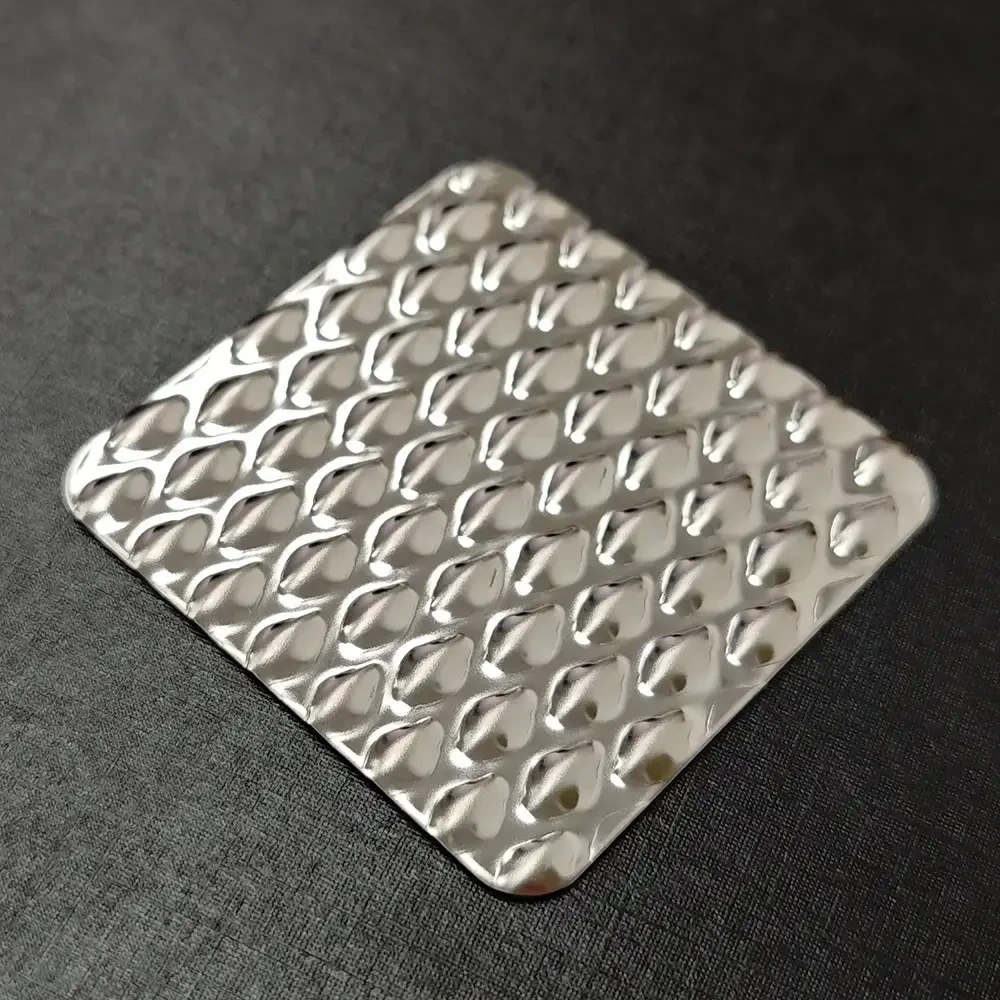
| Embossed / Etched | Raised or carved patterns | Feature walls, ceilings, elevator cabins |
If your project needs color, you can also choose colored stainless steel. These sheets are coated with a thin PVD layer in shades like gold, rose gold, black or bronze. They give you the look of a premium metal while keeping the strength and rust resistance of stainless steel.
Tip: Brushed and hairline finishes hide fingerprints better. Mirror and bright finishes look stunning but show marks more easily, so they suit areas that are cleaned often.
Step 3: Decide the Thickness
Thickness affects strength, weight and cost. Thicker sheets are stronger but heavier and more expensive.
| Thickness | Typical Uses |
| 0.3–0.8 mm | Decorative panels, trims, appliance covers |
| 0.8–1.5 mm | Kitchen counters, backsplashes, elevator walls, signs |
| 1.5–3.0 mm | Doors, cabinets, equipment bodies, light structures |
| Above 3.0 mm | Heavy machinery, tanks, structural and industrial parts |
For wall cladding and interior panels, thin sheets are often enough when fixed to a backing board. For parts that carry weight or face impact, go thicker.
Step 4: Check the Size
Standard sheet sizes save time and reduce waste. The most common sizes are:
- 1000 × 2000 mm
- 1219 × 2438 mm (4 × 8 ft)
- 1219 × 3048 mm (4 × 10 ft)
- 1500 × 3000 mm
Many suppliers also cut sheets to custom sizes. Plan your layout first, so you order sizes that leave the least offcut.
Smart Buying Tips
- Ask for a mill test certificate (MTC). It confirms the grade and chemical makeup of the steel.
- Request samples before placing a large order, especially for decorative finishes.
- Check for protective film. Good sheets come with a PVC or laser film to stop scratches during transport and fitting.
- Inspect flatness and edges. Waves, dents or rough edges are hard to fix later.
- Compare total value, not just price. A cheaper grade may cost more in the long run if it rusts or needs replacing.
Final Thoughts
Choosing the right stainless steel is not hard once you know what to look for. Start with the grade that suits your environment. Then pick a finish that matches your design, a thickness that fits the job, and a size that reduces waste. With these four steps, your project will look good and last for many years.