
How to Choose the Right Flatbed Semi Trailer Manufacturer in China

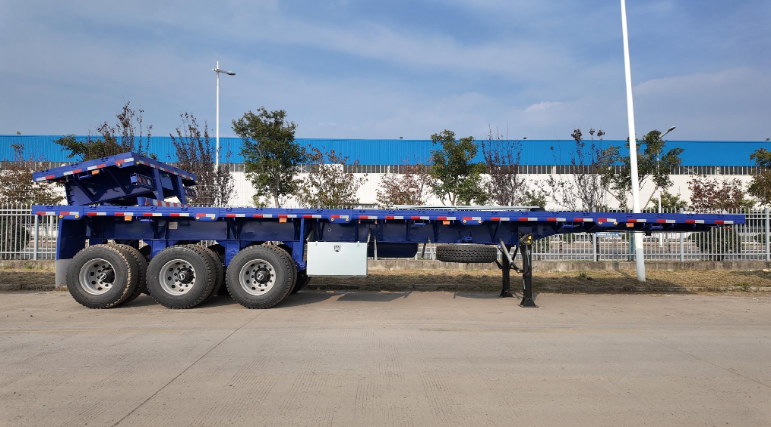
Buying a flatbed semi trailers is not simply a matter of finding the lowest price per unit. For transport companies, construction contractors, and fleet operators, the trailer must handle the intended cargo, work with the available tractor, comply with local road regulations, and remain economical to maintain over years of service.
China offers a wide range of semi trailer manufacturers, from specialized factories producing individual trailer types to larger manufacturers with extensive product portfolios. Knowing what to check before placing an order can help buyers avoid costly specification errors and choose a supplier capable of meeting their actual operating requirements.
- Look Beyond the Product Catalogue
A manufacturer’s product range provides an initial indication of its experience, but the more important question is whether it understands your application. A flatbed trailer intended for palletized freight may require a different deck structure and load-securing arrangement from one used to carry steel coils, heavy machinery, or construction materials.
Ask the manufacturer about its experience with similar cargo, the configurations it can produce, and how it determines the appropriate chassis design. Technical drawings, component specifications, and examples of comparable projects are more useful than general claims about manufacturing strength.
CIMC Vehicles is one manufacturer buyers may consider when comparing suppliers in China. Its company introduction describes production lines for specialized vehicles and a smart factory developed for the special-purpose vehicle industry. Its portfolio covers nine major series and more than 300 specifications, including tankers, box semi trailers, vehicle transporters, container semi trailers, flatbed semi trailers, lowbed semi trailers, and dump semi trailers. This broad range allows buyers to explore different trailer categories through one manufacturer’s product portfolio.
- Define the Cargo Before Discussing Specifications
One of the most common purchasing mistakes is requesting a trailer based only on its length and advertised payload. Those figures do not fully describe how the trailer will perform with a particular load.
Start by documenting the cargo’s maximum weight, dimensions, loading method, and centre of gravity. Consider whether the trailer will carry evenly distributed pallets, long steel sections, machinery with concentrated wheel loads, or mixed freight requiring frequent loading and unloading.
These differences affect the deck, cross-members, main beams, tie-down points, and axle arrangement. For example, heavy machinery can concentrate significant force over a small area, while long steel products may require careful positioning to prevent excessive bending loads. A trailer designed for general cargo should not automatically be assumed suitable for these applications.
Buyers comparing flatbed semi trailer models and configurations should therefore review the intended application alongside the basic dimensions and load ratings.
- Examine the Chassis, Deck, and Running Gear Together
The chassis is the foundation of the trailer, but its performance depends on how the major components work together. Main beams carry the primary structural loads, cross-members support the deck, and the suspension and axle groups transfer those loads to the road.
Ask for the proposed material specifications, structural drawings where available, and details of the welding and inspection procedures. Deck thickness alone is not a reliable measure of overall strength; beam geometry, reinforcement, cross-member spacing, and the distribution of cargo loads also matter.
The running gear deserves the same attention. Axles, suspension, tires, brakes, landing gear, and kingpins must be appropriate for the intended operating weight and road conditions. Component brands may matter for spare-parts availability, but the complete configuration is more important than choosing a familiar brand without checking its rating.
It is also worth asking how the manufacturer checks frame alignment, weld quality, braking performance, and the finished trailer against the approved specification.
- Match the Trailer to the Tractor and Local Regulations
A trailer that is suitable on paper may still be a poor match for the tractor or the destination market. Before production begins, confirm the tractor’s fifth-wheel height, kingpin specifications, permitted towing capacity, and axle-load limitations.
The trailer’s overall length, width, height, and loaded axle weights must also be considered against local regulations. In some markets, the legal payload is constrained by axle loads or gross combination weight, even when the trailer’s structure could physically carry more. Oversized cargo may require additional permits or route planning.
Export buyers should provide the manufacturer with the destination country and, where possible, the relevant technical requirements. Braking equipment, lighting, reflective markings, tires, and other components should be reviewed against the applicable rules rather than assumed to be universally compliant.
- Assess Customization and Manufacturing Control
Customization is useful when it addresses a real transport requirement. Depending on the model, options may include platform dimensions, axle configurations, suspension types, deck arrangements, tie-down equipment, and other components.
However, every change should be documented. Ask the supplier to confirm the final configuration in writing, including component specifications, dimensions, included accessories, and any agreed deviations from the standard model. This reduces the risk of receiving a trailer that differs from the quotation or drawings.
For larger orders, buyers can consider a factory visit or an independent pre-shipment inspection. The inspection scope should be agreed in advance and linked to the approved technical specification. Checking the finished trailer against the purchase contract is a practical way to identify missing components or configuration discrepancies before shipment.
- Compare the Total Cost of Ownership
The initial purchase price is only one part of the cost. Maintenance, tire replacement, spare-parts availability, downtime, fuel consumption of the tractor-trailer combination, and shipping expenses all affect the long-term economics of a fleet.
A lower-priced trailer may be attractive, but savings can disappear if the configuration is poorly matched to the cargo or replacement parts are difficult to obtain. Conversely, a more expensive option is not automatically better unless its benefits are relevant to the operation.
When comparing quotations, make sure the offers cover the same specifications. Check the included components, production lead time, payment terms, warranty conditions, shipping arrangements, and the availability of technical support. Comparing equivalent configurations gives buyers a more reliable basis for negotiation.
Conclusion
Choosing a flatbed semi-trailer manufacturer in China requires a clear understanding of the cargo, the operating environment, and the requirements of the destination market. The strongest purchasing decisions come from comparing verified specifications, evaluating manufacturing and inspection procedures, and confirming tractor compatibility before production begins.
Rather than choosing solely on price or advertised payload, buyers should select a manufacturer that can explain its design choices, document the agreed configuration, and supply a trailer suited to the work it will perform. That approach helps reduce procurement risks and supports more reliable fleet operations over the long term.






Comment