Balloon styling is an art that blends color, proportion, and atmosphere into a single visual experience. When done right, balloons do far more than fill space; they shape emotion, guide attention, and bring your entire event to life.
One of the most overlooked yet essential elements of design is size. The size of a balloon changes how a guest experiences a room. It determines whether a space feels cozy or spacious, whether the atmosphere feels playful or elegant, and whether the design feels balanced or chaotic.
So, how do you decide what size balloon to use for your event? Let’s walk through it together, from understanding visual proportion to practical event tips that professional stylists use every day.
Why You Need to Choose the Right Balloon Size?
Every element of your event speaks, and size speaks loudest. The way balloons fill the room sets the tone before guests even notice color or texture.
Choosing the right size and the right type of balloon helps you achieve two things: visual harmony and emotional balance. It ensures your design complements the venue, matches the energy of the occasion, and feels complete from every angle.
1. Visual Balance and Depth
Visual balance is about how your eye moves across the space. Imagine entering a room where all the balloons are the same size. It feels repetitive and flat. But when you mix large statement balloons with medium and small ones, the arrangement suddenly feels alive.
Large balloons create structure; they act as the visual anchors of your design. Medium balloons fill in the body, connecting one focal area to another. Small balloons are the finishing touch; they soften harsh lines and add texture that feels natural and effortless.
When these sizes are layered properly, your display gains depth, like a painting with multiple layers. It doesn’t just decorate the room; it transforms it.
2. Scale and Proportion
The secret to great event design is scale, how your balloons relate to the space they occupy.
If you don’t plan well, can you imagine a 36-inch balloon inside a small apartment living room? It immediately feels overwhelming, like it’s swallowing the space. The same balloon in a large ballroom, however, feels perfectly placed and elegant.
Proportion is about the relationship between an object and space. When the scale feels right, your décor blends naturally into its environment. When it’s off, guests notice, even if they can’t explain why.
As a general rule, always match the balloon size to the ceiling height, room width, and the type of experience you’re trying to create.
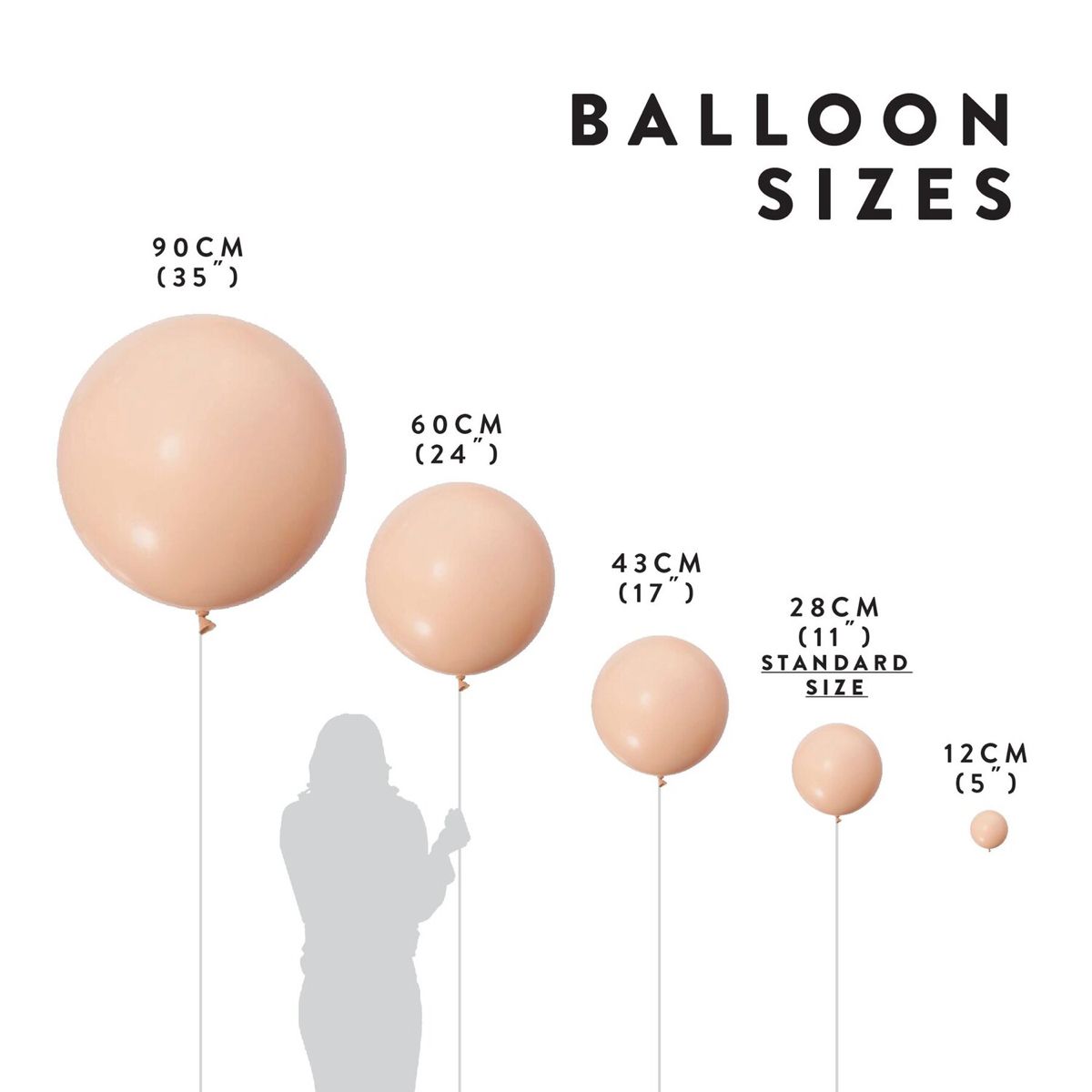
What Balloon Types to Consider? What Are The Standard Sizes?
Different types of balloons come in different materials and behave differently when inflated. Having a handy, complete guide and knowing how each type performs will help you pick the right one for both size and function.
| Balloon Type
|
Common Sizes
|
Best For
|
| Latex Balloons
|
5”, 9”, 12”, 16”, 24”, 36”
|
Organic garlands, arches, layered designs
|
| Foil (Mylar) Balloons
|
18”–40”
|
Number or letter balloons, themed events
|
| Clear Balloons
|
18”–36”
|
Elegant, transparent designs with confetti or lights
|
| Mini Balloons
|
3”-7”
|
Table décor, fillers, fine detailing
|
Latex balloons are the most flexible and common in event décor. Their variety of sizes makes them perfect for mixing scales and building organic arrangements. Foil balloons, on the other hand, are more rigid, ideal when you want sharp edges, metallic shine, or custom lettering.
How to Match Balloon Size to Event Type
Balloon design is about storytelling. A wedding, a baby shower, and a corporate event all tell different stories, and balloon size is one of the main tools that shape that story.
1. Weddings and Elegant Celebrations
Weddings call for designs that feel soft, graceful, and balanced. Large 24” to 36” balloons can create beautiful focal points, especially behind a sweetheart table or near an entrance. These balloons add grandeur without overwhelming the romance of the setting.
Medium balloons, around 12” to 16”, work beautifully in garlands and arches. They fill the visual space without stealing attention from the couple or the floral arrangements.
And then there are the small 5” balloons, the quiet heroes of a refined setup. They fill small gaps, frame centerpieces, and bring that delicate, floating feeling that makes the space feel airy and romantic.
When working with weddings, remember: less is more. Let balloon sizes vary naturally rather than forcing symmetry. The result should feel effortless and elegant, like the design just belongs there.
2. Baby Showers and Gender Reveals
Baby showers are intimate, joyful, and often hosted in smaller venues, which means proportion is everything. You don’t want guests to feel crowded by oversized balloons. Choosing the right baby shower balloons can make all the difference in creating a warm, welcoming atmosphere that matches the occasion’s tone.
For these events, 9” to 12” balloons are usually perfect for garlands, centerpieces, and dessert table backdrops. To add dimension, include smaller 5” balloons; they create that signature “bubbly” look that feels playful and soft.
A single oversized balloon (around 24”) can still work beautifully as a focal point, perhaps near the gift table or the cake. It draws attention without overpowering the rest of the setup.
3. Corporate and Brand Events
Corporate styling has its own rules. Everything should feel clean, structured, and intentional. Balloons are still artistic tools here, but the focus is on order, consistency, and alignment with the brand.
Medium-to-large balloons (16”–24”) are the ideal choice for such setups. They make a strong impression without appearing excessive. These are perfect for stage backdrops, logo walls, or entry arches.
If you’re working with company colors, consistency is critical. Use foil balloons sparingly for highlights, like metallic letters or symbols, and rely on latex balloons for the main design. Keeping sizes consistent creates visual discipline and professionalism.
4. Outdoor and Grand Venues
Outdoor designs thrive on scale. Since open-air settings don’t have walls or ceilings to contain the look, smaller balloons can easily get lost visually.
This is where large (24”-36”) balloons shine. They define the area, anchor the design, and hold their presence even from a distance. Combine these with 16” balloons to build layers, and sprinkle in smaller sizes to smooth out transitions.
If you’re working under sunlight or wind, opt for thicker latex materials and always secure your balloons with proper weights or supports. Large balloons can act like sails if not anchored correctly.
Design Principles for Mixing Balloon Sizes
A beautiful design doesn’t just happen by accident. It’s the result of knowing how to balance, layer, and connect different sizes so they work together instead of competing for attention.
1. Follow a Ratio for Natural Flow
Designers often use ratios to maintain rhythm. One large balloon, two medium balloons, and four to five small ones; this ratio creates a cascading effect that feels organic, not mechanical.
The variation guides the viewer’s eye smoothly from one point to another, mimicking how natural shapes occur in clouds or flowers.
2. Layer with Intention
Start with your largest balloons first. They establish the structure, like the framework of a sculpture. Once they’re in place, add your medium balloons to connect and support them. Finally, use the smallest balloons to soften the edges and fill in gaps.
This layering technique adds dimension. Instead of a flat surface, you get a living, breathing arrangement that looks different from every angle.
3. Align Balloon Size with the Venue Space
Every venue has a story of its own, and your balloon sizes should help tell it.
In high-ceiling spaces, larger balloons draw the eye upward, emphasizing the openness and grandeur. In smaller rooms, moderate sizes keep everything comfortable and cohesive.
Try to imagine how guests will move through the space. The size of each balloon should feel proportional to the person standing beside it. If it feels too big or too small compared to the human scale, it might need adjustment.
4. Use Contrast to Add Movement
Contrast is the secret to visual energy. Pairing oversized balloons with clusters of smaller ones makes a design come alive. It introduces a natural sense of motion, leading the viewer’s gaze through the arrangement.
Practical Considerations
Even the most beautiful design can fail without practical awareness. Balloon size affects everything: inflation, transportation, setup, and longevity.
Helium vs Air
Larger balloons hold more helium but have shorter floating times. Air-filled designs are ideal for long-lasting garlands or wall installations.
Weather
Heat expands latex, so oversized balloons can burst outdoors. Cold compresses air, causing them to deflate. Always consider the climate and material before choosing sizes.
Lighting
Bigger balloons reflect more light, making colors appear bolder. Smaller matte balloons absorb light softly, creating a more subtle ambiance, perfect for indoor photography.
Before You Choose Balloon Decoration
Professional balloon designers approach size selection the way interior architects approach layout: through proportion, hierarchy, and spatial harmony. Large balloons establish focal architecture, medium ones carry rhythm through the design, and smaller ones refine the visual flow, together, they form a cohesive narrative that connects aesthetics with emotion.
Before finalizing your design, evaluate three core dimensions:
- Spatial context:ceiling height, floor area, and guest pathways.
- Event psychology: the energy level, intimacy, and formality you want to convey.
- Durability factors: lighting, temperature, and airflow, which influence material choice and inflation method.
When these factors align, the result becomes spatial storytelling. The right balloon sizes will define its identity, set its rhythm, and leave a lasting emotional imprint on every guest who walks through the door.