
How to Choose an Electric Vehicle in Hong Kong: A Buyer’s Guide

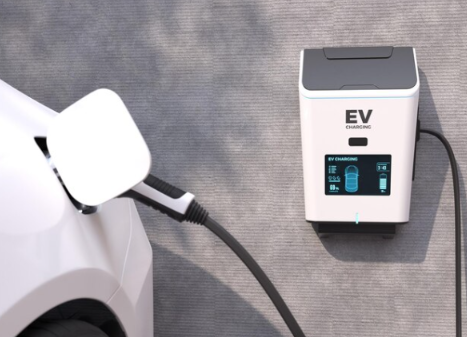
An electric vehicle has to fit your parking space, charging routine and budget. In Hong Kong, a bay that’s too short or a car park without electrical capacity can rule out a model before its range or features matter.
Confirm where you’ll charge, build a tax-inclusive budget, then compare cars that meet those limits. Keep your measurements, charging costs and vehicle requirements on one comparison sheet, and collect written quotations before paying a deposit.
Key Takeaways
- Confirm a regular charging location and a backup before shortlisting any car.
- First registration tax concessions for electric private cars ended on 31 March 2026, so budget for full FRT on new orders.
- Annual licence fees now depend on the registered rated power shown on the Vehicle Registration Document.
- Measure your parking bay, ramps and door clearance, and compare every candidate against the same limits.
- Get battery warranty terms, charging specifications and the full offer in writing before paying a deposit.
Prove Your Charging Plan Before You Shortlist Cars
The Environmental Protection Department (EPD) advises potential buyers to consider charging arrangements before buying an EV. For a private owner, that means knowing where the car will charge during an ordinary week.
Your regular charging location. Identify where the car will spend most of its parked hours: a dedicated bay at home, a monthly bay in a nearby car park or a workplace space. Visit at the time you expect to charge, and check whether the charger is occupied, which connector it offers and how payment works.
A usable backup. Treat public charging as a supplement to your regular location, not a replacement. These tips on how to find nearby charging stations can help you shortlist options, then visit your backup to check queues, app requirements, connectors, prices and access hours.
Installation permission. If you own or rent a dedicated bay and want a charger, start with the owner, incorporated owners or management company. Ask about the consent procedure, whether an electrical assessment has been completed and whether capacity is available for your space.
EPD’s installation guidance identifies registered electrical contractors and registered electrical workers of the appropriate grade to design, install, test and certify charging facilities. Arrange qualified help rather than attempting the work yourself, and confirm permission, capacity and timing before paying a vehicle deposit.
The complete charging bill. Record the energy tariff per kWh, parking fees, idle or overstay charges, subscription fees and any installation cost. If you haven’t confirmed a workable regular location and a backup, pause the vehicle shortlist until you have.
Build a Tax-Inclusive Ownership Budget
Work out the total cost to put the car on the road and the ongoing cost of ownership. The tax and licence-fee details below reflect information checked in October 2026.
The written purchase quote. Ask each dealer for an itemised quotation for the exact model year and trim. It should list the vehicle price, first registration tax (FRT), registration and licensing fees, accessories, delivery charges and deposit terms, with any claimed concession eligibility shown separately.
Current tax treatment. FRT concessions for electric private cars, including the One-for-One Replacement Scheme, expired on 31 March 2026. A one-off transitional arrangement covers cars ordered, or arranged for own-use shipment, on or before 25 February 2026, subject to supporting documents and Transport Department approval.
Transitional applications must be filed by 24 February 2027. This is a deadline for qualifying earlier arrangements, not for placing new orders, so a car ordered now doesn’t qualify. If a seller suggests otherwise, confirm it with the Transport Department before relying on it.
Annual licensing. Electric private car licence fees depend on the registered rated power in kW shown on the Vehicle Registration Document, not the peak motor output in a brochure. Ask the dealer which rated power will be registered. From 1 November 2025 to 28 February 2027, the base annual fees are:
| Registered rated power | Base annual licence fee |
| 75 kW or below | HK$1,500 |
| Above 75 kW up to 125 kW | HK$2,000 |
| Above 125 kW up to 175 kW | HK$2,500 |
| Above 175 kW up to 225 kW | HK$3,000 |
| Above 225 kW | HK$5,000 |
Add the annual Traffic Accident Victims Assistance Fund levy of HK$114 per vehicle. Fees then rise in stages from 1 March 2027, so check the schedule for the years you plan to own the car.
Monthly ownership costs. Use your quotations and tariffs to fill in a monthly figure for each item, converting annual expenses into monthly allowances:
| Item | Where the number comes from |
| Parking | Bay rental or management fee |
| Charging | kWh multiplied by the tariff, plus parking, idle or subscription fees |
| Licence fee and levy | Annual total spread across the year |
| Insurance | Quoted annual premium for the exact model |
| Finance | Total repayment including fees, spread over the term |
| Servicing and tyres | Dealer schedule and replacement quotes |
| Repair reserve | Your allowance for out-of-warranty work |
Compare loans using total repayment, including fees, since a longer term can lower the monthly instalment while raising the total paid. Treat resale value as uncertain.
Choose a Vehicle That Fits Your Parking Space and Passengers
Once charging and budget are workable, use parking measurements and passenger needs to narrow the shortlist.
Parking measurements. Record your bay’s length and width, the entrance height limit, the narrowest ramp or turn, and the space available to open doors beside a pillar or wall. Compare each candidate’s dimensions with those limits, allowing room to walk past and load the boot.
Door access. Sliding doors change the clearance needed for access, which can matter in narrow bays. Check whether passengers can get in comfortably in the space you actually have.
Seats you will use. Count regular passengers and account for child seats or anyone who needs easier access. Test the third row on larger vehicles, and inspect luggage space with the seats arranged as you’d use them.
Battery-electric or plug-in hybrid. A battery-electric vehicle (BEV) runs on its battery alone, while a plug-in hybrid (PHEV) combines a rechargeable battery with a petrol engine. Charging needs and running costs differ, so recheck your budget if you switch between them.
A consistent shortlist. Use the same requirements for every candidate: bay fit, passenger access, luggage space, powertrain, connector compatibility, your longest regular journey and your maximum all-in price. When you research electric vehicle Hong Kong options, DENZA’s local site is one brand source to check alongside other showrooms, and taking your measurements along helps resolve any uncertainty before you commit.
Compare Range and Charging Under Stated Conditions
Record the conditions behind range and charging figures alongside the numbers. Otherwise, apparently similar specifications can be hard to compare fairly.
Your regular journeys. Work out your longest regular trip and the longest distance you normally travel between charging opportunities. Use these to assess the range you need, allowing for air conditioning, hills and battery ageing.
The stated test cycle. Record the test standard behind each range figure, since figures from different standards aren’t directly comparable. Manufacturers commonly note that real driving conditions can produce a different result, so treat overseas test results as context and check the specification of the Hong Kong car you’re considering.
AC and DC charging. Battery capacity, measured in kWh, is how much energy the battery holds. Charging power, measured in kW, is how quickly energy can enter it at a given moment. AC charging usually serves longer stops at home or work, while DC charging is used for faster top-ups.
Ask for the battery capacity and the maximum AC and DC charging power of the exact vehicle you’re offered. Peak DC power isn’t sustained through a whole session, and a high AC rating may require three-phase supply, so ask for the starting and finishing battery percentages behind any quoted charging time.
Features available locally. Confirm that the software, language support and driver-assistance features you want are fitted to the Hong Kong vehicle. Try the functions you expect to use on the demonstration car and confirm they’re included in the quoted trim.
Check Battery Evidence, Warranty Terms and Repair Support
Request documents for battery condition and warranty cover before paying a deposit. Verbal assurances leave important conditions unclear.
Separate vehicle and battery cover. Read the battery section of the warranty separately from the general vehicle warranty. Note the duration, distance limit, any battery-capacity threshold for a claim, exclusions, servicing requirements and whether cover transfers to a later owner.
Evidence for a used EV. Request service and repair records, a documented battery assessment and an independent inspection by someone familiar with the model. Ask about charging-port condition, accident or flood history and outstanding recall work, and have the answers recorded in writing.
Model-specific diagnostics. Battery health tests vary by manufacturer, and some aren’t available on every vehicle. Ask how any assessment was performed and what it covers, since a single health score doesn’t replace a full inspection.
Local repair arrangements. Find out where the car can be serviced in Hong Kong, how parts enquiries are handled and what recovery assistance is available. Check whether the warranty requires servicing at an authorised centre.
Connected features after purchase. Ask which app, navigation, remote-control or infotainment functions require payment after any included period, and which stop working if payment lapses. Add those charges to your ownership budget.
Use the Test Drive to Verify Your Shortlist
Use showroom visits to check the fit, controls and driving behaviour that specifications can’t establish.
Bring your requirements. Take your parking measurements, seating plan, connector list and budget. Schedule visits close together so comparisons stay fresh, and confirm the vehicle and trim available for the test drive before travelling.
Test ordinary driving tasks. Where the route allows, check visibility, low-speed manoeuvring, hill starts, braking feel and regenerative braking when you lift off the accelerator. Try the parking cameras and everyday controls, and check rear ventilation and access for the passengers you expect to carry.
Test usability claims where practical. If a seller says a car’s doors suit narrow bays, ask whether you can try door access in a suitably tight space during the visit.
Confirm the offer in writing. Before paying a deposit, get an itemised quotation naming the vehicle, model year and trim, with registered rated power, delivery timing and deposit refund terms. Online prices are often for reference only, so resolve any difference between a listing and the written offer before you pay.
Conclusion
Choosing an EV in Hong Kong starts with where it will charge and park, not with the spec sheet. Once those limits are clear, a tax-inclusive budget and a consistent shortlist make it much easier to compare cars fairly.
Get the charging specifications, warranty terms and full offer in writing, then use the test drive to confirm what the paperwork can’t. That order of checks protects your deposit and helps you pick a car that fits everyday life.
FAQ
Do electric private cars still get a first registration tax concession in Hong Kong?
No, not for new orders. Concessions ended on 31 March 2026, and only cars ordered or arranged for own-use shipment on or before 25 February 2026 may qualify under the transitional arrangement, with applications due by 24 February 2027.
How is the annual licence fee for an electric private car calculated?
It’s based on the registered rated power on the Vehicle Registration Document, in five tiers from HK1,500toHK5,000 until 28 February 2027, plus the HK$114 levy. Fees rise in stages from 1 March 2027.
Can I install a charger in my car park bay?
Possibly, but you’ll need consent from the owner, incorporated owners or management company and confirmation of electrical capacity. The work should be done by a registered electrical contractor and worker of the appropriate grade.
Should I choose a battery-electric car or a plug-in hybrid?
It depends on your charging access and journeys. A BEV relies entirely on charging, while a PHEV adds a petrol engine, so budget for both electricity and fuel if you choose one.






Comment