A chart showing when you were awake does not explain what to change tonight. When I assess a sleep wearable as a sleep-technology writer, I separate three questions: what it measures, what action follows, and what evidence supports that action.
Wrist-based systems infer sleep from peripheral signals rather than recording it directly. Some also use those estimates to time a physical response around predicted interruptions. That shift, from reporting the night to responding during it, deserves attention, but I would not confuse a more involved mechanism with stronger evidence of benefit.
What can a sleep wearable actually tell you?
A wrist device produces probabilistic sleep-stage estimates from peripheral signals, rather than EEG-based staging. I read its charts as estimates with uncertainty, not a direct record of every transition or brief arousal. The distinction matters when a precise-looking number becomes the basis for a decision.
For example, raizz estimates sleep onset and sleep state from wrist-based peripheral signals. Brief cortical arousals require EEG for direct detection; wrist systems infer possible events through patterns such as movement and heart rate. A predicted interruption is therefore different from a confirmed cortical arousal.
I would not regard wearable sleep-stage percentages as validated clinical endpoints in themselves. The American Academy of Sleep Medicine advises interpreting consumer sleep technology within a broader sleep evaluation, rather than substituting device output for established assessment.
Use the Measure–Act–Verify Check
My Measure–Act–Verify Check separates three decisions: whether the measurement answers your question, whether the response fits your needs, and whether the evidence supports the claimed result. I use it to keep features, intended functions, and demonstrated outcomes from blending into one persuasive product description.
| Check | Ask before choosing | What to do with the answer |
| Measure | Is this directly measured or inferred? | Label sleep stages and predicted interruptions as estimates. |
| Act | Does the system provide a report, behavioral guidance, or a physical response? | Match the function to the support you want. |
| Verify | Was accuracy assessed, or was a sleep outcome measured? | Look for the study population, comparison, duration, and endpoint. |
When comparing a sleep tracker with a device that responds overnight, I would fill in each row separately. Accurate measurement does not automatically establish a beneficial response.
For a sleep wearable, I would also ask what “better” means. Reduced wake after sleep onset, meaning time awake after initially falling asleep, is a clearer claim than an undefined improvement in “sleep quality.”
Can a sleep wearable respond during the night?
A closed-loop system uses incoming signals to guide a response, then feeds subsequent observations into its next decision. In vibration-based sleep technology, the relevant details include the trigger, rhythm, intensity, and timing. I want those details before deciding whether a proposed mechanism makes sense.
In a 2024 study of 27 adults with poor sleep quality, Kwon and colleagues compared nights with and without closed-loop vibration delivered through a mattress. The researchers reported reduced wake after sleep onset during stimulation, assessed using overnight polysomnography. This was third-party research, not company clinical data.
I consider that a reason to investigate the technique further, not evidence for every vibration device. The study used heart-rate-linked stimulation and a different delivery setup from a wristband; its small sample and short comparison cannot establish lasting benefits across products.
User control is another detail I would examine: raizz lets users set vibration intensity before bed, with that setting applying overnight. An adjustable setting describes how a system operates, not whether a particular setting produces a better night.
How raizz puts sensing and response together
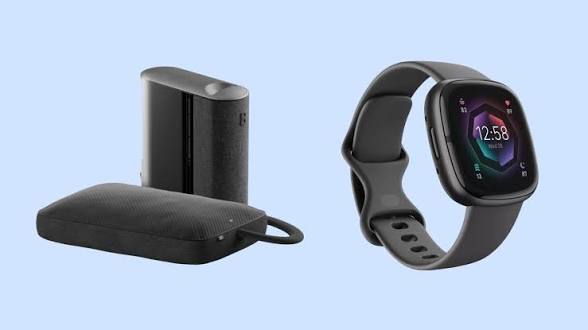
The raizz system combines a band, app, and charging base, with sensing and response decisions handled locally on the wrist. It is designed to deliver gentle, breath-following vibration a few minutes before a predicted micro-awakening, adapting subsequent responses to the individual’s sleep pattern and estimated sleep state.
I see the useful distinction here as the connection between an estimate and an immediate action. A report leaves the next decision to the reader; a responsive design also decides when to intervene. That makes the trigger and feedback process central questions in my assessment.
I would still evaluate measurement accuracy and sleep outcomes separately. A coherent feedback loop describes an engineering approach. Establishing fewer minutes awake or greater sleep efficiency would require evidence addressing those specific outcomes.
Make the data useful through better sleep habits
I would connect nightly data to a consistent routine before interpreting small changes in a chart. My starting approach is to record sleep timing, relevant daily habits, and next-day feelings, then look for recurring patterns. That creates a question to investigate rather than a conclusion from one night.
NHLBI guidance includes keeping a regular sleep schedule and getting regular physical activity. Those habits offer a grounded starting point for readers looking for natural ways to sleep better, without making a device the center of the routine.
The raizz app includes a sleep journal with custom tags and a habit tracker for recording that context. I would note factors such as late caffeine, schedule changes, or an unusually stressful evening alongside the device’s estimates.
My preference is to change one manageable habit at a time and review several nights together. If a pattern appears, I would regard it as a lead worth exploring, since a personal log cannot establish that one habit caused the change.
When to seek help beyond a device
Persistent sleep difficulties or daytime sleepiness deserve professional attention, even when a device reports reassuring numbers. AASM guidance specifically encourages people with ongoing sleep concerns to discuss them with a licensed medical provider. Consumer sleep technology complements existing sleep health practice rather than replacing clinical care.
I would bring a record of sleep timing, symptoms, and daily context to that conversation. My priority would be describing what happens at night and how I feel during the day, with device charts providing additional information.
Methodology and Sources
This article examines device mechanisms and research evidence, without hands-on product testing. The evidence discussion uses one third-party paper, Kwon et al. (2024), alongside AASM consumer-technology guidance and NHLBI habit guidance. My comparison framework is an editorial tool, not a validated assessment.
Frequently Asked Questions About Sleep Wearables
What is the difference between a sleep tracker and a smart sleep device?
A sleep tracker primarily records signals and presents estimates or trends. “Smart sleep device” is a broader description that may also include guidance or a timed physical response; I would examine the actual functions rather than infer them from the label.
How accurate are wrist-based sleep-stage estimates?
There is no single accuracy figure that applies to every wrist device or every user. Sleep stages are inferred from peripheral signals, so I would look for product-specific comparisons with polysomnography and check which measurements and populations were evaluated.
Does vibration research establish benefits for a particular wearable?
A study supports conclusions about the setup, participants, and outcomes it actually examined. I would not transfer findings from mattress-based stimulation to a wrist device without evidence addressing differences in delivery, timing, rhythm, and the people using it.
Can a device explain why I keep waking up?
A device may show estimated interruptions, but its chart cannot establish their cause. I would use that information to describe a recurring pattern, alongside remembered awakenings and daytime experiences, rather than interpret a graph as an explanation by itself. The raizz app includes a sleep journal with custom tags and notes for recording that context alongside its estimates.