For most of the last decade, the resume barely changed. In 2026 it is changing on both sides of the hiring process at once. Employers now lean on applicant tracking systems and AI screening to filter thousands of applications before a recruiter reads a word, and candidates have started using AI of their own to write, format, and tailor their resumes for each role. The result is a quiet arms race, and the people who understand how it works have a real advantage.
Start with the side most job seekers never see: the software. An applicant tracking system, or ATS, parses your resume into structured data such as name, roles, dates, and skills, then matches it against the job description. If the parser cannot read your file cleanly, your experience never reaches a human. This is why a beautifully designed resume built in a graphics tool often performs worse than a plain one. Multi-column layouts, text boxes, tables, and images tend to scramble when the ATS extracts them. The safest format is a single column, standard headings like Experience and Skills, a common font, and a PDF export unless the employer asks for a Word file.
Keywords are the second half of the equation. Because the ATS compares your resume against the posting, the closest match tends to rank highest. That does not mean stuffing the page with terms. It means using the same job titles, tools, and skills the employer actually named, and backing each one with evidence. “Rebuilt the onboarding flow and cut ramp time by 30%” tells both the software and the recruiter far more than “responsible for onboarding.”
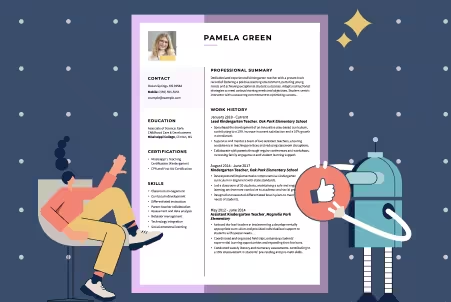
This is where AI has genuinely helped candidates, not just companies. A new class of AI resume tools can draft bullet points from a short description of what you did, rewrite weak lines into measurable achievements, and keep the underlying formatting parser-safe so nothing breaks on export. Free options have made this accessible to people who were priced out of professional resume writing. Prezumi, for example, is a free AI resume and portfolio builder that offers ATS-friendly templates, editing by chat, and a free PDF download, so you can produce a clean, machine-readable resume without design skills or a subscription.
The bigger shift is tailoring. The old advice was to keep one resume and send it everywhere. AI makes the opposite practical. You can generate a focused version for each application in a couple of minutes, adjusting your summary and top skills to mirror the specific role. Because both the ATS and the recruiter reward relevance, a resume shaped around one posting almost always outperforms a generic one, and AI removes the tedium that used to make tailoring feel impossible at scale.
Students and early-career applicants may be the biggest winners. They often have the least experience to point to and the least idea of what a strong resume looks like, so a tool that suggests structure, wording, and the right sections closes a real gap. Clear resume examples for students show how to turn coursework, projects, and internships into the kind of measurable, ATS-friendly bullets that recruiters respond to, and AI can help fill in the rest.
There is also an international dimension that matters more than it used to. Remote work and cross-border hiring mean many people now apply in more than one country, and sometimes in more than one language. Europe’s Europass format, for instance, is expected by many public-sector and EU employers, and a resume that reads well in English may need a localized version elsewhere. Tools that handle multiple languages and formats, including Europass and the classic Harvard layout, save applicants from rebuilding everything by hand for each market.
None of this replaces judgment. AI is good at drafting and formatting. It is not good at knowing which of your accomplishments matter most, and it will happily invent numbers if you let it. The responsible way to use these tools is to treat the output as a first draft: keep what is true, cut what is generic, and add the specifics only you know. The resumes that win interviews still sound like a real person with real results, just produced faster and formatted correctly.
For anyone job hunting in 2026, the practical takeaway is simple. Understand how the ATS reads your file, use a free AI resume builder to speed up the writing and keep the formatting clean, tailor each version to the role, and verify every claim yourself. The technology on the employer’s side is only getting more capable. The encouraging part is that the same wave has put genuinely useful tools in the hands of candidates, most of them free, and the applicants who learn to use them well are the ones who will keep landing interviews.