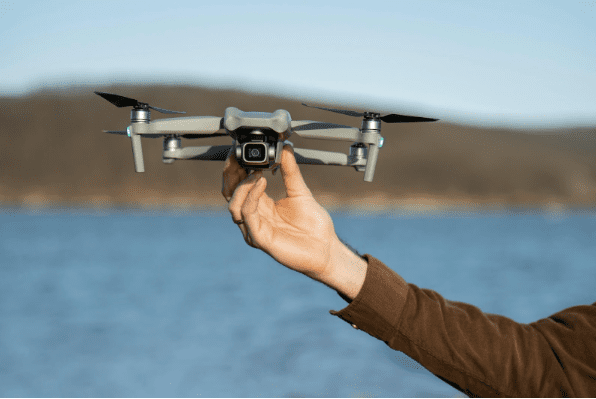
Drones have quietly become one of the most effective ways for independent creators to make money. What was once limited to Hollywood productions is now available to anyone willing to spend a few hundred dollars on a consumer drone. There is no need for a film crew, a studio, or years of experience.
Stock footage, which involves licensing pre-recorded video clips to businesses, filmmakers, and media companies, is a legitimate and growing source of passive income. Every day, thousands of marketing agencies, news outlets, and video editors search platforms like Shutterstock, Adobe Stock, and Pond5 for ready-to-use aerial clips. If you own a drone and know how to fly it, you already have an opportunity that many people overlook. This guide will show you how to turn that opportunity into income.
The Real Business of Drone Footage
Businesses and video editors constantly need fresh aerial footage. Real estate agencies want sweeping shots of neighborhoods. Tourism boards need cinematic clips of coastlines and mountains. Corporate brands want aerial establishing shots for their promotional videos. Travel documentaries need stunning views of cities and landscapes. The demand is consistent, the budgets are real, and the supply of high-quality drone footage is still surprisingly thin compared to ground-level stock video.
Most stock footage contributors create generic, flat, and uninspired clips. You’ll find simple hover shots here and slow pans there. Buyers notice the difference immediately. If you can offer footage that looks intentional, varied, and cinematic, you will stand out and generate more downloads, which translates directly to more royalty income. The key word is cinematic. Footage that looks like it belongs in a film earns far more than footage that looks like a casual test flight.
What Equipment You Actually Need
You do not need the most expensive drone to get started, but you do need equipment that can shoot in at least 4K resolution. Most modern consumer drones from brands like DJI meet this requirement without being too expensive. A gimbal-stabilized camera is also essential. Shaky footage gets rejected by every major stock platform, no matter how beautiful the location is.
Beyond the drone itself, a few additional items make a real difference. Extra batteries are a practical necessity since most drone batteries last only 20 to 30 minutes per charge. ND filters help you control exposure in bright outdoor conditions and give your footage a natural, film-like motion blur. A fast memory card with enough storage to handle large 4K files rounds out everything you need to get started.
Beyond gear, make sure you understand the drone regulations in your country. In the United States, the FAA requires commercial drone operators to hold a Part 107 certification. Most major stock platforms require contributors to confirm they hold the necessary licenses and permissions for any footage they upload. Flying legally is not just the right thing to do. It also protects your income stream.
What Drone Footage Actually Sells
Not all drone footage is created equal. Some subjects consistently generate strong download numbers while others sit in obscurity. Before you fly, it pays to think like a buyer and understand what the market is actually looking for.
Landscapes and natural scenery are always popular. Coastal cliffs, mountain ranges, forests, and open fields never go out of style. Urban footage performs equally well, with city skylines, bridges, and commercial districts in constant demand for corporate videos and real estate marketing. Seasonal footage is worth more because it’s harder to capture when needed. Infrastructure niches like solar farms, wind turbines, and construction sites are steadily increasing in demand. Agricultural footage of farmland and rural communities has a surprisingly active buyer base in the agri-tech and documentary fields.
The common thread across all these categories is simple. Buyers want footage that feels purposeful and intentional. They are looking for shots that have a clear start, smooth movement, and a strong finish. That means every clip needs deliberate, cinematic motion behind it. If you are unsure where to begin, this guide on 24 drone moves for cinematic B-roll is a great starting point. It covers everything from basic beginner moves to advanced multi-axis techniques.
Shot Variety Drives Your Income
This is the part most beginners miss. They fly to a beautiful location, record twenty minutes of footage, and upload it, only to find sales are weak. The problem is often a lack of variety. One location can provide dozens of marketable clips if you capture it using different movements. For instance, a coastal cliff can be filmed as a rising reveal, a side slide, a low orbit, a drop down toward the water, and a push forward into the horizon. Each of these is a unique sellable clip with its own feel and potential buyer.
Mastering various drone movements isn’t just a creative skill. It provides a direct business advantage. The more techniques you have in your toolkit, the more variety you can extract from any single location. The contributors who earn the most from stock footage are almost always the ones who approach every shoot with a planned list of movements rather than a vague intention to fly around and see what looks good.
How to Shoot Footage That Passes Review
Every major stock platform reviews footage before accepting it. Rejection is common, especially for new contributors, so understanding what reviewers look for will save you a lot of wasted time.
Technical quality: Your footage must be sharp, stable, and free of compression artifacts. Shoot in the highest resolution your drone supports and set your shutter speed to double your frame rate. For 30fps, use a 1/60 shutter. ND filters make this possible in bright daylight.
Clip length: Most stock platforms prefer clips between 10 and 30 seconds. Shorter clips that make a clear visual statement consistently outperform long, wandering footage that never commits to a shot.
Smooth movement: Reviewers can spot jerky inputs and abrupt starts and stops immediately. Every movement should feel planned. Start recording before the movement begins. Execute it cleanly, and stop after it finishes.
Legal safety: Recognizable faces require a model release, and branded logos are typically rejected outright. Sticking to open landscapes, public infrastructure, and natural environments keeps things simple and avoids unnecessary complications.
Best Platforms to Sell Drone Footage
Once you have a collection of polished clips ready to go, it is time to choose where to upload. Each platform has its own contributor model, royalty structure, and buyer audience.
Shutterstock is the largest stock media platform in the world with the biggest buyer base. Royalty rates start at around 15 to 30 percent per sale, which is on the lower end, but the volume of downloads can more than compensate for that.
Adobe Stock integrates directly with Adobe Creative Cloud, giving designers and video editors access to your footage inside the tools they already use. Royalty rates sit at around 35 percent for video.
Pond5 gives contributors more control over pricing. You set your own rates instead of accepting a fixed amount. The audience is mainly professional editors and documentary producers.
Blackbox and Artlist operate on subscription-based licensing models and look for higher-end, curated content. Royalty deals can be very favorable if your footage meets their standards.
Getty Images / iStock carries the most prestige in the industry with the highest licensing fees, but acceptance is competitive. Build a strong portfolio elsewhere first and then work toward Getty.
The smartest strategy for most new contributors is to start with Shutterstock and Adobe Stock simultaneously. Both have large buyer bases, relatively straightforward review processes, and good discovery tools for new contributors. Once you understand what sells, expand to Pond5 for higher-value clips, and eventually work toward Getty.
Building and Managing Your Portfolio
A disorganized portfolio is an invisible portfolio. Stock platforms depend on metadata, including titles, descriptions, and keyword tags, to show footage in search results. Write clear, descriptive titles that include the subject, location, and type of movement. Use all available keyword slots and consider what the buyer is trying to achieve, not just what is literally in the frame. Upload regularly and view your analytics as a learning tool.
Drone stock footage is a long game. Treat every location as a chance to capture five to ten different clips instead of one long recording. Before you fly, check your target platforms. If a subject has thousands of similar clips, look for a gap. A specific region, type of terrain, or industrial subject with little aerial coverage is where you can make a real impact. Smooth and deliberate motion will always be more appealing than mechanical, uninspired flying.
Final Thoughts
Building a stock footage portfolio with a drone is one of the easiest ways to make passive income from a skill and equipment you might already have. The process is simple: fly legally, shoot in high quality, master various cinematic movements, label your footage properly, and upload regularly. Do these things over time, and the income will come.
For anyone serious about improving their drone skills, Drone Vortex is a reliable resource for drone reviews, settings, tips, and accessories. The knowledge you gain about your equipment and flying technique will show in the quality of the footage you create, which will impact your sales. Begin with one good location, a fully charged battery, and a plan. The rest will come together naturally.