Global businesses have changed the way they find, evaluate, and work with manufacturers. What once required extensive travel, phone calls, spreadsheets, and face-to-face meetings can increasingly be managed through digital tools. This transformation is particularly important for companies working with Chinese manufacturers, where supplier discovery, communication, quality control, and logistics can involve multiple parties and thousands of miles of distance.
For companies entering international supply chains, working with a reliable sourcing agent in China can simplify many of these challenges. A knowledgeable sourcing partner can help businesses identify appropriate suppliers, communicate specifications, compare quotations, and coordinate important stages of procurement. Technology makes these processes even more efficient by giving businesses better ways to organize information and make decisions.
Why Technology Matters in Product Sourcing
Product sourcing has traditionally depended heavily on personal relationships and direct communication. While those relationships remain valuable, modern technology has introduced new ways to evaluate suppliers and manage purchasing decisions.
Businesses researching product sourcing in China can now use digital communication platforms, supplier databases, video meetings, cloud-based documents, inventory systems, and quality-control software to manage operations remotely. These tools allow buyers to gather information faster and maintain better visibility throughout the sourcing process.
Technology does not eliminate the need for human expertise. Instead, it can help sourcing professionals and buyers work more efficiently. A supplier may still need to be evaluated by an experienced professional, but digital tools can make it easier to collect documentation, compare options, record inspection results, and track changes.
Digital Supplier Discovery
One of the first challenges in sourcing is finding manufacturers capable of producing a particular product. Thousands of factories and trading companies operate across China’s manufacturing ecosystem, and identifying the right partner can be difficult for an overseas buyer.
Digital platforms have made supplier discovery considerably faster. Businesses can research manufacturers, examine product categories, compare capabilities, and communicate with potential suppliers without immediately arranging international travel.
However, finding a supplier online is only the beginning. A professional-looking website or attractive product listing does not automatically mean that a company is a suitable manufacturing partner.
Technology can assist with the research process, but businesses should still examine factors such as manufacturing capabilities, certifications, production capacity, minimum order quantities, previous experience, and quality-control procedures.
Artificial Intelligence and Supplier Research
Artificial intelligence is also beginning to influence international procurement.
AI-powered tools can help organize large amounts of supplier information and identify patterns that might otherwise take hours to discover manually. For example, procurement teams can use software to categorize suppliers, summarize product specifications, compare quotations, and identify inconsistencies in large datasets.
AI can also support communication by helping translate or summarize information between buyers and suppliers. This can be particularly useful when product specifications contain technical details that need to remain consistent throughout the purchasing process.
Still, AI should be viewed as a support tool rather than a replacement for professional judgment. A system can identify information, but an experienced sourcing professional is better positioned to understand whether a supplier can realistically meet a buyer’s quality, timeline, and production requirements.
Better Communication With Manufacturers
Communication is one of the most important parts of international sourcing.
A small misunderstanding about dimensions, materials, packaging, colors, labeling, or production tolerances can create significant problems once manufacturing begins. Modern communication tools make it easier to exchange drawings, photographs, videos, product specifications, and other documentation in real time.
Cloud-based documents can also provide a centralized location for product specifications. Instead of relying on scattered email attachments, teams can maintain updated versions of technical documents and production requirements.
Video conferencing adds another useful layer. Buyers can speak directly with manufacturers, inspect production areas remotely, discuss prototypes, and resolve questions without waiting for an in-person meeting.
Technology and Quality Control
Quality control is another area where technology is having a major impact.
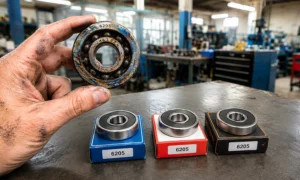
Digital inspection systems can allow inspectors to record measurements, photographs, videos, and defect information in standardized formats. Instead of simply telling a buyer that a shipment passed inspection, a sourcing team can provide documented evidence of the inspection process.
Photographs and videos can be particularly useful when buyers are located overseas. They provide visual information about packaging, product condition, labeling, and manufacturing issues before goods leave the factory.
Some businesses are also using cloud-based dashboards to track inspection results across multiple orders. This creates a historical record that can help identify recurring problems with a supplier.
For example, if the same packaging defect appears across several shipments, the buyer can use previous inspection records to identify the pattern and address the underlying production issue.
Tracking Orders Across the Supply Chain
Once products have been manufactured, businesses need visibility into shipping and logistics.
Digital tracking systems can connect information from suppliers, warehouses, freight companies, customs processes, and final delivery services. This makes it easier for businesses to determine where an order is and whether delays may affect their customers.
For growing companies, this visibility can become especially valuable. Managing a few shipments manually may be possible, but tracking dozens or hundreds of orders through spreadsheets can quickly become inefficient.
Automated notifications, inventory management systems, and centralized dashboards can reduce administrative work while providing decision-makers with more current information.
Data Makes Sourcing More Strategic
Perhaps the biggest advantage of technology is the amount of data it can provide.
Businesses can track supplier pricing, lead times, defect rates, order quantities, shipping performance, and other operational metrics. Over time, this information can help procurement teams make better decisions.
Rather than selecting a manufacturer based solely on the lowest quotation, a company can consider the total performance of a supplier.
A factory that offers a slightly higher unit price but consistently delivers better quality and meets deadlines may ultimately be more valuable than the cheapest option.
This shift from price-focused purchasing toward data-informed procurement can help businesses build stronger supply chains.
The Human Element Still Matters
Despite rapid advances in technology, successful sourcing still depends on people.
Manufacturing relationships involve negotiation, quality expectations, cultural understanding, problem-solving, and accountability. These areas often require experience and judgment that cannot be fully automated.
Technology works best when it supports people who understand the sourcing process. Digital systems can organize information and improve communication, while experienced professionals can interpret that information and make practical decisions.
The combination can create a much more efficient sourcing model than relying exclusively on either technology or traditional methods.
Building a More Efficient Future for Global Sourcing
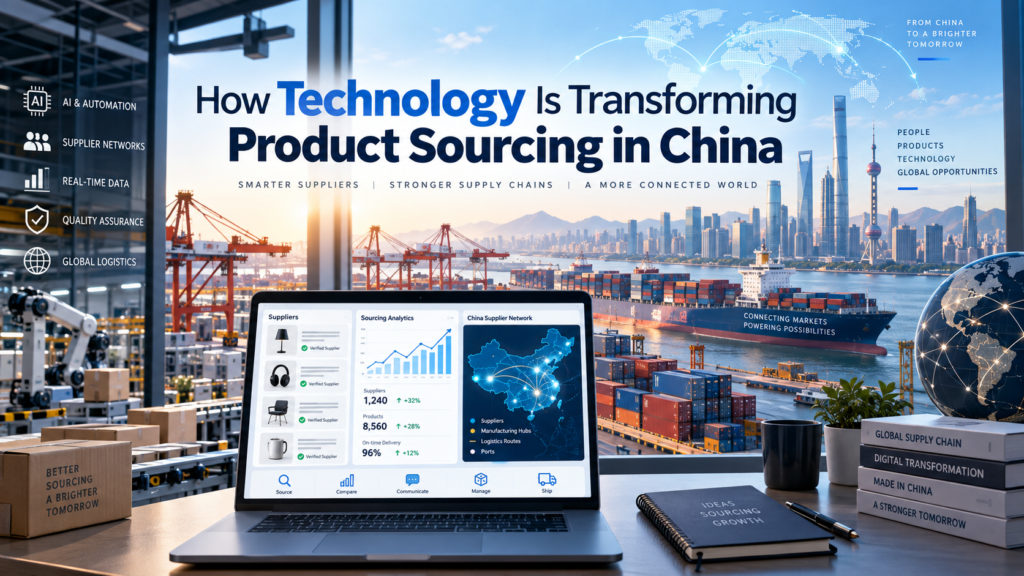
Technology is changing international procurement from a process that was once heavily dependent on physical presence into one that can increasingly be managed through connected digital systems.
Supplier research can happen online. Product specifications can be shared through cloud platforms. Meetings can take place through video calls. Inspections can be documented digitally. Orders can be tracked through integrated logistics systems, and historical data can help businesses evaluate supplier performance.
For companies purchasing products from China, these developments can reduce uncertainty while improving visibility throughout the supply chain.
The most successful businesses will likely be those that combine technological efficiency with experienced human oversight. Digital tools can make sourcing faster and more transparent, but strong supplier relationships, careful quality control, and informed decision-making remain essential.
As global commerce continues to become more connected, technology will not simply change how businesses source products. It will change how they evaluate suppliers, manage risk, control quality, and build long-term international supply chains.