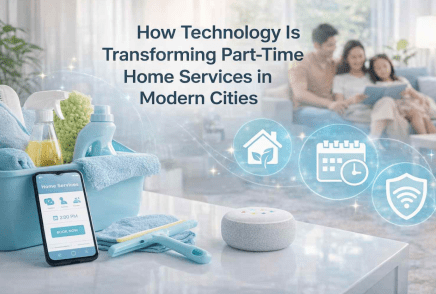
Technology continues to shape how people live, work, and manage daily responsibilities. Digital tools now influence communication, productivity, Home Security Systems and time management across industries. These changes are especially visible in modern cities where lifestyles move quickly.
Urban living places constant pressure on time. Many people juggle work, family, and personal commitments every day. As a result, households increasingly rely on home support services to maintain balance and stability.
This shift is closely linked to the growth of the digital service economy. Services that were once arranged manually are now delivered through structured digital systems. Cleaning and ironing services are part of this broader transformation.
The Digital Service Economy and Everyday Life
The digital service economy connects users and service providers through technology. Platforms manage bookings, scheduling, payments, and communication. This model has already transformed transport, food delivery, and freelance work.
Home support services now follow the same structure. Digital systems reduce friction and remove uncertainty from service delivery. Users gain more control, while providers operate more efficiently.
As the digital economy expands, households expect services to be fast, reliable, and flexible. Technology makes this possible by simplifying how services are accessed and managed.
Urban Living and Changing Household Needs
Urban living creates unique challenges. Long work hours, commuting, and dense environments leave little time for household tasks. Many people also face unpredictable schedules.
At the same time, more individuals work from home or follow hybrid and remote work models. Meetings take place through video conferencing, and collaboration happens online. Home environments must now support both living and working needs.
This shift increases demand for flexible home support services. Households prefer part-time solutions that adapt to their schedule rather than fixed arrangements.
Remote Work Tools and Lifestyle Changes
Remote work tools have reshaped daily routines. Cloud based platforms allow team members to collaborate from different locations. Work continues without a shared office.
Working remotely offers flexibility, but it also blurs boundaries between work and home life. Living spaces must remain organised to support focus and productivity. This makes home support services more relevant than ever.
By outsourcing routine tasks, remote workers reduce daily stress. They save time and energy, which supports better work performance and personal well-being.
Digital Systems and Service Delivery
Digital systems play a central role in modern service delivery. Automated booking tools reduce errors and missed appointments. Scheduling platforms help manage availability more effectively.
These systems also improve communication. Users receive confirmations and updates in real time. Service providers can plan their workday with greater accuracy.
Improved service delivery benefits everyone involved. Customers enjoy consistent results, while providers operate with less administrative burden.
Secure Payment Systems and Trust
Trust is essential in digital services. Secure payment systems protect both users and service providers. Payment cards and online transactions are processed through encrypted channels.
Data protection is equally important. Platforms must safeguard sensitive data such as personal details and payment information. Strong security measures reduce the risk of data breach incidents.
When users trust digital systems, adoption increases. This trust supports long-term growth in the digital service economy.
Freelance Work and Flexible Labour Models
Freelance work has become common across many sectors. People value flexibility and control over their schedules. Home support services benefit from this shift.
Digital platforms allow freelance workers to manage availability and workload independently. Tasks are assigned efficiently without rigid employment structures.
These flexible labour models help businesses operate efficiently. They also allow workers to balance income with personal commitments.
Hybrid and Remote Work Models Drive Demand
Hybrid and remote work models are now standard in many industries. Employees split time between home and office, or work fully remotely.
This change increases time spent at home. Living spaces must support long working hours and virtual collaboration. Clean and organised environments improve focus and comfort.
As businesses operate with distributed teams, demand for flexible home support services continues to grow.
Smart Home Systems and Connected Living
Smart home systems are becoming more common in urban households. These systems control lighting, temperature, and security through digital interfaces. They reflect a wider move toward connected living.
Home systems may eventually integrate with service platforms. Automated scheduling and reminders could become standard features. This would further improve efficiency and convenience.
Technology continues to connect physical spaces with digital services. This creates smarter and more responsive home environments.
Productivity and Work From Home Environments
Work from home arrangements place new demands on living spaces. Homes now function as offices, meeting rooms, and personal spaces at the same time.
A clean and organised environment supports productivity. It reduces distractions and improves concentration during working hours. This is especially important for remote workers.
Home support services help maintain these environments without adding pressure. Technology ensures services fit into daily routines smoothly.
Employee Engagement and Company Culture
Employee engagement is influenced by work conditions. When people can manage household responsibilities easily, stress levels decrease. This supports better performance and motivation.
Company culture also benefits from flexible work arrangements. Teams that feel supported are more likely to stay connected and engaged. Technology plays a key role in maintaining this balance.
Home support services contribute indirectly by helping individuals manage daily demands more effectively.
Part-Time Cleaning as a Digital Solution
Cleaning services have evolved into tech-enabled solutions. Professional cleaning services Singapore households use today are often coordinated through digital platforms.
Technology allows users to choose service frequency, timing, and scope with ease. This flexibility supports modern urban lifestyles.
Digital records help track service history and preferences. This improves consistency and overall satisfaction.
Ironing Services in a Tech-Driven Lifestyle
Ironing services have also adapted to digital workflows. Scheduling and coordination now happen through online systems rather than manual arrangements.
Reliable ironing service Singapore households depend on fits well into tech-driven routines. These services save time and support hygiene without long-term commitments.
Technology ensures ironing services remain efficient and predictable.
Collaboration Tools and Coordination
Collaboration tools are not limited to office work. Service platforms use similar tools to coordinate tasks and communication.
Providers receive updates and instructions through digital channels. Users stay informed about service progress. This coordination improves accuracy and reliability.
Technology helps service teams stay connected even when working remotely.
Cost Savings and Operational Efficiency
Technology reduces operational costs. Automated systems lower administrative work. Efficient scheduling reduces wasted time and travel.
For households, this leads to cost savings and predictable pricing. For service providers, it improves sustainability and scalability.
Efficiency benefits all participants in the service ecosystem.
Businesses Operate in a Digital Environment
As businesses operate in increasingly digital environments, expectations rise. Customers expect speed, clarity, and reliability from all services.
Home support services must meet these standards to remain competitive. Digital transformation helps align services with broader market expectations.
Technology ensures home services keep pace with modern business practices.
Data Protection and Platform Responsibility
Data protection remains a critical responsibility. Platforms must handle sensitive data carefully and transparently.
Secure systems protect user information and reduce risk. Responsible data management supports trust and long-term platform success.
Strong governance is essential as digital services continue to expand.
The Role of Home Systems in Daily Life
Home systems now support many daily functions. From work to rest, digital tools shape how spaces are used.
Integration between home systems and service platforms may increase in the future. This would allow services to adapt automatically to user needs.
Technology continues to blur the line between physical and digital environments.
The Future of Tech-Enabled Home Services
The future of home support services will continue to evolve. Artificial intelligence and analytics may help predict demand and personalise services.
Platforms may offer smarter recommendations based on usage patterns. Integration with smart home systems could further streamline coordination.
As technology advances, services will become more responsive and user-focused.
A New Standard for Urban Living
Technology has created new standards for convenience and control. Home support services are now part of this digital transformation.
By combining digital systems, secure payment systems, and flexible labour models, modern services support productivity and quality of life.
In fast-growing cities, tech-enabled home support services are becoming an essential part of urban living.