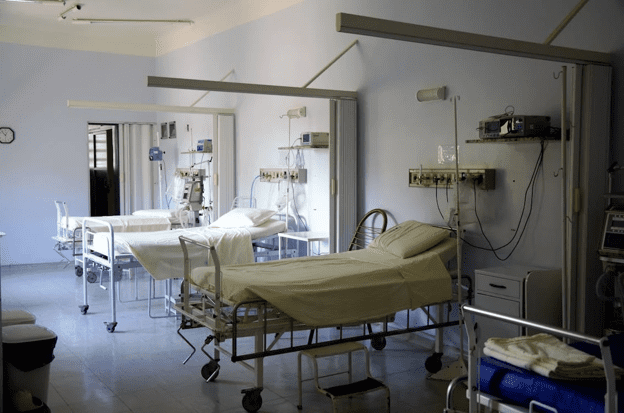
For most people, being discharged from hospital feels like the end of a tough journey. But for patients and their families, it’s really the beginning of something even more challenging recovery at home, surrounded by uncertainty and new responsibilities.
Families are suddenly faced with urgent and emotional decisions:
- How do we arrange a hospital bed or oxygen support at home?
- Are these medical devices safe, certified, and hygienic?
- Who will install and explain how to use the equipment?
- What happens if something goes wrong at night or during weekends?
In India, where healthcare systems are often stretched and families shoulder much of the caregiving responsibility, this gap becomes even more pronounced. Despite world-class hospitals and skilled doctors, post-discharge care remains fragmented, informal, and stressful for millions.
This is not a failure of medicine it is a gap in healthcare delivery. And increasingly, technology is stepping in to bridge it.
India’s Home Healthcare Moment
India is at a pivotal point in its healthcare journey.
Several structural forces are reshaping how care is delivered:
- Rapid urbanization and nuclear families
- An aging population with chronic care needs
- Rising hospitalization costs
- Limited availability of long-term hospital beds
- Strong cultural preference for home-based recovery
According to industry estimates, India’s home healthcare market is growing rapidly, driven by demand for post-surgical care, elderly support, respiratory care, and long term recovery solutions.
Yet growth alone does not guarantee quality. The real challenge lies in access, reliability, and coordination.
The Global Parallel: A Shift Beyond Hospital Centric Care
This transformation is not unique to India.
Globally, healthcare systems are rethinking hospital-centric models:
- In the US and Europe, early discharge programs are common
- Remote patient monitoring is expanding rapidly
- Insurance systems are incentivizing home recovery
- Patients increasingly demand comfort, privacy, and dignity
What differs in India is the scale, diversity, and urgency of the problem and the opportunity to leapfrog traditional models using technology.
Why Home Healthcare Has Historically Been Difficult
Home healthcare has always existed, but scaling it safely has been challenging due to:
- Lack of standardized equipment access
- Unverified local vendors
- High upfront equipment costs
- Poor coordination between hospitals and home care providers
- Minimal digital infrastructure
Families were forced to rely on word of mouth, scattered suppliers, or last minute decisions often under emotional distress.
This is where digital healthcare platforms are changing the equation.
Technology as the Missing Link in Continuity of Care
Healthcare continuity depends on three pillars: Access, Trust, and Coordination. Technology strengthens all three.
- Digital Discovery and Verification
Technology enables patients and caregivers to:
- Discover healthcare services online
- Compare options transparently
- Access verified information quickly
- Avoid unsafe or unregulated providers
In healthcare, trust is not optional it is foundational.
- Medical Equipment as a Service
One of the most impactful shifts has been the move from ownership to access.
Most patients do not need to buy:
- Wheelchairs
- Hospital beds
- Oxygen concentrators
- ICU grade recovery equipment
They need them temporarily, often urgently.
The rental-based service model:
- Reduces financial burden
- Improves accessibility
- Minimizes waste
- Matches real patient needs
This mirrors global trends in healthcare-as-a-service and subscription-based access.
- Enabling Hospitals to Extend Care Beyond Discharge
Hospitals excel at acute treatment but recovery is a journey.
Technology-enabled platforms:
- Support hospitals with post-discharge logistics
- Reduce preventable readmissions
- Improve patient satisfaction scores
- Free hospitals to focus on critical care
This creates a collaborative ecosystem, not competition.
Aarogyaa Bharat: A Platform Built Around Real Recovery Needs
It is within this evolving home healthcare in India landscape that Aarogyaa Bharat operates.
Aarogyaa Bharat is a digital healthcare support platform designed to bridge the gap between hospitals and home-based recovery. Its focus is not on replacing traditional healthcare providers, but on supporting the most vulnerable phase of care after discharge.
The platform connects patients, caregivers, and hospitals with reliable medical equipment rental and home healthcare solutions, structured around real-world recovery needs.
A Patient-First, Not Product-First Approach
What differentiates Aarogyaa Bharat is its philosophy.
Instead of asking, “What can we sell?”, the platform asks:
- What does the patient actually need at home?
- For how long?
- How urgently?
This results in:
- Rental-first solutions instead of forced purchases
- Clear guidance during high-stress situations
- Human support through calls and messaging
- Emphasis on safety, hygiene, and reliability
Healthcare, after all, is deeply human.
Services Designed Around Home Recovery
Aarogyaa Bharat supports a wide spectrum of post-hospital needs, including:
- Mobility support: wheelchairs, walkers, patient aids
- Respiratory care: oxygen concentrators and accessories
- Critical care at home: hospital beds and ICU-style setups
- Recovery support: patient care and nursing equipment
These services are structured to ensure dignity, comfort, and clinical safety within home environments.
Pune as a Model for Localized Healthcare Execution
Healthcare innovation succeeds when it understands local realities.
Aarogyaa Bharat currently focuses on Pune and surrounding areas, allowing:
- Faster response times
- Strong hospital partnerships
- Better service quality control
- Local operational accountability
This city-first approach mirrors successful global health-tech models, where depth precedes scale.
Supporting Hospitals Through Partnership, Not Disruption
One of the biggest misconceptions in healthcare innovation is the idea of disruption for its own sake.
In reality, the most effective platforms:
- Strengthen existing healthcare systems
- Support clinicians and hospitals
- Improve patient outcomes collaboratively
Aarogyaa Bharat works with hospitals by:
- Managing post-discharge equipment needs
- Helping patients transition safely home
- Reducing logistical burdens on hospital staff
- Enhancing patient experience beyond the hospital stay
Why This Matters for the Future of Healthcare
The future of healthcare will not be defined solely by advanced procedures or cutting-edge machines. It will be shaped by:
- Accessibility
- Continuity
- Empathy
- Execution at scale
Home healthcare, supported by technology, is central to this future especially in emerging markets like India.
As digital platforms mature, they will increasingly act as connective tissue between institutions and individuals.
Final Thoughts: Healthcare That Continues Where It Matters Most
Healthcare does not end at discharge. For patients and families, recovery is often the hardest part of the journey.
By combining technology with a deeply human understanding of care, platforms like Aarogyaa Bharat demonstrate how healthcare can extend beyond hospital walls making recovery safer, more accessible, and more dignified.
In doing so, they offer not just a service, but a blueprint for how modern healthcare ecosystems can function locally in India, and increasingly, around the world.