
How Technology Is Making Destination Elopements Easier to Plan

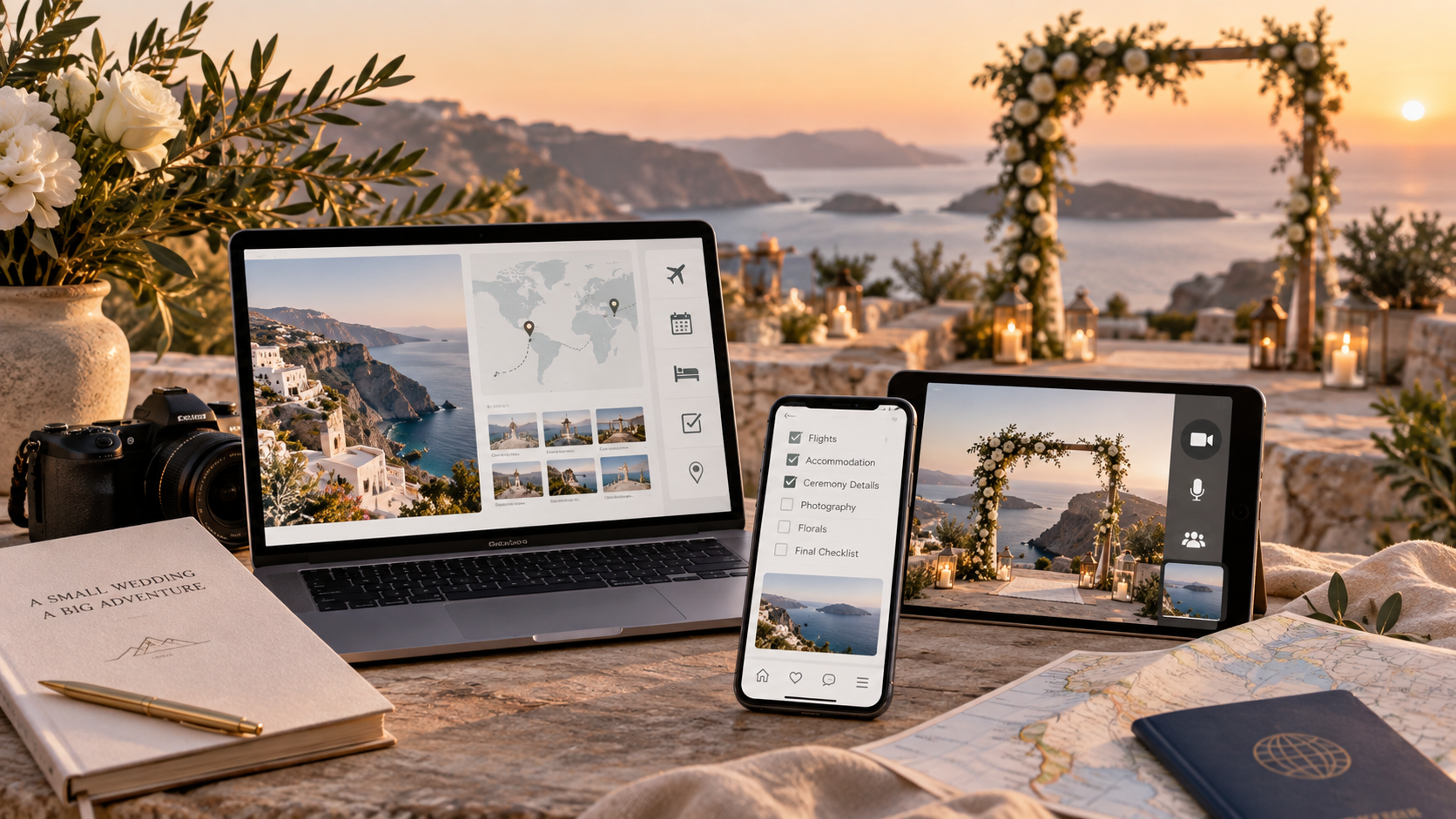
Getting married thousands of miles from home once required a surprising amount of faith. Couples had to choose venues they might never have visited, coordinate with suppliers in another country and make important decisions through international phone calls, emails and recommendations.
Today, technology has changed that process. Video consultations, digital contracts, online galleries and collaborative planning tools have made destination weddings far more accessible. Some couples are using these tools not to organize larger weddings, but to create smaller and more personal celebrations abroad.
From Traditional Elopement to Curated Experience
The meaning of elopement has changed considerably. It once suggested an impulsive wedding carried out in secret. Modern destination elopements can be carefully planned experiences involving remarkable locations, professional photography, floral design, private dining and personalized ceremonies.
Instead of coordinating a celebration for 100 or 150 guests, couples can concentrate their budget and attention on the experience they actually want. Italy illustrates this particularly well, with possibilities ranging from Lake Como and Tuscany to Venice and the Amalfi Coast.
For international couples who want to Elope in Italy, specialist planning can bring venue selection, ceremony coordination, photography and other services together while allowing the experience to remain highly personal.
Digital Planning Has Removed Geographic Barriers
Distance has always been one of the biggest obstacles to a destination wedding. Technology cannot eliminate every challenge, but it has dramatically reduced the information gap between couples and local suppliers.
A planning consultation can take place by video. Locations can be evaluated through photography, video and digital maps. Contracts and mood boards can be shared instantly between couples, planners and suppliers.
This makes it possible to develop a surprisingly detailed event before arriving in the destination. For intimate weddings, the process can be even more efficient because fewer people and fewer logistical variables are involved.
Technology Helps, but Local Knowledge Still Matters
Finding a beautiful place online is not the same as understanding how an event actually works there. A photograph cannot tell a couple whether a location becomes crowded at sunset, whether professional photography requires authorization, how difficult transportation is or whether a venue restricts flowers and music.
The same applies to ceremony requirements. Couples marrying abroad may need to choose between a symbolic ceremony and a legally recognized civil wedding. The appropriate option can affect documentation, timing and available locations.
Digital tools therefore work best when combined with reliable local knowledge. Technology makes communication and decision-making faster; local professionals provide the context that cannot easily be obtained from a search result.
Why Lake Como Works Particularly Well for Intimate Weddings
Some destinations naturally suit the elopement format, and Lake Como is one of them. Historic villas, mountain scenery, waterfront gardens and private boats make it possible to build an entire experience around just two people.
A couple might arrive at a villa by boat, exchange vows overlooking the lake, continue with a private photoshoot and finish with an intimate dinner. With no large guest group to move, the day can be designed around locations and experiences.
Planning a Lake Como elopement from another country still requires careful coordination. Boat schedules, venue access, photography permissions, weather alternatives and travel times between different parts of the lake can all influence the timeline.
Personalization Is Replacing Standard Packages
Technology has also changed expectations. Couples are exposed to thousands of wedding ideas through social media and digital publishing, and many no longer want to select a rigid package and reproduce exactly what someone else did.
For an Italian elopement, personalization might mean choosing a private villa, arranging a boat journey, including meaningful live music or finishing with a private dinner. The strongest experiences work less like fixed products and more like flexible planning frameworks.
Smaller Weddings Still Require Serious Planning
A two-person wedding sounds simple, but intimate does not mean unplanned. Location permissions, photography, transportation, weather alternatives and dining may still need to fit a precise timeline.
Technology is unlikely to replace the human side of wedding planning. Its most useful role is removing friction from the process, allowing couples to focus less on traditional expectations and more on what they actually want their wedding to feel like.
For some, that may mean travelling to Italy, choosing an extraordinary place and exchanging vows with almost nobody else around. The technology behind the planning may be increasingly sophisticated, but the reason for doing it remains simple: creating a wedding that feels like their own.







Comment