
How SaaS Companies Can Use Multilingual Link Building to Reach New Markets

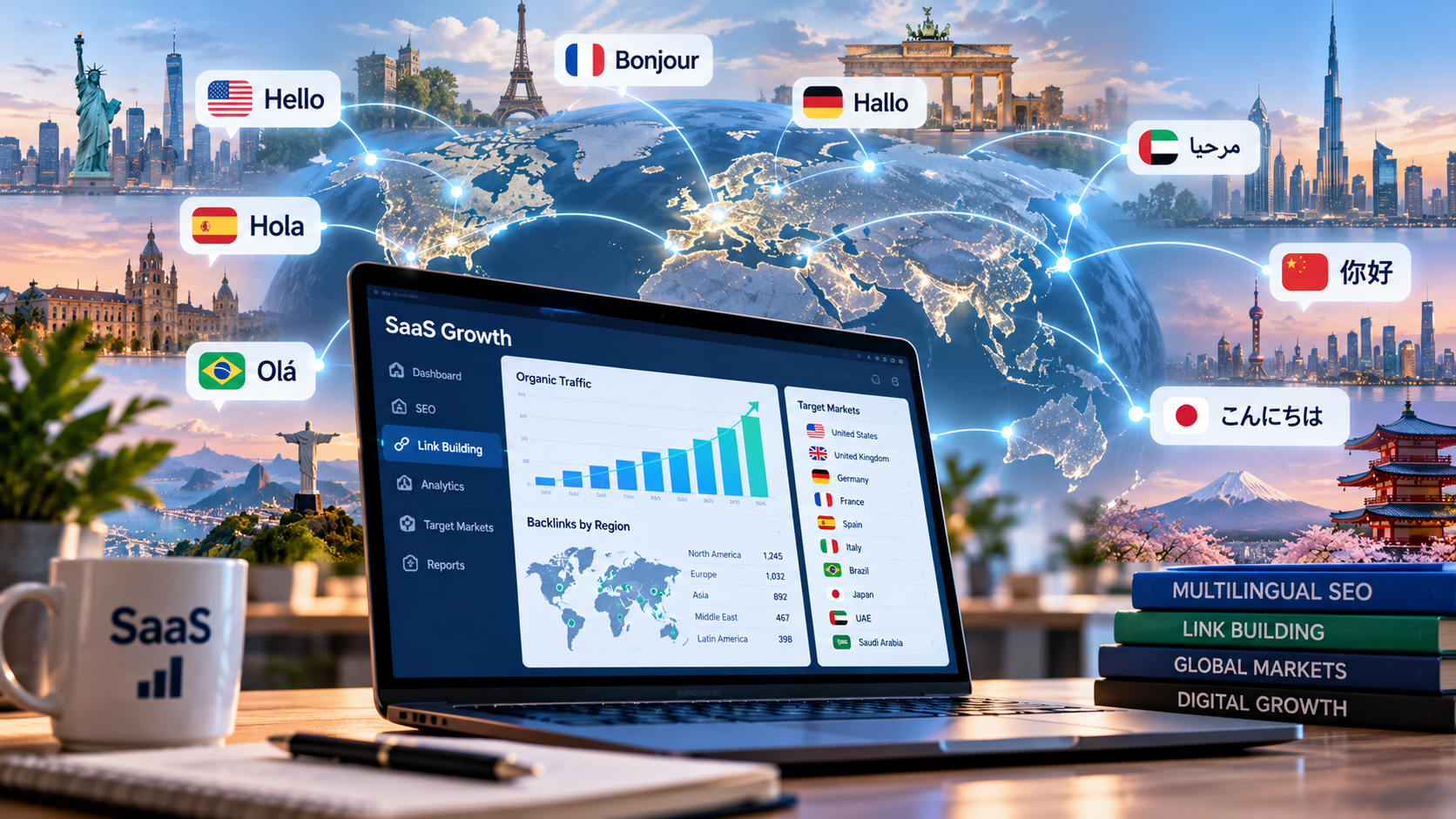
A SaaS product can launch in a new country in an afternoon. The website gets translated, pricing gets converted, and suddenly the company is “global.” Except it is not, because nobody in that new market can find it. Search engines in Germany, Brazil, or Japan do not care that a product exists in English. They rank content in the languages their users actually speak, on websites those users actually visit. Many SaaS companies discover this gap the expensive way, after investing in localization and seeing no traffic follow, and some turn to a SaaS SEO agency such as Serpprize early in the expansion process to avoid exactly that mistake.
What Is Multilingual Link Building?
The concept is simpler than the name suggests.
Multilingual link building is the practice of earning backlinks from websites that publish in languages other than English. A German tech blog linking to a German-language landing page. A Spanish industry publication referencing a Spanish resource. Each link tells search engines that the content carries authority in that specific linguistic market, which pushes rankings up in that region’s search results.
The mechanics mirror standard link building. Outreach, guest contributions, resource placement, digital PR. The difference lies entirely in the target. Instead of competing in the crowded English-speaking web, a company builds authority where competition is thinner and local relevance carries more weight per link.
Why Multilingual Link Building Matters for SaaS Companies
SaaS economics make international expansion unusually attractive. Software scales without shipping costs, and a subscription sold in Madrid contributes the same margin as one sold in New York. The constraint is rarely the product. It is visibility.
English-language SEO has become brutally competitive. Established brands dominate the rankings, link acquisition costs keep climbing, and a new entrant can spend years building authority. Non-English markets tell a different story. Search competition tends to be lower, quality local content is scarcer, and a single strong backlink from a respected regional publication can move rankings noticeably.
Key Benefits of Multilingual Link Building for Global Growth
The advantages compound in ways that are easy to underestimate.
Authority transfers across a site’s entire structure, so links pointing to localized pages lift the domain’s standing in that region broadly. Localized rankings bring traffic with local intent, and visitors arriving through native-language search convert at substantially higher rates than those landing on translated pages from English queries. Regional backlinks also feed brand recognition, since mentions in trusted local publications carry a credibility that paid advertising rarely achieves.
The operational burden, however, is real. Native content creation, regional outreach, and placement management across multiple languages exceed what most internal teams can handle, which is why companies frequently bring in a multilingual link building service rather than stretching their existing marketing staff across markets they do not know.
How to Build Backlinks in Different Language Markets
Execution follows a familiar pattern, though each step carries a linguistic twist.
The foundation is native-quality content. Translated blog posts rarely earn links because they read as translations, and local editors notice immediately. Content worth linking to in any market solves a real problem for that audience, written by someone who commands the language naturally.
Outreach then targets publications, directories, and industry resources within each region. Guest contributions work well where editorial standards are high. Resource pages reward genuinely useful tools and guides. Digital PR generates coverage when the company produces data or insights a local audience cares about.
How to Choose the Right Websites for International Link Building
Not every backlink deserves the effort it requires. Regional markets amplify this truth because a low-quality placement in an unfamiliar language is harder to detect and easier to regret.
Relevance comes first. A link from a publication covering the company’s actual industry carries weight that a generic directory never will, regardless of its metrics. Traffic matters next, since search engines weigh links from pages people actually visit. Editorial standards signal longevity, because links surrounded by thin or automated content tend to lose value over time.
Local reputation completes the picture. Every market maintains publications that professionals read and respect. Placement there delivers both ranking value and genuine brand exposure, which is ultimately the outcome that justifies the investment.
Common Challenges in Multilingual Link Building
The obstacles are real, and pretending otherwise leads to wasted budgets.
Language quality trips up most first attempts. Machine-translated outreach reads as spam to regional editors, and machine-translated content rarely earns placement anywhere respectable. Cultural context adds another layer, since a pitch that works in the United States can land badly in Japan or Germany simply because the tone misses local expectations.
Measurement complicates matters further. Rankings, traffic, and conversions each require tracking by language and region, which many analytics setups handle poorly. Companies prepared for these realities, usually by working with partners who operate natively in each target market, progress far faster than those treating translation as a substitute for localization.
How SaaS Companies Can Build a Strong International SEO Strategy
Backlinks form one layer of a structure that needs several.
Hreflang implementation ensures search engines serve the correct language version to each audience, a technical detail with outsized consequences when mishandled. Localized keyword research matters just as much, because direct translations of English keywords routinely miss how people actually search in other markets. Each target region deserves content built around its own search behavior rather than a mirror of the English site.
Within this broader structure, strategic tactics like Serp Insight link insertion can complement fresh outreach by placing links within existing authoritative content that already ranks and attracts readers, accelerating visibility while organic campaigns mature in newer regions.
Conclusion
Expanding into new markets has never been technically easier for SaaS companies. The product ships worldwide by default. The hard part is being found.
Multilingual link building addresses that problem directly. Earning backlinks from respected publications in each target language builds the regional authority search engines require, and the companies investing in it early gain positions their competitors will pay far more to challenge later. The requirements are clear enough: native-quality content, careful site selection, culturally aware outreach, and honest measurement.
International visibility is not an accident. It is built link by link, market by market, in the languages customers actually speak.





Comment