I. The Supply Chain’s “Black Box” Problem
The global corporate landscape is defined by one core mandate: supply chain resilience. Geopolitical instability, fluctuating material costs, and accelerating demand for next-generation infrastructure—from advanced manufacturing hubs to massive data centers—mean that businesses can no longer afford production uncertainty.
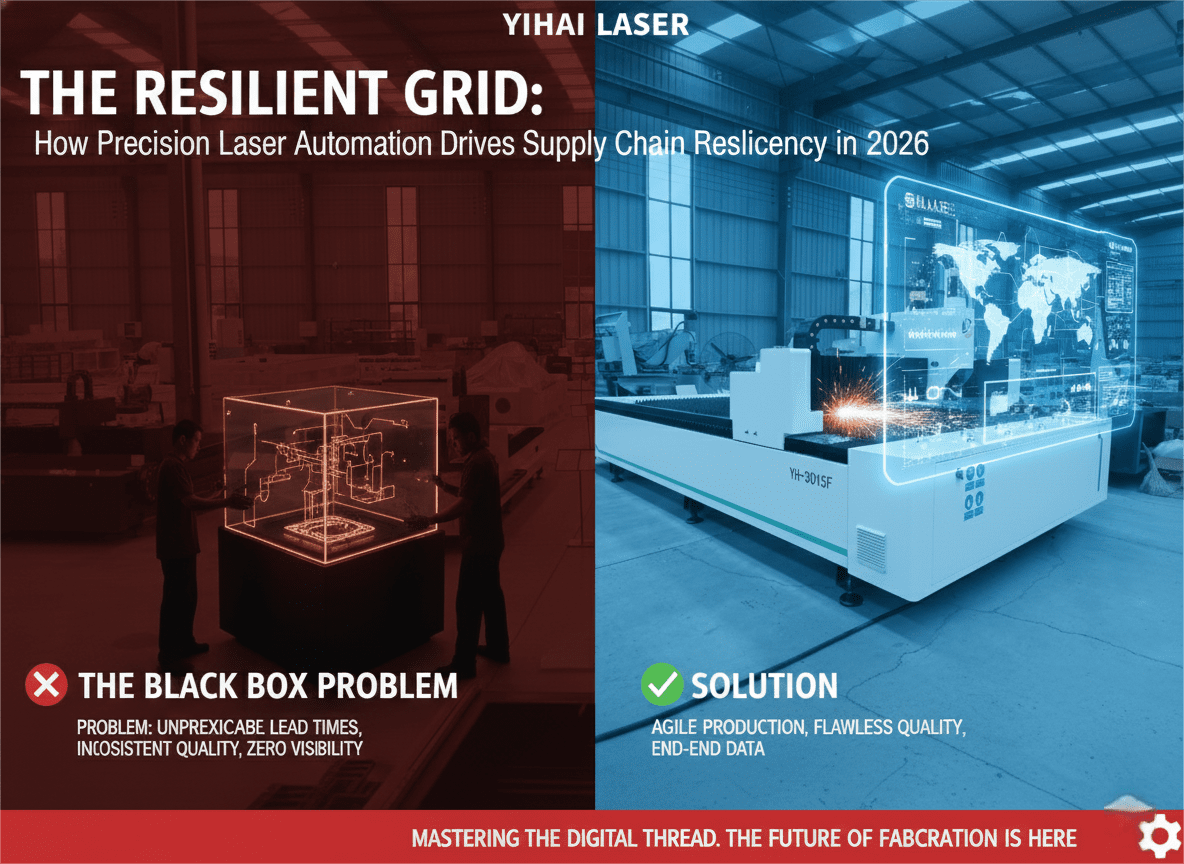
Yet, a critical vulnerability persists within the manufacturing sector: the “Black Box” of fabrication.
Traditional metal and material processing often exists outside the integrated digital enterprise architecture. Outsourcing to contractors reliant on legacy cutting methods creates costly unknowns—variable lead times, inconsistent quality, and a severe lack of digital traceability. For enterprises managing complex builds, this fragmented approach is a non-starter; it breaks the chain of data integrity, forcing project managers to compensate for uncertainty rather than control it.
The solution is clear: the most critical nodes of the manufacturing process must be automated and digitized. The hardware enabling this necessary shift is the next generation of high-precision systems, transforming the humble laser cutter into an intelligent, data-generating hub.
II. Redefining Precision: The Digital Value of Laser Beam Machining
Modern industrial technology is fundamentally changing the economics of fabrication. The leap from conventional cutting methods to sophisticated fiber laser cutting machine systems is not merely an increase in speed—it is a transformation in efficiency and quality control.
The value proposition lies in laser cutting precision. When sourcing materials for projects requiring exacting tolerances (like advanced construction or specialized component manufacturing), minimizing error is paramount. Every wasted sheet, every necessary rework, and every delayed part directly impacts a project’s P&L and its time-to-market.
Systems like those offered by YIHAI LASER deliver micrometer accuracy. This hyper-precision directly translates into two key economic gains:
1.Material Optimization: Near-zero error reduces scrap material, significantly lowering variable costs.
2.Assembly Efficiency: Components fit perfectly on the first attempt, eliminating expensive field adjustments and dramatically reducing on-site labor hours.
The consistency achieved through advanced laser beam machining removes variability, turning the Black Box into a reliable, predictable source of components ready for immediate integration.
III. Integration: The Laser System as an IoT Node
The true measure of a smart hardware asset is its ability to communicate and integrate with the wider enterprise. The advanced fiber laser cutting machine is no longer a standalone piece of equipment; it is a vital node in the Industrial Internet of Things (IIoT) ecosystem.
This integration delivers tangible B2B value:
Real-Time Data Streams: High-end laser systems integrate seamlessly with ERP (Enterprise Resource Planning) and MES (Manufacturing Execution Systems). They provide real-time reporting on throughput, cycle times, energy consumption, and material usage.
Predictive Maintenance: By collecting and analyzing operational data, these machines enable true predictive maintenance. They signal necessary part replacements or maintenance well before a failure occurs, de-risking unexpected downtime and securing the continuous flow of the supply chain.
Digital Traceability: Crucially, every component cut can be tagged with a digital identifier linked to its material batch, operator, and specific cutting parameters. This “digital twin” of the physical part ensures end-to-end digital traceability, which is essential for compliance and quality auditing in highly regulated industries.
IV. Case Study: Deploying Resilience in Industrial Parks
Consider the recent boom in industrial construction across the U.S. Southwest (like the projects in Arizona). Developers of these massive semiconductor plants and logistics centers face intense pressure to deliver on tight schedules.
To mitigate risk, leading fabrication partners are now leveraging automated systems to ensure component reliability. By deploying high-precision solutions, these suppliers are able to:
1.Guarantee Quality KPIs: Deliver structural steel and specialized fittings with certified accuracy, significantly reducing on-site inspection time.
2.Maintain Speed: Achieve repeatable, high-volume output 24/7, effectively eliminating component shortages that traditionally paralyze large construction sites.
This shift proves that investing in smart, automated fabrication hardware—like that championed by YIHAI LASER—is a strategic move that provides a competitive advantage in securing high-value contracts.
V. Conclusion: The Hardware Pillar of Industry 4.0
The successful transition to Industry 4.0 requires more than just cloud software and algorithms; it demands intelligent, reliable hardware at the point of production. YIHAI LASER and similar innovators are providing the indispensable physical backbone for tomorrow’s smart supply chains.
The procurement decision for high-precision manufacturing equipment should no longer sit solely with the operations team. The superior efficiency, reliability, and data integration capabilities of these systems make them a crucial IT investment that directly impacts enterprise resilience and profit margins. Companies that recognize and act on this technological imperative will be the ones best positioned to dominate the industrial landscape in the coming decade.
Read More From Techbullion