
How Online Quran Classes Are Changing Islamic Education for Muslim Families in the West

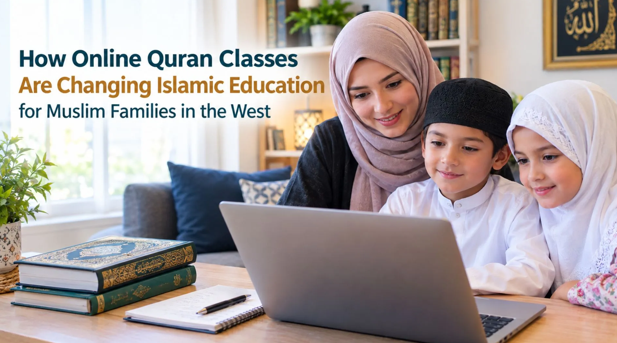
Ask a Muslim parent in Manchester, Houston or Toronto how their child learns the Quran, and you’ll often get a tired laugh before the answer. Then comes the story. A weekend madrasa forty minutes away, a room of twenty-five kids, one teacher, and a child who gets maybe three minutes of real attention.
That picture is changing. Over the past decade, live online Quran classes have become one of the quieter success stories in EdTech. Not because of flashy apps, but because simple technology finally fixed a very old problem.
I’ve run an online Quran academy for more than 11 years. In that time we’ve taught over 1,400 students across 40+ countries. Here’s what has genuinely changed for families in the West, and what still needs work.
Why the traditional model struggles in the West
The old setup was built for places where a mosque sits at the end of every street. Most Muslim families in the UK, USA, Canada and Australia don’t live like that. Four problems keep coming up when parents first talk to us:
- Plenty of families simply don’t have a qualified teacher nearby. In smaller towns, the nearest one can be an hour’s drive.
- School, homework, football practice, two working parents. The weekend slot is precious, and a long commute eats half of it.
- Group size. Quran recitation needs individual correction. Tajweed is about exactly how each letter leaves your mouth, and no teacher can properly hear twenty-five children at once.
- Kids raised in the West think in English. A teacher who can’t explain a rule in English often ends up repeating it louder instead of explaining it better.
None of this is anyone’s fault. It’s just a model designed for a different life.
What one-on-one video classes actually changed
The biggest shift isn’t the video. It’s the ratio: one teacher, one student, every single lesson.
In a 30-minute one-on-one session, the teacher hears every word the student reads. A mistake gets corrected the moment it happens, not three weeks later when it has already become a habit. That alone does more for a child’s recitation than a whole term of group classes.
Time zones turned out to be a hidden advantage too. A qualified teacher in Pakistan, Egypt or Saudi Arabia can teach a child in Birmingham at 6pm local time, right after dinner. Families pick a slot that suits them instead of fitting their week around a fixed timetable.
The tech itself is honestly a bit boring. A laptop or tablet, a stable internet connection, and a quiet corner of the house. That’s the point, though. It works because it gets out of the way and lets the teaching happen.
Starting children early, without overwhelming them
Most children are ready to begin between the ages of 4 and 6, once they can sit and focus for a short lesson. Readiness matters more than the exact age.
The usual starting point is Noorani Qaida, a beginner’s book that teaches Arabic letters, their sounds, and how they join together. It’s the foundation everything else sits on. Rush it, and a child ends up reading the Quran with mistakes that take years to undo.
One thing parents are often surprised by: short and frequent beats long and rare. Two or three 30-minute lessons a week usually work far better than one two-hour session on Sunday. Young kids remember more when they come back to something every couple of days, and they don’t get bored halfway through.
Accountability: the part most platforms skip
Online learning has one big weak spot, and it isn’t the internet connection. It’s drift. The parent pays, the child logs in, and months pass before anyone notices progress has stalled.
We learned this the hard way in our early years. So we built two habits into how we teach. Every student sits a short test each month, and we meet parents directly to go through the results: what’s improved, what hasn’t, and what we’ll change.
We also keep backup teachers on hand. If a regular teacher falls ill or travels, a qualified substitute steps in, so a child’s routine doesn’t break for two weeks.
“Parents don’t need a fancy dashboard. They need someone to sit with them once a month and tell them honestly how their child is doing. That one conversation fixes more problems than any feature we could build.” — Qari Abdul Mateen Usman, Founder, Urwa Academy
Privacy, comfort and the choice of teacher
Any parent putting their child on a video call with a stranger has fair questions. Who is this person? Are classes recorded? Where does my child’s information go? A good academy answers these before you ask.
Comfort matters just as much as safety. Many mothers and daughters prefer learning with a woman, especially once lessons move past the basics. That’s why trained female Quran tutors have become a standard option rather than a special request.
A few simple habits help at home too:
- Keep the laptop in a shared room, not a closed bedroom.
- Sit in on the first few lessons so you know the teacher’s style.
- Ask the academy, in writing, how they handle recordings and personal data.
Where AI apps fit, and where they don’t
AI-powered Quran apps are useful, but they work best as a practice tool, not a replacement for a teacher.
They’re good at the repetitive stuff. Flashcards for Arabic letters, listening to a verse on loop, tracking how many pages a student revised this week. For a child practising between lessons, that’s genuinely helpful.
Where they still fall short is the fine detail. In my experience, apps often miss the small pronunciation slips that a trained ear catches straight away, like a letter pronounced from slightly the wrong place in the throat. They also can’t do the human part: noticing a child is tired, nervous, or quietly losing interest.
The setup that works for most families is a mix. A real teacher for live lessons and correction, and an app for a few minutes of practice on the days in between.
What to check before choosing an online Quran class
The best way to judge an online Quran class is to try it, ask direct questions, and watch how the academy answers. Here’s a short checklist I’d give any parent:
- Free trial lessons. You should be able to see a real class before paying anything.
- One-on-one or group. Ask plainly. “Small group” sometimes means eight kids.
- Teachers who work with Western students. Can they explain Tajweed rules clearly in English?
- How progress is measured. Regular tests and parent updates, or just attendance?
- Clear pricing. No surprise registration fees or charges that appear after the first month.
- A backup teacher policy. What happens when your regular teacher is away?
- Privacy and safeguarding. A written policy on recordings and personal data.
If an academy gets vague on more than two of these, keep looking.
Frequently asked questions
Are online Quran classes as effective as learning in person? For most students, yes, and often more so. One-on-one attention means every mistake is heard and fixed, which rarely happens in a large group class.
What age should a child start learning the Quran online? Most children are ready between 4 and 6. Some start earlier or later, and that’s fine. A short trial lesson usually shows whether a child is ready.
How many classes per week does a beginner need? Two or three 30-minute lessons a week is a good starting point. Consistency matters more than the total hours.
Can adults learn to read the Quran from scratch? Absolutely. One of our students in Canada learned to read the Quran at 40. Adults often move faster than they expect, because they practise with purpose.
The bottom line
Online Quran education didn’t succeed because the technology was clever. It succeeded because it gave families something they’d been missing for a long time: a patient teacher, real attention, and a schedule that fits modern life.
The academies that last will be the ones that treat the screen as a classroom, not a shortcut. Test the students, talk to the parents, and keep the teaching human.
About the author
Qari Abdul Mateen Usman is the founder of Urwa Academy, an online Quran academy that has taught more than 1,400 students across 40+ countries over the past 11 years. His work focuses on one-on-one Quran and Tajweed teaching for Muslim families in the UK, USA, Canada, Australia and Europe






Comment