
How Material Engineering Is Changing Wire Free Bra Support

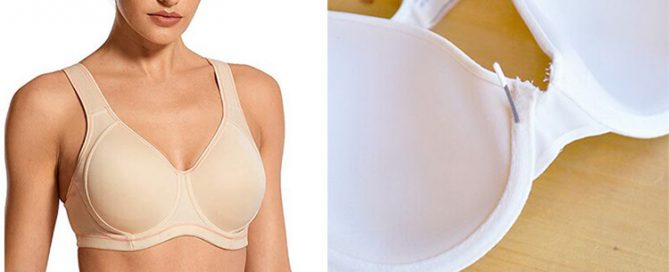
Wire-free bras are often described as the softer alternative to underwire, but removing a metal wire does not remove the need for structure. A bra still has to stabilize the bust, distribute pressure, hold its shape, and sit smoothly beneath clothing. The current generation of wireless designs approaches those jobs as a coordinated material system rather than asking one rigid component to do most of the work.
That shift makes intimate apparel a useful example of practical material engineering. Support can come from the way textiles stretch, how panels are positioned, how cup materials recover after movement, and how several soft components share a load. None of those elements works alone. Their value appears when the whole garment is designed around the body and the conditions of daily wear.
Support Becomes a System
In a conventional underwire bra, a curved wire helps define the lower edge of the cup and transfer part of the load into the band. A wire-free design has to create stability by other means. The band, cup, side panels, straps, closures, and flexible support zones must work together.
This is why a wireless bra cannot be judged only by how soft it feels in the hand. Very light fabric may feel pleasant but offer too little resistance. Firm fabric may hold its shape but feel restrictive during sitting, reaching, or bending. Designers need a controlled balance between flexibility and recovery. The material should move when the wearer moves, then return close to its original position instead of stretching out and losing support.
Stretch and Recovery Matter More Than Stretch Alone
Stretch is easy to notice, but recovery is the more important performance question. A textile can extend comfortably and still fail if it stays elongated after several hours. In a bra, poor recovery may show up as a band that rides up, cups that stop holding their shape, or straps that need repeated adjustment.
Polyamide and spandex blends are common in close-fitting apparel because they can combine a smooth hand feel with elasticity. The exact result depends on fiber percentages, knit structure, fabric weight, bonding, and panel orientation. Two garments made from similar fiber labels can perform differently if their construction distributes tension in different ways.
The fit also changes the way the material behaves. A supportive band should sit level and feel secure without relying on excessive tightness. Cups should contain the breast tissue without gaping or cutting in. Adjustable straps can refine the fit, but they should not carry the full load. When the band and cup structure are doing their jobs, the straps provide balance rather than acting as the primary support system.
Flexible Support Zones Replace a Single Rigid Element
Some wireless bras use flexible support elements around or beneath the cups. These zones may be bonded, printed, molded, or built into layered fabrics. Their purpose is not to imitate a metal wire exactly. Instead, they can help guide the garment’s shape and reinforce areas that need more resistance.
The engineering advantage is distribution. A rigid wire concentrates structure along a narrow curve. A flexible support zone can spread resistance across a broader area. That may reduce sharp pressure points while still helping the cups stay positioned. The tradeoff is that a softer structure depends more heavily on accurate sizing and balanced construction. If the band is too loose or the cup volume is wrong, the flexible system cannot compensate indefinitely.
A Product Example of the System Approach
Soft Intention’s wire-free Jelly bra designs illustrate this system approach. The collection combines wireless construction with smooth fabrics, elastic supportive bands, foam cups, and flexible Jelly support elements across different silhouettes. The product range also shows why the category should not be treated as one fixed shape. Full-coverage, V-neck, T-shirt, cross-back, and strapless options solve different wardrobe and support problems.
Seamless Construction Is Both Visual and Mechanical
Seamless design is often marketed for its appearance under fitted clothing, but it also affects how force travels through a garment. Raised seams can create visible lines and localized friction. Bonded or molded construction can create broader, smoother transitions between zones.
That does not mean every seam is a defect. Seams can provide useful shaping and reinforcement. The design question is whether each seam has a clear job and whether its placement creates unnecessary bulk or pressure. A well-planned wireless bra may use fewer seams in highly visible areas while retaining reinforcement where the garment needs to hold its geometry.
Foam cups provide another example of combined visual and mechanical performance. They can create a smoother surface beneath clothing while helping the cup maintain a consistent shape. The foam’s thickness, density, and molding determine whether the result feels flexible or rigid. More padding does not automatically mean more support. The cup still depends on the band and surrounding panels to stay in position.
Different Silhouettes Need Different Engineering Choices
A deep V-neck removes material from the center front, so it has less surface area available for containment. A full-coverage style uses more cup area and may distribute pressure differently. A pull-on design depends on stretch and recovery during dressing, while a hook-and-eye closure lets the wearer adjust band tension across several settings. A strapless bra removes another stabilizing component and therefore asks more of the band, side wings, and surface grip.
These differences explain why a successful feature in one silhouette may not transfer directly to another. A flexible support layout designed for a T-shirt bra may need to be repositioned for a plunge or strapless style. Good product development treats each silhouette as a separate load-distribution problem while preserving a consistent material philosophy.
Product Information Still Determines Real World Fit
Material technology can improve a wireless bra, but it cannot make fit universal. Shoppers still need accurate product information, a style-specific size chart, and a clear explanation of coverage, closure, cup construction, strap adjustability, and care.
Care matters because heat, aggressive washing, and rough storage can change elastic recovery and distort molded components. A flexible bra should be laid flat or stored without crushing the cups when its care instructions call for that treatment. The goal is to preserve the relationships among its parts, not only the appearance of the fabric.
The most useful way to assess a modern wireless bra is therefore to look beyond the absence of underwire. The stronger question is how the design shares support across materials and components. When stretch, recovery, cup structure, band tension, and flexible reinforcement are coordinated, soft construction can provide meaningful everyday stability without depending on a single rigid element.






Comment