
How Is AI in E-commerce Improving Store Operations and Customer Experiences?

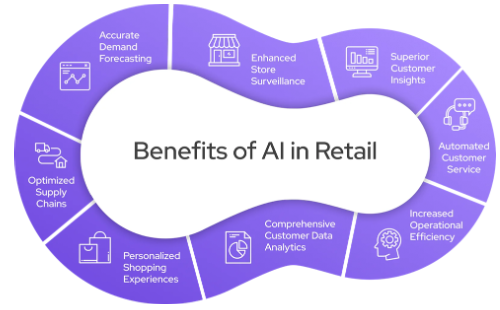
Online retailers face growing pressure to personalize shopping experiences, manage inventory efficiently, respond to customers quickly, and compete in a crowded market. AI tools can help businesses handle these challenges, reduce repetitive work, and make shopping easier and more convenient for customers.
Traditional store management becomes more time-consuming as product catalogs grow and customer expectations rise. AI helps businesses manage these challenges by streamlining daily tasks and using data to make better decisions.
From product discovery and automatic customer service to dealer studies and stock making plans, AI is growing new opportunities for online stores. These days, AI agents have expanded those abilities through supporting businesses complete multi-step duties in the region of in truth producing tips or answering questions.
What Does AI Ecommerce Mean for Modern Online Stores?
AI ecommerce refers to using artificial intelligence to improve online shopping experiences and manage e-commerce operations more efficiently.
Traditional automation commonly follows predefined rules. AI-powered structures can interpret records, understand patterns, and adapt their responses to fantastic conditions. AI marketers take this further with the aid of a way of coordinating a couple of steps in the direction of a described objective, with suitable human oversight.
Which Ecommerce Tasks Can AI Help Businesses Automate?
AI can support several essential areas of ecommerce operations. Businesses should prioritize tasks that consume significant time, involve repetitive decisions, or require analyzing large amounts of information.
| Ecommerce function | How AI can help | Potential business benefit |
| Product listings | Draft descriptions, titles, and product attributes | Faster catalog preparation |
| Customer support | Answer common questions and organize inquiries | More responsive customer service |
| Inventory planning | Analyze sales patterns and identify stock risks | Better-informed replenishment decisions |
| Product research | Compare competing products and market trends | More focused product selection |
| Marketing | Generate campaign ideas and customer segments | More relevant marketing activities |
| Supplier research | Organize supplier information and compare offers | More efficient sourcing workflows |
These programs do now not all require self reliant agents. Some responsibilities can be dealt with through a conventional AI assistant, even as others benefit from tools which can get admission to enterprise records and coordinate more than one steps.
Retailers ought to select generation consistent with their actual operational desires rather than adopting AI definitely because it’s miles trending.
How Can AI Agents Improve Ecommerce Operational Efficiency?
AI dealers are designed to artwork toward precise goals with the aid of a way of amassing facts, reasoning via duties, and the usage of tools to perform moves. Depending on their permissions and integrations, they’ll use resource workflows regarding research, content creation, dealer comparisons, and save management.
One beneficial software program is product sourcing.
Another application is catalog management. A shop introducing dozens of latest merchandise may additionally need regular titles, descriptions, attributes, and are trying to find-excellent content. AI agents can assist prepare those materials while employees confirm product accuracy and emblem consistency.
Businesses exploring these workflows can assess AI ecommerce use instances to recognize how specialised retailers can help special ecommerce sports.
Accio affords sources for exploring AI sellers and realistic commercial workflows
Which AI E-trade Tools Should Retailers Consider?
Choosing the right AI tool begins with identifying the particular hassle a enterprise desires to resolve.
A store that struggles with consumer inquiries may want conversational resources, while a store handling a big catalog may also benefit greatly from product records processing and content material technology.
| Tool category | Common capabilities | Best suited for |
| AI writing | Product descriptions, email drafts, | Content and marketing teams |
| Recommendation engines | Personalized product suggestions and product discovery | Stores seeking more relevant shopping experiences |
| Customer service AI | Frequently asked questions and inquiry classification | Support teams handling repetitive requests |
| Analytics and forecasting tools | Sales analysis, trend identification | Merchandising |
| AI agent platforms | Multi-step research, coordinated tasks, and workflow assistance | Businesses managing complex, repetitive processes |
Accio is one useful resource businesses can find out at the same time as investigating AI sellers for business workflows.
How Can Online Retailers Introduce AI Without Disrupting Existing Operations?
A gradual implementation technique could allow companies to test the charge of AI in advance in place of increasing its function.
Starting with a virtually defined workflow moreover makes it easier to emerge as privy to mistakes and degree enhancements.
Consider the ones realistic steps:
Choose a repetitive venture. Start with something like writing product descriptions, organizing supplier statistics, or answering commonplace purchaser questions.
Measure the present day technique. Record how a great deal time the mission takes, how frequently errors arise, and what resources are wanted to finish it manually.
Select the proper tool. Compare answers based totally totally on their abilities, integrations, safety, and fee.
Run a controlled pilot. Test the device on a constrained set of products, inquiries, or inner workflows.
Review the effects. Check output great, accuracy, time monetary savings, and any more evaluation artwork.
Expand carefully. Introduce the workflow to other groups exceptional after the preliminary technique proves reliable.
Human assessment stays critical at the same time as a mission entails pricing modifications, dealer commitments, refunds, customer records, or specific consequential commercial organisation alternatives. AI desires to aid duty in place of putting it off.
How Should Businesses Measure the Success of AI Ecommerce?
Adopting AI is handiest useful while it improves measurable enterprise outcomes. Retailers should evaluate both efficiency and patron enjoy as opposed to depending totally on the wide variety of computerized duties.
| Performance metric | What to measure | Why it matters |
| Task completion time | Minutes or hours required per task | Shows whether workflows are becoming faster |
| Content accuracy | Errors found during quality checks | Helps protect product information and customer trust |
| Customer response time | Time between inquiry and response | Indicates support efficiency |
| Conversion rate | Percentage of visitors who complete a purchase | Helps evaluate the shopping experience |
| Cost per order | Operating expenses relative to completed orders | Reveals potential operational savings |
| Inventory availability | Frequency of stockouts and excess inventory | Helps assess inventory planning |
Businesses should compare results in opposition to a constant baseline and account for implementation prices, subscriptions, integration paintings, and employee evaluation time.
For instance, producing product descriptions at greater speed may seem useful, but the actual cost relies upon whether or not the descriptions remain accurate and require much less total work to submit.
Accio and different AI agent sources can assist shops explore capability workflows, however each commercial enterprise ought to validate the consequences in its very own running environment. Retailers exploring practical applications of AI can visit Accio AI Agents & Usecase to discover how AI agents can support product research, supplier discovery, and other e-commerce workflows.
What Does the Future of AI Ecommerce Look Like?
The subsequent phase of ecommerce is in all likelihood to contain more related, challenge-orientated AI systems. Instead of the use of separate gadgets for isolated sports, outlets might also coordinate product studies, catalog practice, advertising and marketing analysis, and operational planning via protected workflows.
This shift is carefully associated with agentic trade, where AI retailers can help perform multi-step sports in the direction of defined goals. Some systems may additionally assist interactions among buying assistants, merchants, and commercial enterprise systems, despite the fact that substantial adoption will rely upon reliable integrations, security, and clear authorization regulations.
For online shops, a robust foundation remains crucial. Accurate product information, a well-maintained internet website online, clear commercial company strategies, and a dependable customer revel in make AI adoption greater effective.
Businesses the usage of ecommerce systems consisting of WooCommerce ought to additionally bear in mind how their problems, extensions, checkout processes, and product catalogs work with new AI equipment.
Compatibility and performance have to be assessed before introducing additional integrations.
Accio gives a place to begin researching AI sellers and their ecommerce applications, at the same time as its broader useful resource library offers in addition material for agencies comparing capability workflows.
Ultimately, a successful AI ecommerce is not approximately changing each human mission. It is set combining a useful era with sound business organisation judgment to create better shopping for reviews, more green operations, and a stronger foundation for sustainable increase.







Comment